Artist
Leonardo da Vinci
1452–1519
Works (22)
Benois Madonna
1480

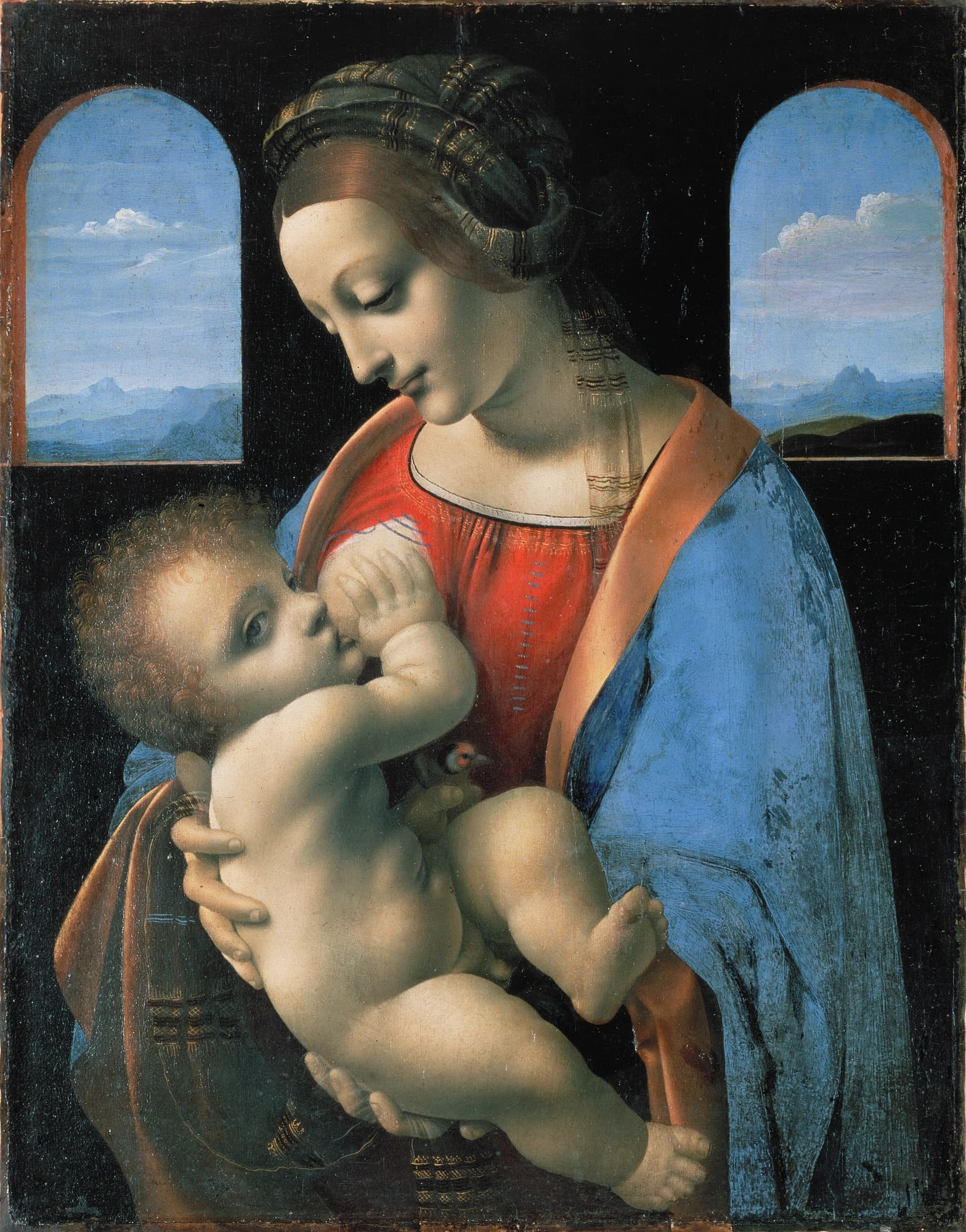
Madonna Litta
1490

Annunciation
1472
Saint Jerome in the Wilderness
1480
Adoration of the Magi
1482

The Virgin and Child with Saint Anne
1511

Lucan portrait of Leonardo da Vinci
1505

Sala delle Asse
1498

The Battle of Anghiari
1503
Head of a Woman
1500
Madonna of the Yarnwinder
1501

Lady with an Ermine
1490

The Last Supper
1490
Portrait of a Young Fiancée
1495

Portrait of a Musician
1485

Isleworth Mona Lisa
1502

Mona Lisa
1503
Salvator Mundi
1500

Allegory on the Fidelity of the Lizard (recto); Design for a Stage Setting (verso)
1496

Compositional Sketches for the Virgin Adoring the Christ Child, with and without the Infant St. John the Baptist; Diagram of a Perspectival Projection (recto); Slight Doodles (verso)
1480–85

The Head of the Virgin in Three-Quarter View Facing Right
1510–13

A Bear Walking
ca. 1482–85
Timeline
Born in 1452 near Vinci to a notary father and a lower-class mother out of wedlock, his background is said to have fostered his unconventional and free-thinking genius.1
Around age 14, he entered Verrocchio's workshop. Alongside peers like Botticelli, he mastered diverse skills from painting to metallurgy, laying the foundation for his polymathy.1
Legend says that after seeing the angel Leonardo painted in 'The Baptism of Christ,' his master Verrocchio was so humbled by the talent that he resolved never to paint again.1
In his 30s, he served Ludovico Sforza in Milan as a court painter and military engineer, creating 'The Last Supper' and gaining fame throughout Italy.1
Invited by Francis I, he spent his final years at Clos Lucé in France. The King revered him like a father, and Leonardo died there, reportedly with the Mona Lisa in his possession.1
In 2017, 'Salvator Mundi,' attributed to Leonardo, sold for a record-breaking $450.3 million, proving his enduring global influence 500 years after his death.1