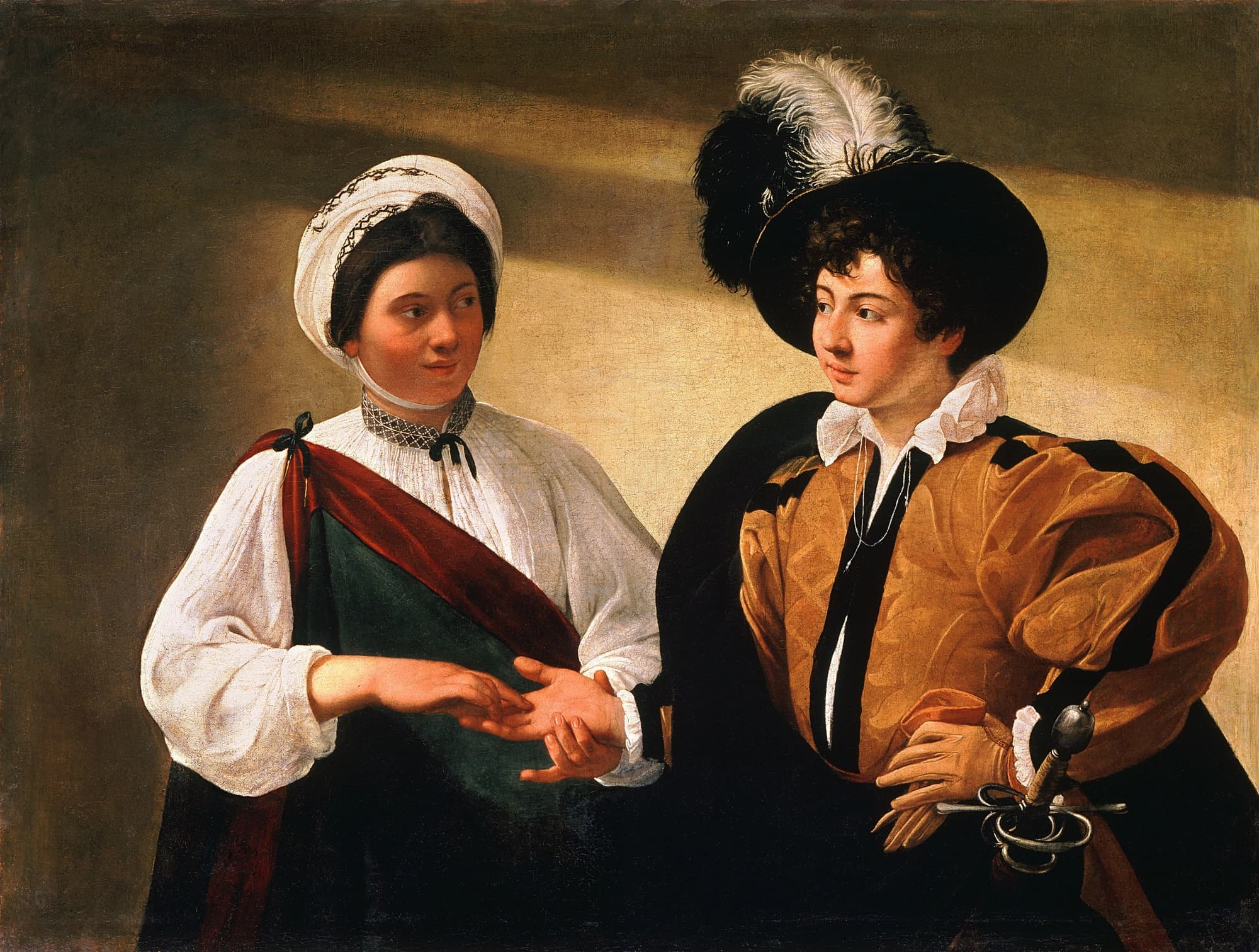
Artist
Caravaggio
1571–1610
Works (17)

The Fortune Teller
1594

Judith Beheading Holofernes
1599
Saint Jerome Writing
1607

The Incredulity of Saint Thomas
1601

Ecce Homo
1700

The Calling of Saint Matthew
1609
Nativity with Saint Francis and Saint Lawrence
1600

The Beheading of Saint John the Baptist
1608

Medusa
1597

Ecce Homo
1605

Bacchus
1598

Madonna and Child with Saint Anne
1605

Death of the Virgin
1604

Boy with a Basket of Fruit
1594

Crucifixion of Saint Peter
1600

The Entombment of Christ
1600

Conversion on the Way to Damascus
1600
Timeline
In 1584, Caravaggio began a four-year apprenticeship in Milan under Simone Peterzano, who claimed to be a pupil of Titian, exposing him to Venetian color and Lombard naturalism.1
The Cardsharps attracted the patronage of Cardinal Francesco Maria del Monte, leading to a series of intimate chamber pieces and establishing Caravaggio's reputation among Rome's elite.1
In 1606, Caravaggio killed Ranuccio Tommasoni in a brawl, resulting in a death sentence. This forced him to flee Rome, beginning a period of exile in Naples, Malta, and Sicily.1
In Malta, he joined the Order of Saint John but was imprisoned after a fight. He escaped to Sicily, where his late works became increasingly dark and introspective.1
Caravaggio died in 1610 at age 38 while traveling to Rome to seek a papal pardon. His cause of death remains uncertain, with theories ranging from fever to murder or lead poisoning.1
In the 20th century, art historian André Berne-Joffroy stated that modern painting begins with Caravaggio, marking a major reevaluation of his importance to Western art.1