Artist
William Etty
Works (13)
Mademoiselle Rachel
1841

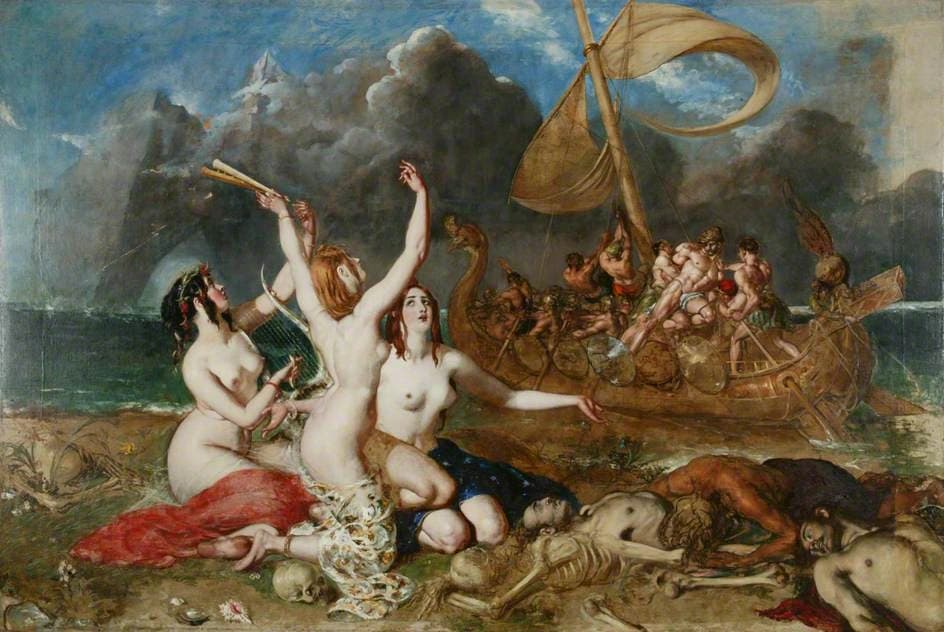
The Sirens and Ulysses
1837

The Wrestlers
1840
Candaules, King of Lydia, Shews his Wife by Stealth to Gyges, One of his Ministers, as She Goes to Bed
1830
Britomart Redeems Faire Amoret
1833
The Dawn of Love
1828
Preparing for a Fancy Dress Ball
1833
Youth on the Prow, and Pleasure at the Helm
1830

The Triumph of Cleopatra
1821
The Destroying Angel and Daemons of Evil Interrupting the Orgies of the Vicious and Intemperate
1832

The Combat: Woman Pleading for the Vanquished
1825

The World Before the Flood
1828

Allegory
Timeline
Born in York in 1787, Etty spent seven years as an apprentice printer in Hull from age 12. During this grueling period, he continued to draw in his spare time, eventually realizing he could make a living as an artist.1
The 1821 exhibition of 'Cleopatra's Arrival in Cilicia' brought him great acclaim. This success prompted him to establish a unique style featuring nudes in historical scenes, cementing his role as Britain's first significant painter of nudes.1
Etty acquired a reputation for indecency due to his focus on nudes, causing significant controversy. Despite this, he achieved critical and commercial success, being elected a Royal Academician in 1828, the highest honor at the time.1
In the 1830s, Etty branched out into lucrative portraiture and became the first English painter to produce significant still lifes. He adapted his talents to various genres as the demand for traditional history painting declined.1
An extremely shy man, Etty never married and lived with his niece Betsy. Raised as a strict Methodist, he was deeply attached to the aesthetics of the Catholic Church and attended the opening of major Catholic buildings.1
He retired to York in 1848 due to failing health and died in 1849 shortly after a major retrospective. While his works were initially highly collectable after his death, changing tastes led to a decline in his reputation by the late 19th century.1
After being largely forgotten in the 20th century, interest in Etty was renewed by the 2001 Tate Britain exhibition and the 2010 restoration of 'The Sirens and Ulysses,' repositioning him as a key Victorian nude painter.1