Artist
Pieter Brueghel the Elder
Works (13)
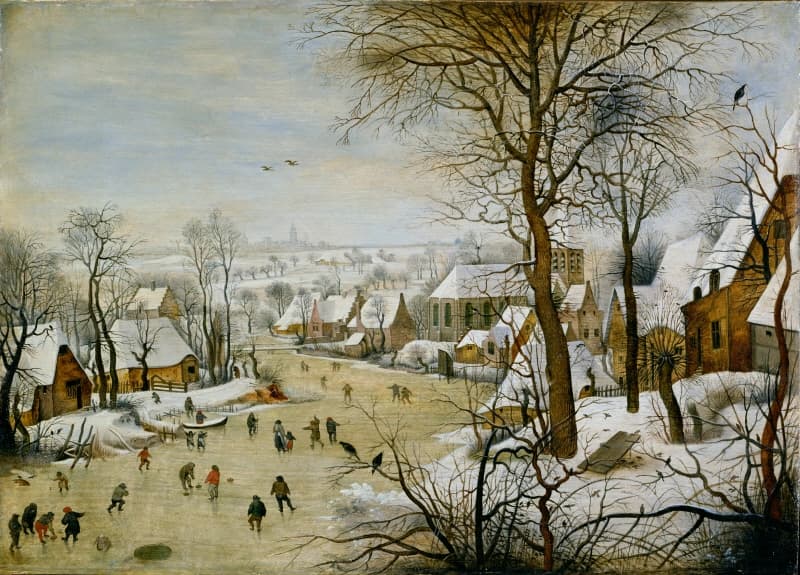
鳥罠のある冬景色
1564

Dull Gret
1563
The Adoration of the Kings
1563

The Hunters in the Snow
1565

The Triumph of Death
1560

Adoration of the Magi in a Winter Landscape
1563

The Massacre of the Innocents
1566

The Fall of the Rebel Angels
1562

The Wedding Dance
1566

The Fight Between Carnival and Lent
1559

Children's Games
1560

The Blind Leading the Blind
1568

Netherlandish Proverbs
1559
Timeline
Around 1545, he became a pupil of Pieter Coecke van Aelst. After his master's death, he likely secured early work through the connections of Coecke's wife, Mayken Verhulst.1
In 1551, he traveled to Italy, reaching as far as Rome and Reggio Calabria. Unusually for the time, he focused on sketching natural landscapes rather than classical ruins.1
From 1555, he spent about eight years designing over 40 prints for the publisher Hieronymus Cock. The precise compositional skills he developed then were later applied to his masterpiece oil paintings.1
In 1559, he dropped the 'h' from his name and changed his signature from Gothic to Roman capitals, likely influenced by humanist circles to Latinize his name.1
In 1563, he married his master's daughter Mayken and moved from Antwerp to Brussels. Most of his major masterpieces were created during the final decade of his life in this city.1
On his deathbed, he reportedly told his wife to burn his 'too sharp or sarcastic' drawings, likely to protect his family from political or religious persecution during the Reformation.1