Artist
William Hogarth
1697–1764
Works (10)
The Gate of Calais
1748

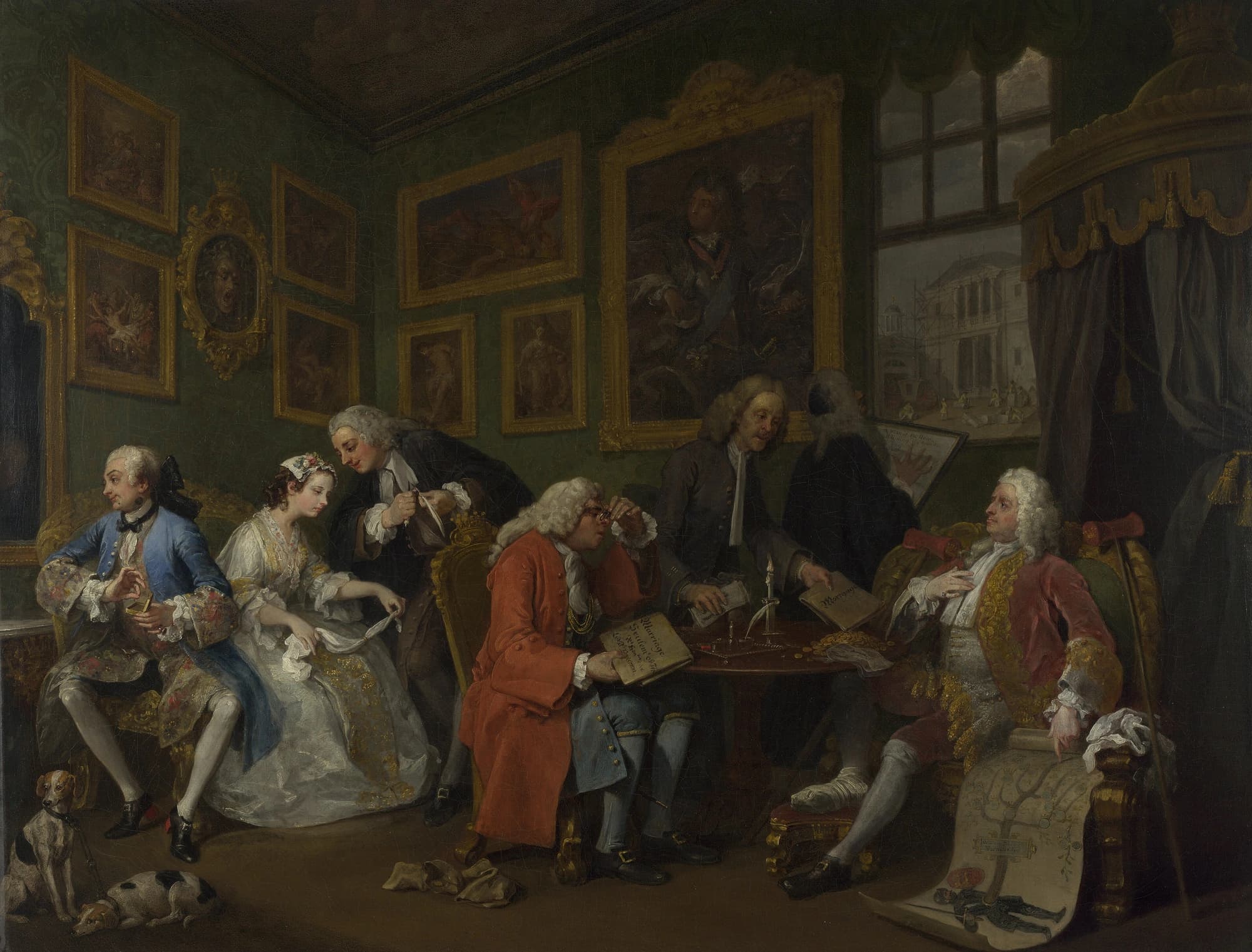
Marriage A-la-Mode: 1. The Marriage Settlement
1743

Sigismunda mourning over the Heart of Guiscardo
1759

The Distrest Poet
1736
The Graham Children
1742

The March of the Guards to Finchley
1750

The Bench
1758

Captain Lord George Graham in his Cabin
1745

Cassandra, Frontispiece, Vol. 3
1725

Two Dromedaries (Aubry de La Mottraye's "Travels throughout Europe, Asia and into Part of Africa...," London, 1724, plate 314)
1723–24
Timeline
Born in London to a poor Latin teacher, Hogarth's experience of his father's imprisonment for debt significantly influenced the hard-edged realism and social commentary in his work.1
Apprenticed to engraver Ellis Gamble, he learned to engrave trade cards and coats of arms, providing the technical foundation for mass-producing his later works as prints for the public.1
He produced satirical works on the South Sea Bubble stock market crash of 1720, depicting a disordered crowd to sharply criticize the foolishness of British society's speculative frenzy.1
He studied at the drawing school of Sir James Thornhill, the Serjeant Painter, and was influenced by his grand decorative schemes, later marrying Thornhill's daughter.1
In 1727, after a client refused payment claiming he was 'an engraver, and no painter,' Hogarth won a lawsuit that became a turning point in establishing his status as a painter.1
From around 1728, he honed his skills as an oil painter by creating 'conversation pieces,' which were small-scale group portraits of families or social gatherings.1
Published in 1731, 'A Harlot's Progress' was a series depicting a woman's downfall in the city; this 'modern moral subject' format earned him national popularity.1
In 'A Rake's Progress,' he used eight pictures to depict a wealthy son's ruin through luxury and gambling, ending in a mental hospital, serving as a moral warning against profligacy.1