FEATURE
Nikolai Astrup: From a Norwegian Valley to Japan
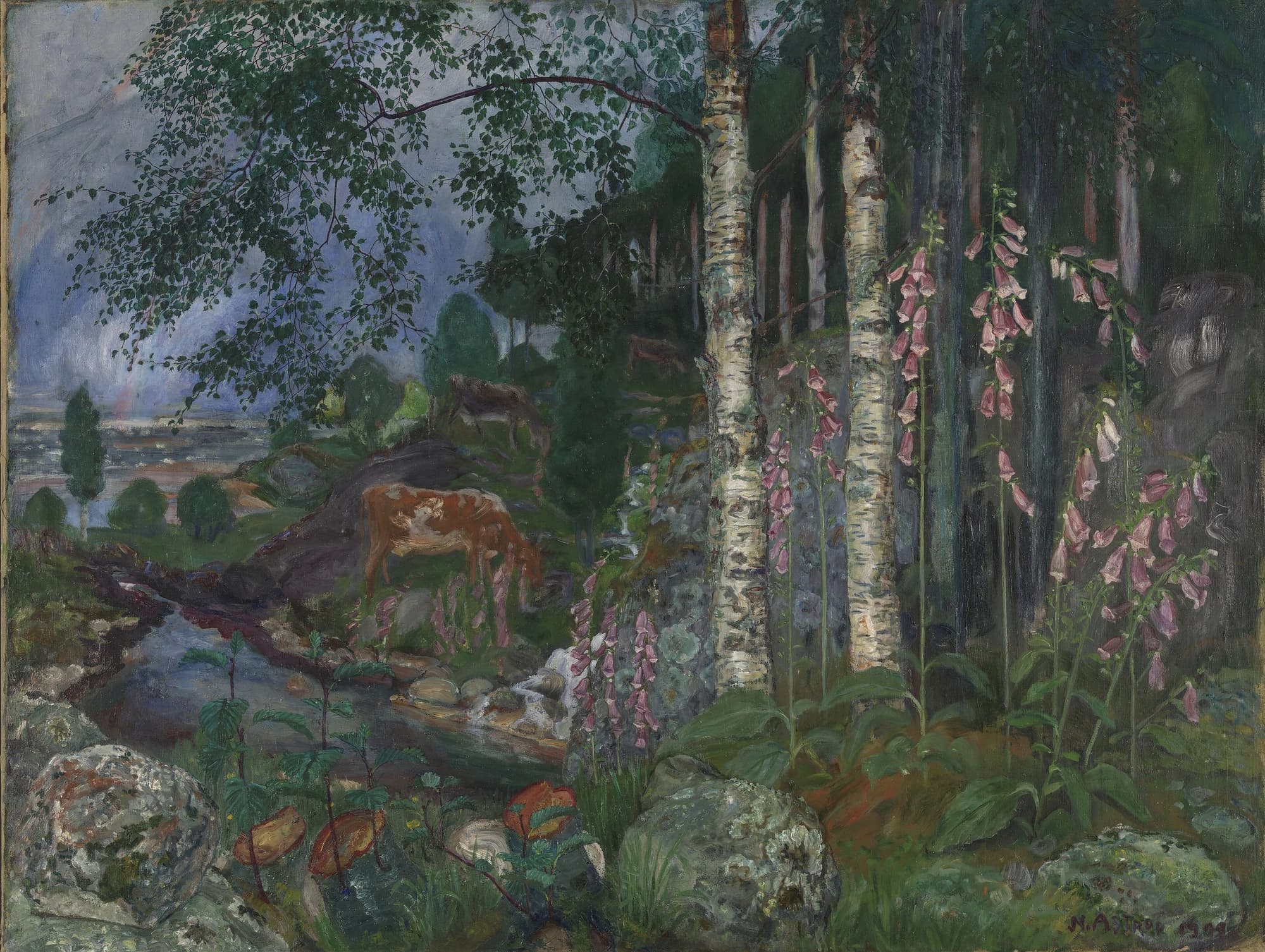
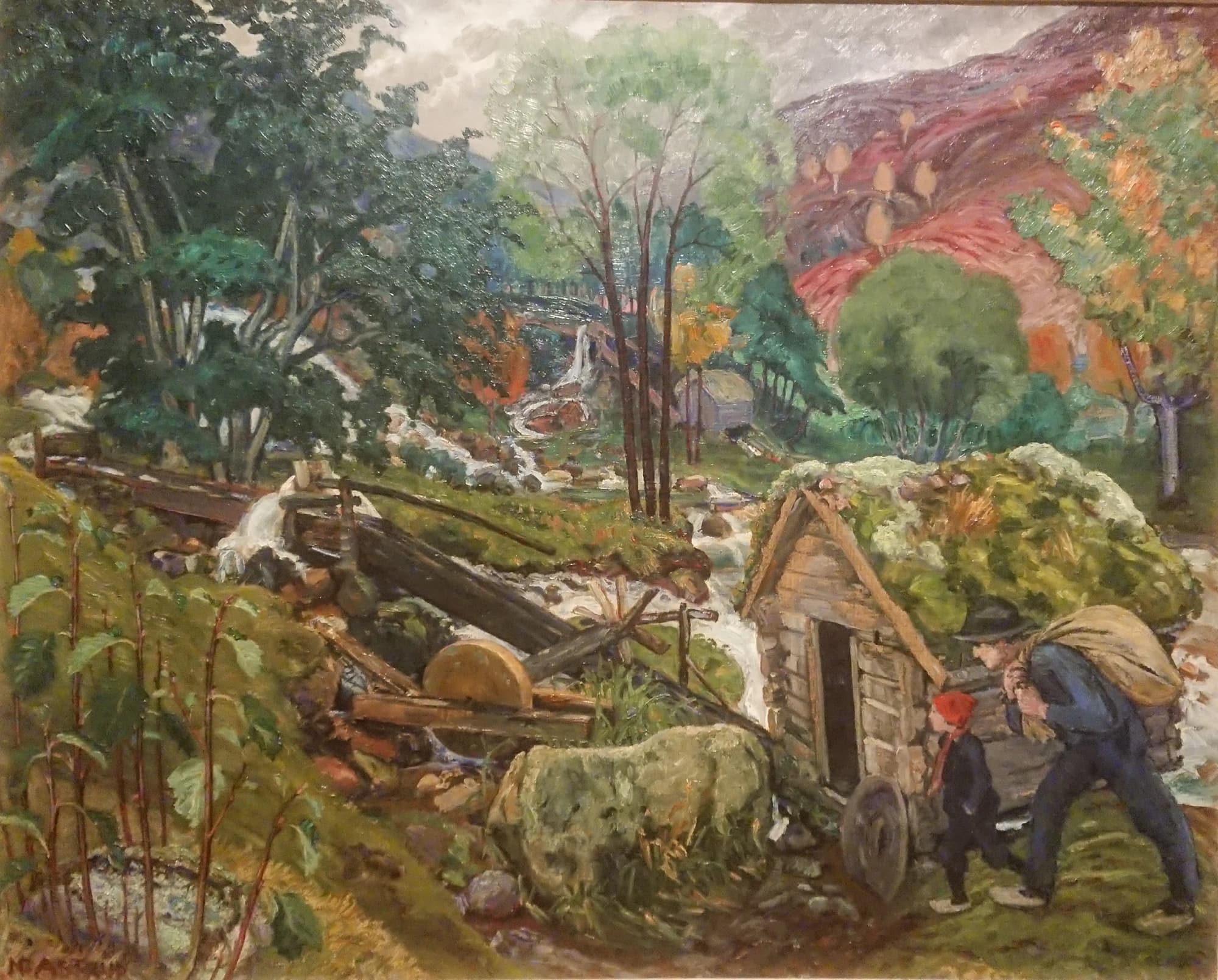
Norwegian painter, 1880–1928. He spent his life painting one western valley, Jølster.
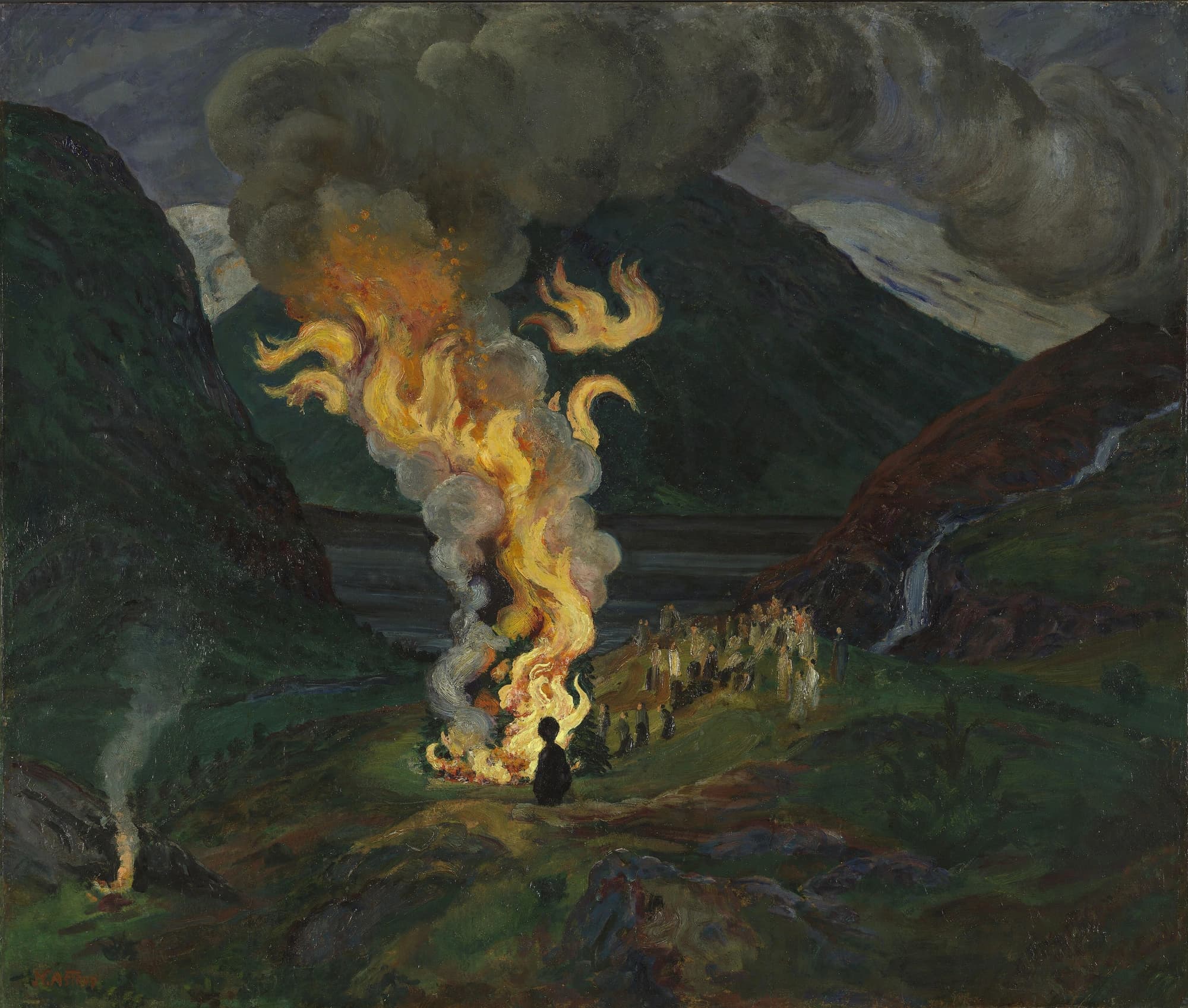
Midsummer bonfires, a garden he built with his own hands, the light of bright northern nights. Meet the painter who spent his life on a single valley — read and listen before Japan’s first retrospective.
Listen to the highlights1:23On show in Japan
Nikolai Astrup: The Garden of Growth
Tokyo Station Gallery
2026Nov21(Sat)–2027Jan31(Sun)Who was Nikolai Astrup?
Nikolai Astrup (1880–1928) was a Norwegian painter who made a single western valley, Jølster, the subject of his life. Born into a parsonage, he grew up from 1883 in a village on the shore of Lake Jølster, where his father served as vicar.
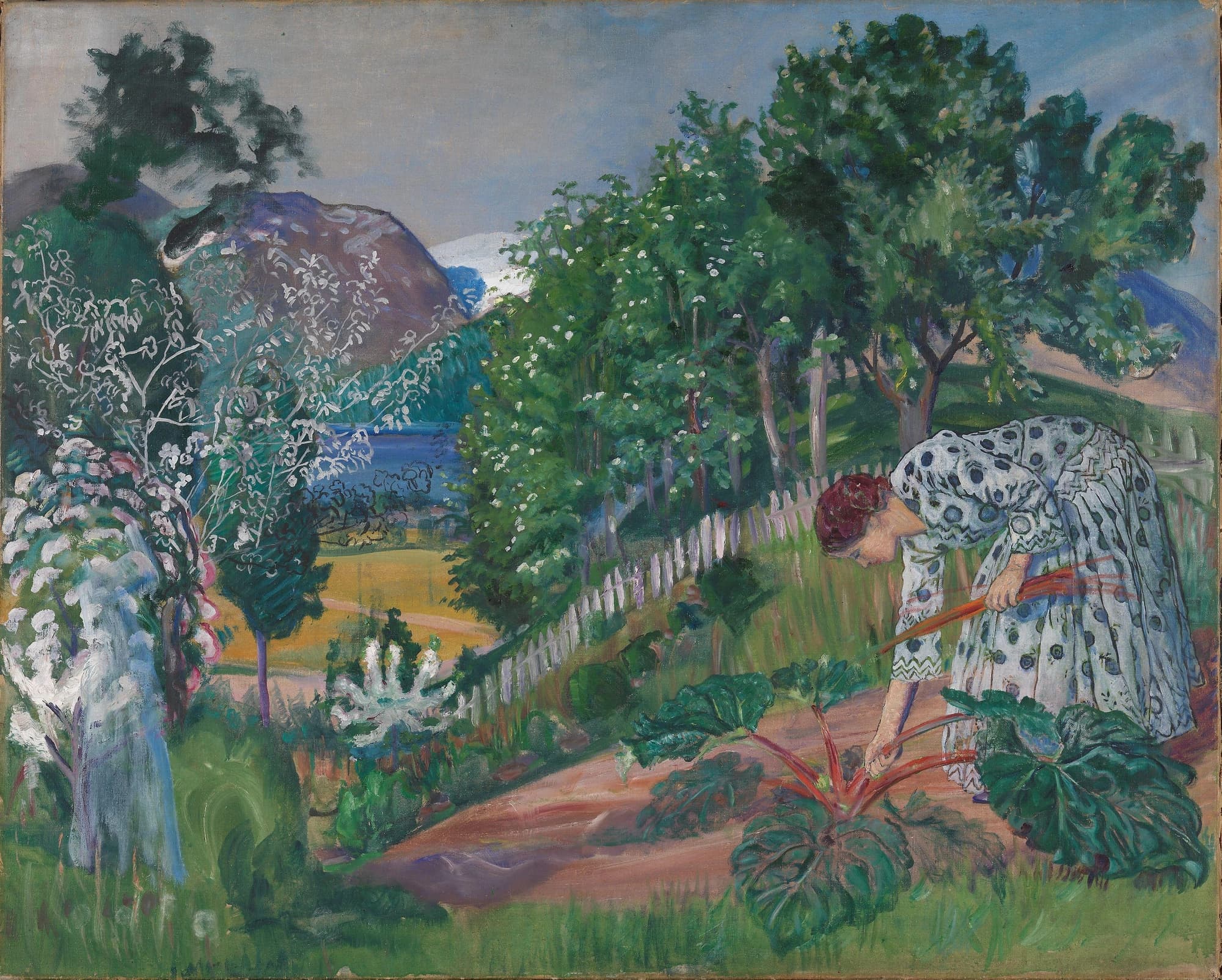
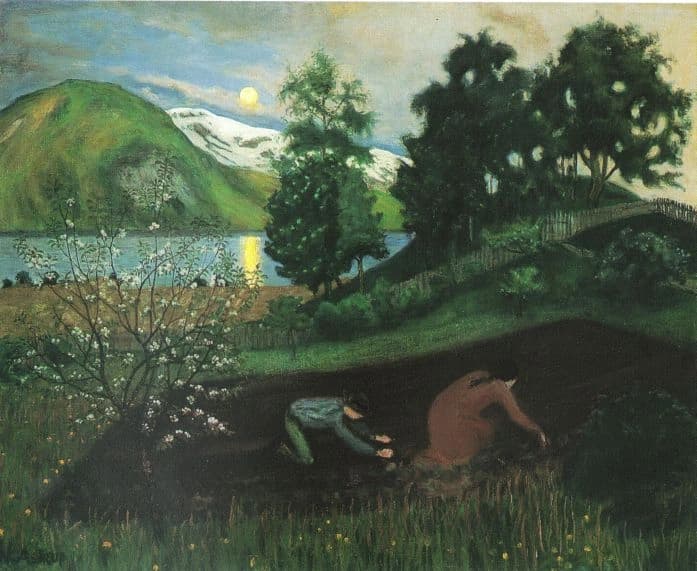
From 1913 until his death he lived at Sandalstrand, across the lake, cultivating the smallholding as a self-sufficient farm and as a work of art in itself. He fixed vantage points inside his own garden and painted the views from them in some twenty pictures.1
His best-known works are the Midsummer Eve bonfire paintings. Between 1906 and 1912 he returned to the subject again and again in bright, saturated colour.2
His other side is printmaking. He worked without a press, rubbing the back of the paper by hand or with a block of wood — the “Japanese” method — then brushed colour onto the finished sheets. With Edvard Munch he is regarded as a pioneer of the modern Norwegian woodcut; Munch bought three of his prints.1
At a glance
- Life
- 1880–1928, Norway
- Where he grew up
- Jølster, western Norway, on Lake Jølster
- What he painted
- Midsummer bonfires; the views from the garden he made himself12
- Media
- Oil painting, and woodcuts coloured by hand1
- Studied in Paris
- Gauguin, Denis, Rousseau — and Katsushika Hokusai2
- Where the works are
- Bergen Art Museum (KODE); Astruptunet, his home in Jølster23
- On show in Japan
- Nikolai Astrup: The Garden of Growth · Tokyo Station Gallery · Nov 21, 2026 – Jan 31, 2027
Questions people ask
- What is he best known for?
- The Midsummer Eve bonfire paintings. Between 1906 and 1912 he painted the subject repeatedly in bright, saturated colour. The pictures of the views from his own garden are also among his best-known works.12
- How is he connected to Munch?
- In the same generation in Norway, the two are regarded as pioneers of the modern woodcut. Munch admired Astrup’s prints and bought three of them, including Head of a Boy.1
- What is his link to Japan?
- While studying in Paris he looked closely at Katsushika Hokusai. For his woodcuts he used the “Japanese” method — no press, rubbing the back of the paper by hand or with a block of wood.12
- Where can you see the works?
- In Norway, the Bergen Art Museum (KODE) holds a substantial collection of oils, woodcuts and drawings, and his home in Jølster is open to visitors as Astruptunet.23
Sources
- 1.Nikolai Astrup — 公式カタログ・レゾネ
- 2.Per A. Holst, Nikolai Astrup: The Colorful Painter from Jølster (Per A. Holst Forlag, 2008)
- 3.ja.wikipedia.org
From his own letters
Read all of his wordsRead in order
Each chapter opens a different side of the painter. Start at the top and keep going.
Chapter 1His WordsLetters and accounts
His WordsThe first person he wrote in his letters, and what the people around him said. The two do not agree.
Chapter 2The GardenArticle
Astrup’s Garden: How a Painter Without Land Made a Garden That Made PaintingsHow a painter without land built, with his own hands, a garden that made paintings.
Chapter 3The NightArticle
Nikolai Astrup: The Painter Who Never Left His ValleyMidsummer bonfires and northern nights that never go dark — the works he is best known for.
Listen to the works
A short audio guide to every work — in Japanese and English.