When you think of Norwegian painters, Munch may be the first name that comes to mind. But there was another, working in the same era, who turned his back on the city and on foreign fashions and spent his whole life painting a single home valley: Nikolai Astrup. Called "Norway’s other great master," he has, until now, rarely been seen in Japan in any depth.[7]
This winter, at Tokyo Station Gallery — housed in the red-brick station building beside JR Tokyo Station — “Nikolai Astrup: The Garden of Growth” opens — Astrup’s first full retrospective in Japan. Midsummer bonfires, woodcuts learned from Hokusai, a garden he cleared with his own hands: the world born of one deep valley in western Norway, in some 130 oil paintings and woodcuts. Never heard the name? That’s fine. Here is a gentle guide to what to look for, before you go.[7]
| Exhibition | Nikolai Astrup: The Garden of Growth (first full retrospective in Japan) |
|---|---|
| Venue | Tokyo Station Gallery (directly connected to JR Tokyo Station, Marunouchi North Exit) |
| Dates | November 21, 2026 – January 31, 2027 |
| Works | About 130 oil paintings and woodcuts |
So, who was Astrup?
Astrup was born in 1880 in Kalvåg on the island of Frøya, on Norway’s west coast, and from 1883 grew up in a village by Lake Jølster, where his father served as a pastor. In 1895 his father, hoping he would become a priest, sent him to the cathedral school in Trondheim, but there he began frequenting museums and encountered the works of modern painters. Not the path of theology, but the path of painting. In 1899 he studied at the painting school of the female painter Harriet Backer in Christiania, honing his skills.[1,4]
Yet he did not remain in the capital. In 1902 he returned to his native Jølster, and from then on placed the source of his creativity in this land. Jølster was a long, narrow valley surrounded by high mountains, a place where a traditional way of life remained, its dialect and culture rooted in Old Norse. Astrup defined his own art as something deeply rooted in a particular land, and is said to have denied any direct influence from other painters or contemporary movements. One is tempted to call him the painter who clung to his valley.[4,6]
Nights when he could not breathe
Astrup lived with severe asthma all his life. The attacks usually came at night, and his biographer records that they forced him out to walk in the dark.[6]
The asthma was traced to his mother’s side of the family; his brother Christian and Christian’s children had the same symptoms. At the parsonage where he spent nearly twenty years, the straw mattresses were rarely changed, and the dust and mould they held were among the causes.[6]
When a severe attack left him unconscious, his wife Engel revived him with camphor. He tried everything — folk remedies, imported “snake oil”, even self-administered injections of adrenaline.[6]
Dr Inge Romslo concluded in a paper that the asthma, and the drugs he took for it, affected his sense of colour. But nothing in the biography connects his paintings of the night to these night walks. What we know is that he was a man who was awake at night.[6]
One fire, burning in a dark valley
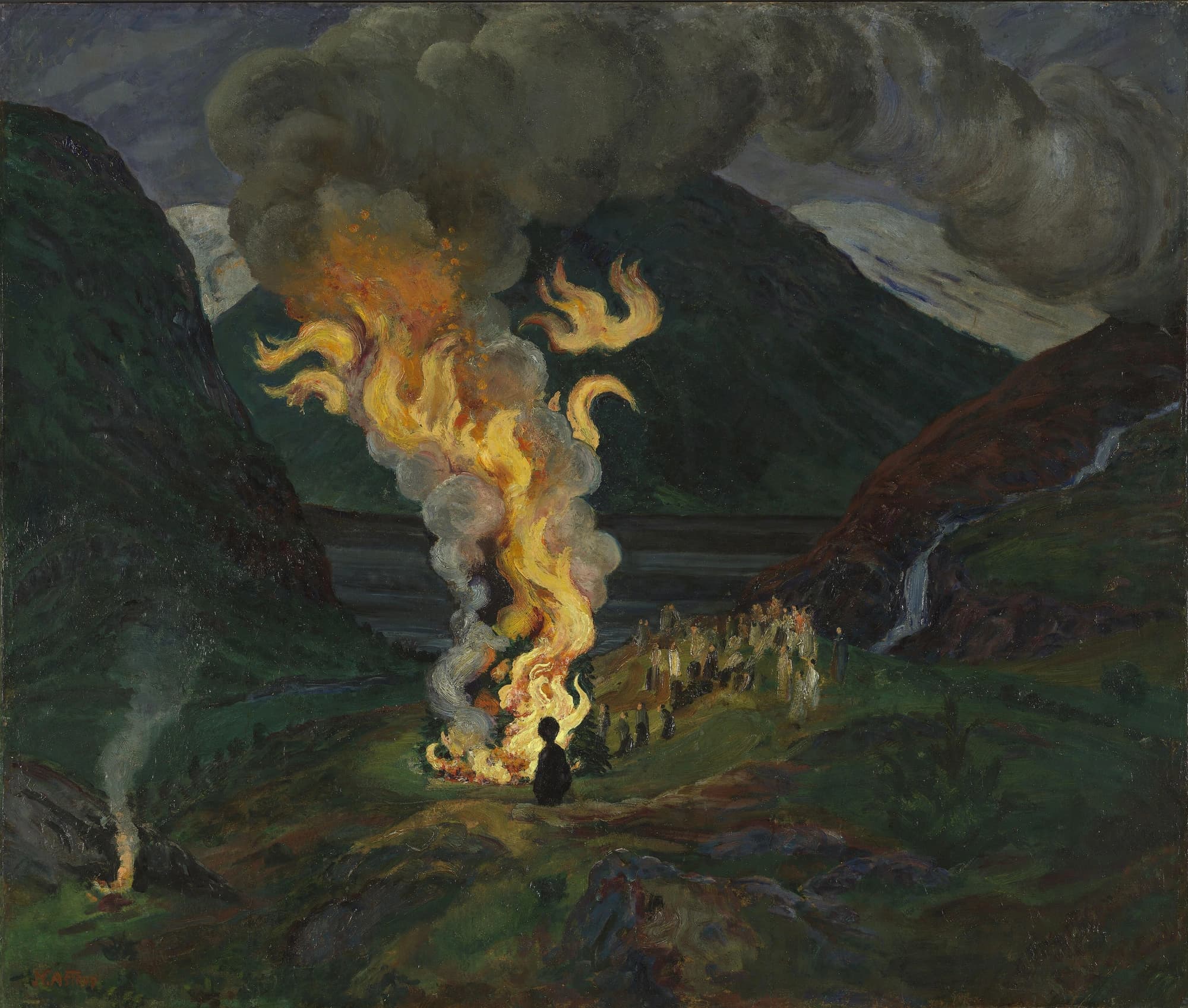
Start with the painter’s signature motif. At the bottom of a deep valley, an enormous pillar of fire blazes upward — the Midsummer bonfire. The flames illuminate the surrounding mountains and the figures of the gathered people, flickering in contrast with the darkness. This is the bonfire lit on the eve of St. John’s feast, a tradition of the valley of Jølster in western Norway. Astrup painted the subject again and again between 1906 and 1912, and some versions took as long as fourteen years to finish.[3,4]
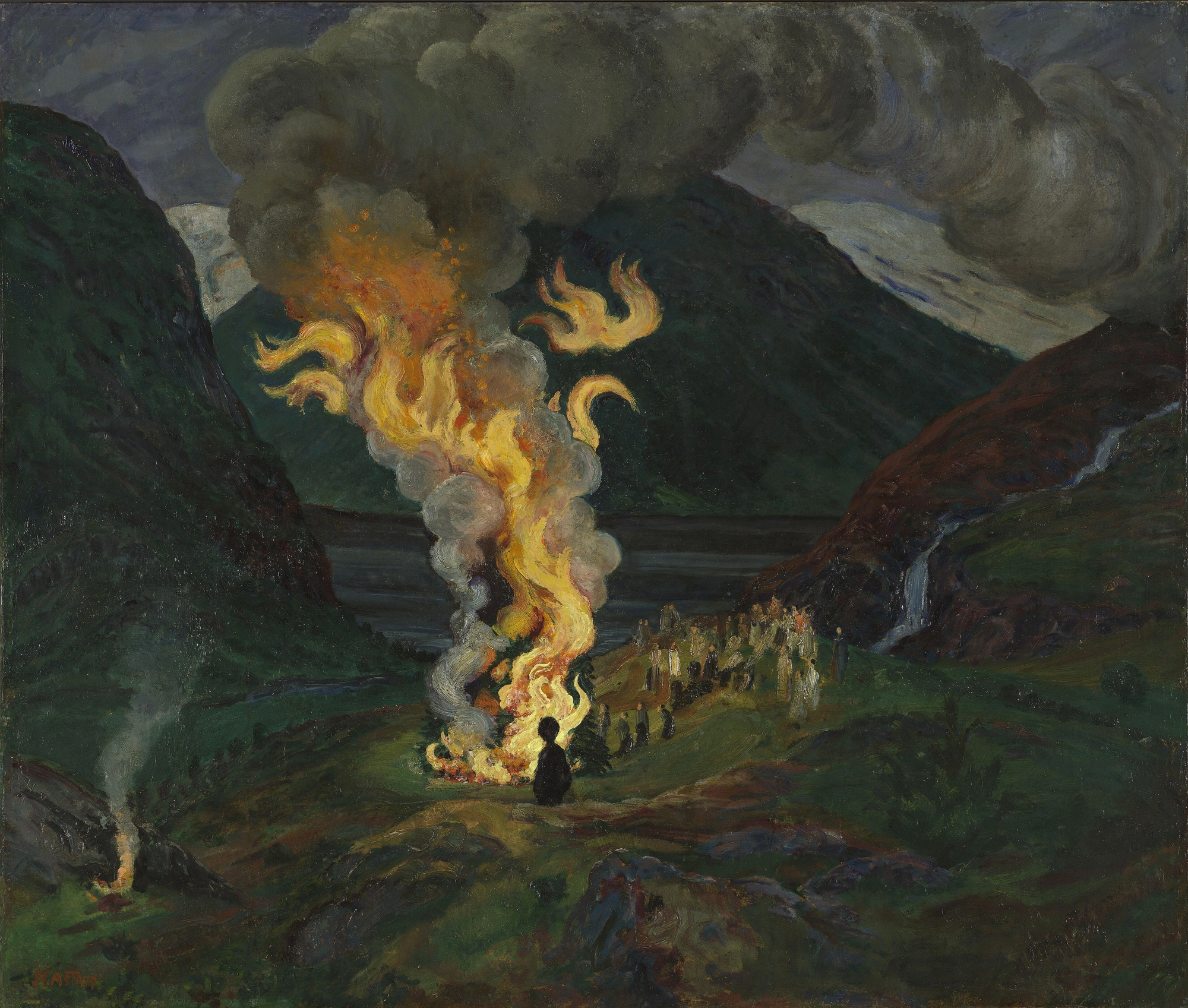
Summers in the northern country are short, and even the nights never fully sink into deep darkness. It feels as though the fire symbolizes the life-force of that brief season. Surely I am not the only one who sees, in the flickering flames and the rising smoke, the breath of something hidden within nature. At the venue, let yourself pause a while before one of these fire paintings.[3]
The woodcuts he met in Paris, through Hokusai
Even he had a period when he ventured out into the wider world. From 1901 to the following year, with the support of an art collector, he studied under Christian Krohg at the Académie Colarossi in Paris. During this study abroad, he researched the works of Henri Rousseau, Maurice Denis, Paul Gauguin, and Katsushika Hokusai. He became familiar with the woodcuts of Western painters such as Gauguin, and in Christiania he also observed Edvard Munch at work.[4,6]
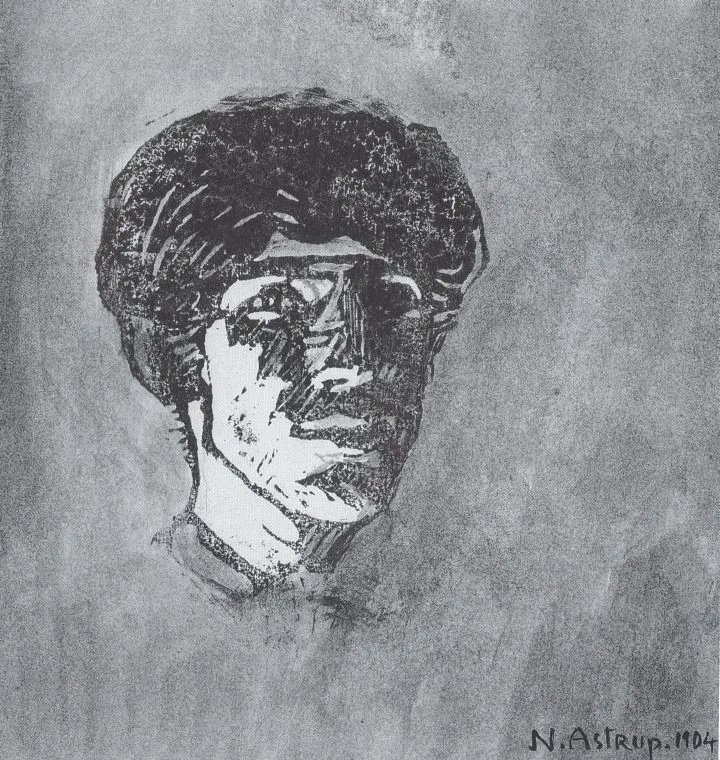
In time, Astrup came to be regarded, alongside Munch, as a pioneer of modern woodblock printing in Norway. His printing blocks were made mainly of alder, and were printed using a "Japanese method" of rubbing the back of the paper with the hand or a piece of wood, without a press. He applied oil paint directly to the block, and after printing added further colouring with a brush; for this reason each piece has a different expression, and he himself is said to have described them as "closer to painting than to prints." The woodblock print "Foxgloves" required precision in its multicolour printing and exact placement of the paper, and printing just a few copies is said to have taken more than two months. Munch, too, valued his prints highly, buying three, including "Head of a Boy."[4,6]
The texture of these woodcuts — the unevenness of the printing, the warmth of hand-rubbed paper — barely survives on a screen. The exhibition is a rare chance to see each impression’s own expression up close.
The garden that was itself a work of art
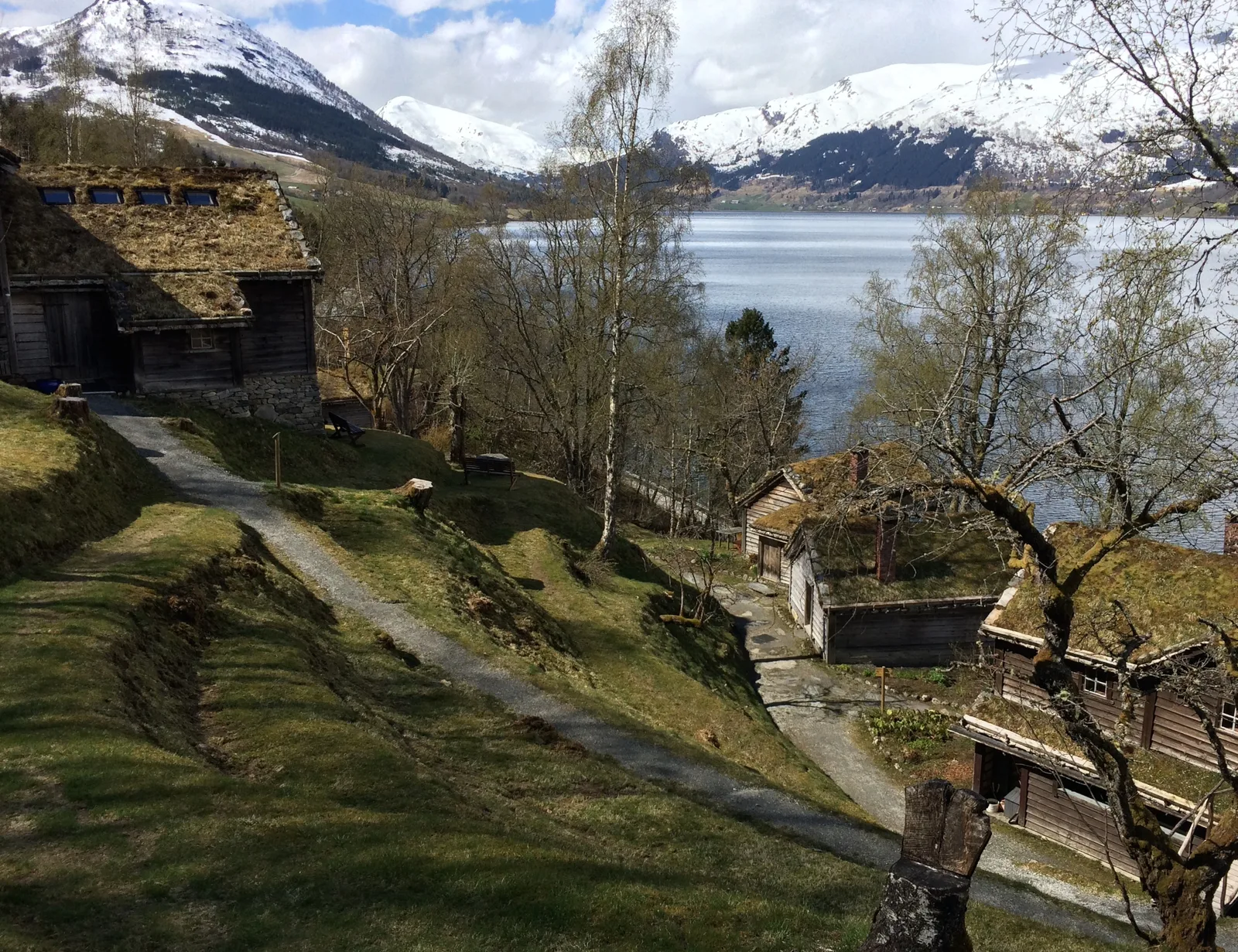
In late 1906, Astrup met Engel Anderssdotter Sunde in a room of a farm, and married her the following year, 1907. From 1913 he moved to Sandalstrand on the opposite shore of the lake, cultivating it as a self-sufficient farm. Together with his wife, he cut the steep slope into terraces and reconstructed old log cabins into a "tun," the form of a traditional settlement.[4,6]
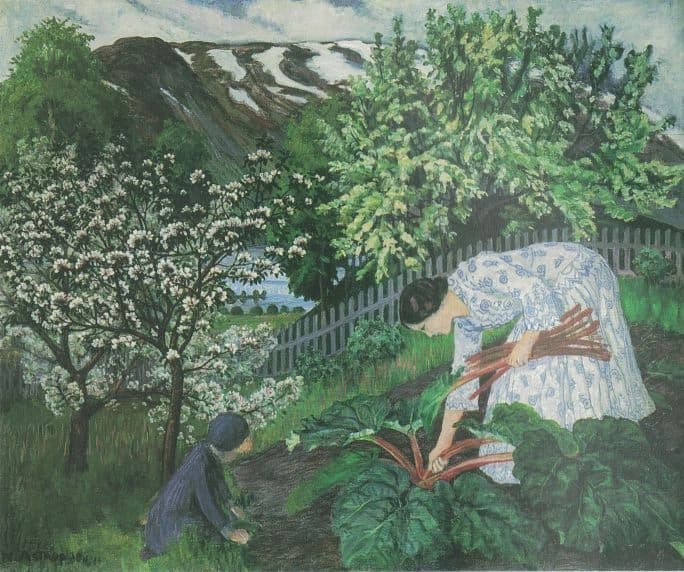
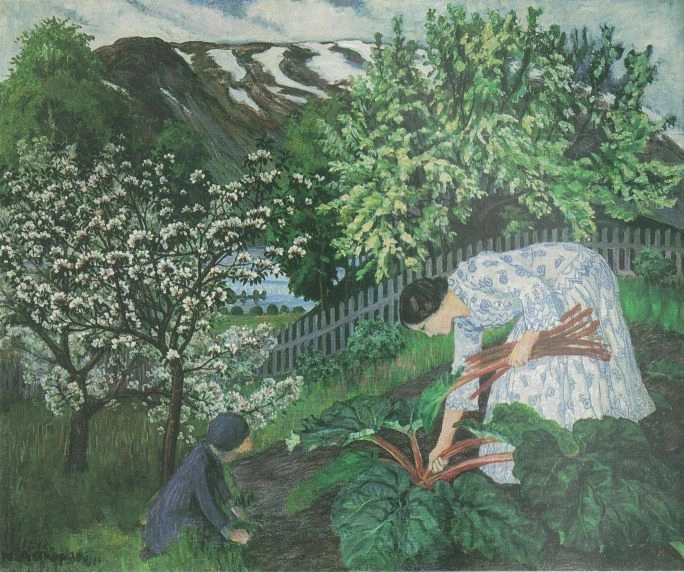
This garden itself was his work. He pruned trees into troll-like shapes, created spaces called "grottos" inspired by Japanese and English gardens, and, fixing his viewpoint within the garden, painted the scenery visible from there in some twenty-two paintings. His 1925 "Spring in Jølster" depicts the Sandalstrand farm he built with his wife. "Rhubarb" depicts a scene of picking rhubarb, and "Spring Night in the Garden" depicts flowerbeds of black soil surrounded by trees, with the lake spreading out behind them. Here, life, farm work, and painting feel inseparably bound together.[4,6]
Once more, before you go
The painter returned home carrying the techniques he had learned in Paris, and went on painting the garden he had built himself and the nights he could not sleep through. The Midsummer fire, the woodcuts learned from Hokusai, and the garden — these three are your keys to knowing Astrup. Whatever painting you meet in the galleries, its roots most likely run back to this one small valley. The flicker of the bonfire’s flames, the texture of colour pressed by hand into a woodblock print — surely these are things that can only be confirmed before the actual works.