Artist
Sandro Botticelli
Italy, 1445–1510
Works (13)

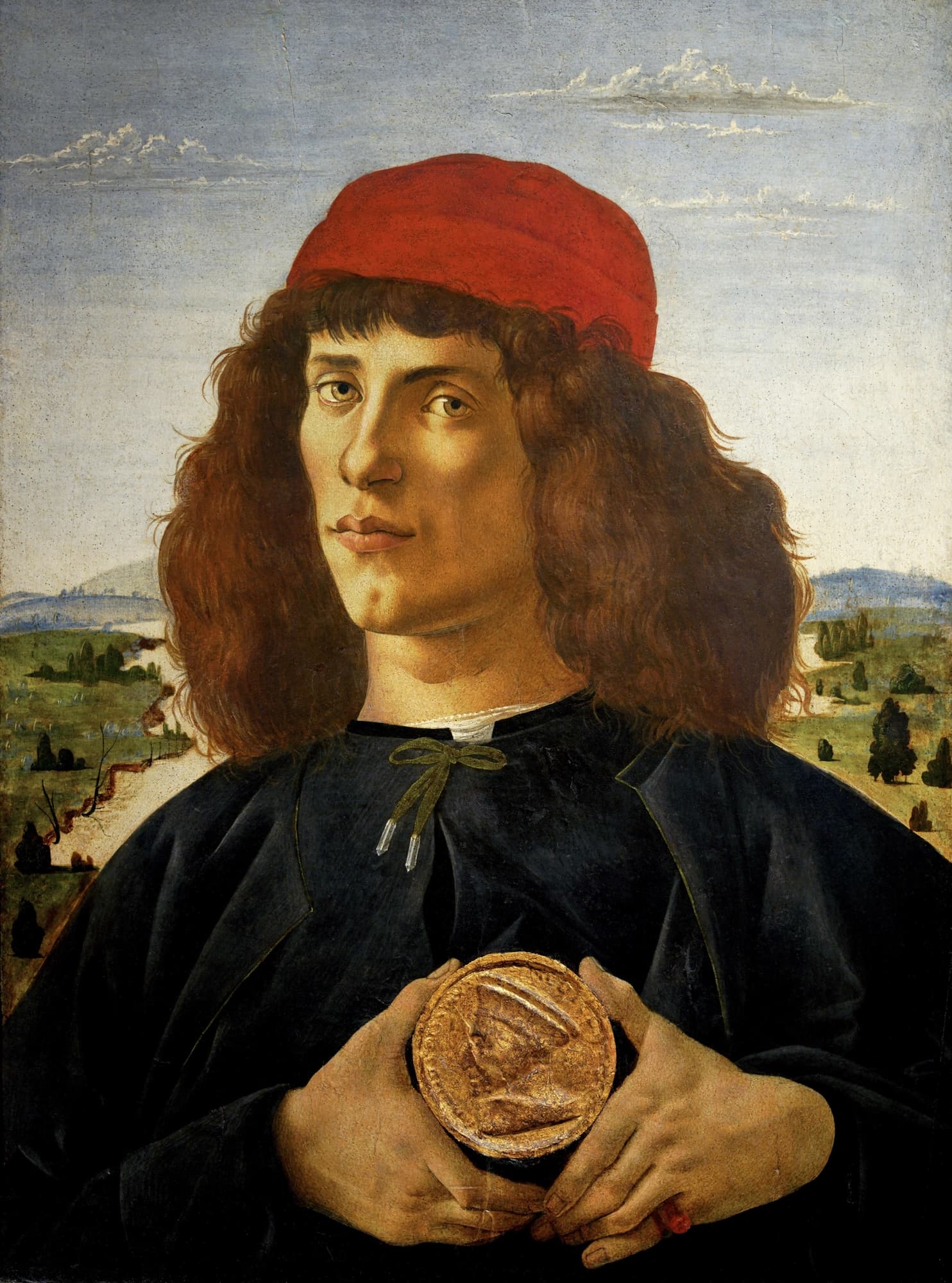
Portrait of a Man with a Medal of Cosimo the Elder
1474
Fortitude
1470
The Discovery of the Body of Holofernes
1470

Madonna of the Book
1480
Madonna of the Magnificat
1483
Calumny of Apelles
1497
Madonna of the Pomegranate
1487

Pallas and the Centaur
1482

The Mystical Nativity
1500

Adoration of the Magi
1475

Venus and Mars
1485

Primavera
1480

The Birth of Venus
1485
Timeline
Apprenticed to Fra Filippo Lippi around 1461, Botticelli learned to create melancholic figures with clear contours, a style that fundamentally shaped his early artistic development.1
The nickname Botticelli, meaning 'little barrel', derived from his brother's nickname. Born Alessandro di Mariano Filipepi, he had fully adopted the name Sandro Botticelli by 1470.1
In 1472, he took on Filippino Lippi, his former master's son, as his first apprentice. Their early works are often difficult to distinguish due to their close collaboration.1
Supported by powerful patrons like the Vespucci family, allies of the Medici, his 1475 'Adoration of the Magi' featured Medici portraits and significantly boosted his reputation.1
The 1480s were his most successful decade, during which he completed his large mythological masterpieces and many of his most famous Madonna paintings.1
Botticelli lived almost his entire life in the Ognissanti neighborhood of Florence, with rare exceptions including his work on the Sistine Chapel in Rome between 1481 and 1482.1
By the 1490s, his style became more personal and mannered, moving away from the High Renaissance style of Leonardo da Vinci toward a more 'archaic' or Gothic direction.1
His reputation suffered until the late 19th century when the Pre-Raphaelites rediscovered his work, leading to his modern status as a master of the Italian Renaissance.1