Artist
Rogier van der Weyden
1390–1464
Works (16)
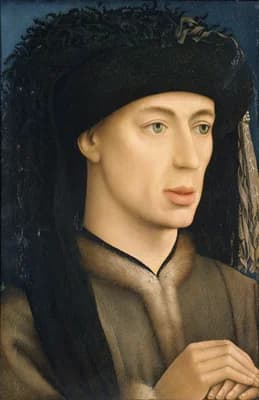
ある男の肖像
1430

The Seven Sacraments
1440

Crucifixion Triptych
1440
Durán Madonna
1435

Braque Triptych
1452

The Altar of St. John
1455

Diptych of Philip de Croÿ with The Virgin and Child
1460

Miraflores Altarpiece
1443
Portrait of Francesco d'Este
1460

Jean Wauquelin presenting his 'Chroniques de Hainaut' to Philip the Good
1447
Virgin and Child Enthroned
1430

Crucifixion Diptych
1460

The Descent from the Cross
1440

Portrait of a Lady
1460

The Magdalen Reading
1435
Saint Luke Drawing the Virgin
1490
Timeline
Born in Tournai around 1399, he was initially known by his French name but adopted the Dutch 'Rogier van der Weyden' after moving to Brussels, where he became the official city painter.1
He apprenticed under Robert Campin, a pioneer of Early Netherlandish painting, alongside Jacques Daret, which formed the basis for his sophisticated iconography and compositional skills.1
The 'Descent from the Cross' is his best-authenticated masterpiece. Combining meticulous detail with dramatic emotion, it is considered one of the most influential paintings of the 15th century.1
In 1436, he was appointed as the official painter of Brussels, a prestigious post that involved commissions for large-scale justice scenes for the City Hall in the Burgundian court's key residence.1
He likely made a pilgrimage to Rome in 1450, connecting with Italian artists and patrons. His international reputation led him to train court painters from Milan in his Brussels workshop.1
He achieved high social status and was known for his philanthropy, serving as a hospital administrator. Humanist scholars praised him as the 'most noble' of painters.1