Artist
Gustave Courbet
France, 1819–1877
Works (26)

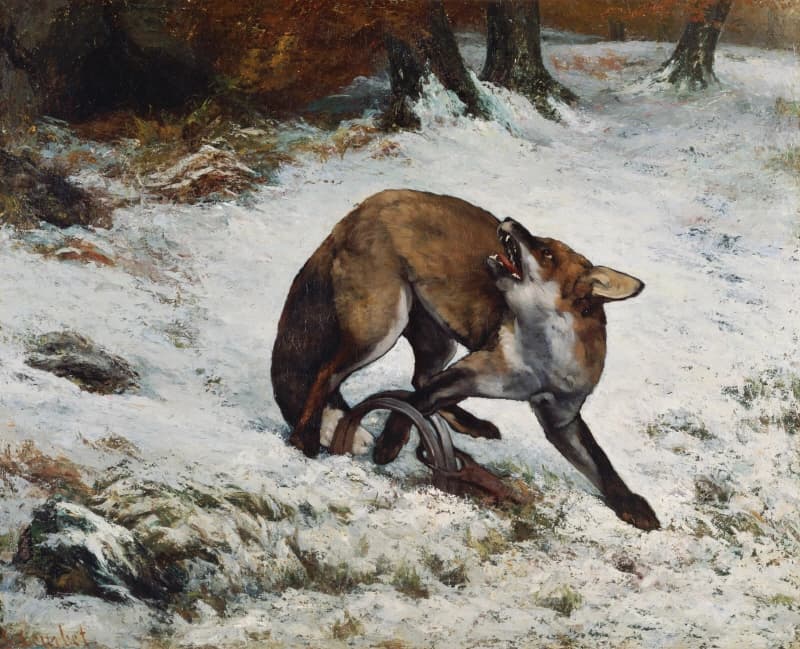
罠にかかった狐
1860
The Meeting, or Bonjour, Monsieur Courbet!
1854

A Burial at Ornans
1841

The Stone Breakers
1850

L'Origine du monde
1866

The Sea
1865 or later

The Source
1862

A Brook in a Clearing (possibly "Brook, Valley of Fontcouverte; Study")
probably 1862

River and Rocks
1873–77

Portrait of a Man
probably ca. 1862

View of Ornans
probably mid-1850s

Marine: The Waterspout
1870

After the Hunt
ca. 1859

A Brook in the Forest
ca. 1868–77

Louis Gueymard (1822–1880) as Robert le Diable
1857

The Calm Sea
1869

Jo, La Belle Irlandaise
1865–66

The Source of the Loue
1864

The Hidden Brook
ca. 1873–77

The Woman in the Waves
1868

Madame Frederic Breyer (Fanny Hélène Van Bruyssel, 1830–1894)
1858

Hunting Dogs with Dead Hare
1857

Study of a Nude Man
early 1840s

Monsieur Suisse
1861

The Deer
ca. 1865

Spring Flowers
ca. 1855–60
Timeline
Born in 1819 in Ornans, France, to an anti-monarchical family. His native province and family remained lifelong sources of inspiration for his art.1
Arrived in Paris in 1839 but rejected academic training, preferring to develop his style by studying and copying Spanish and Flemish masters in the Louvre.1
Initially influenced by Romanticism, he abandoned literary themes by the mid-1840s to focus on observed reality, becoming a leader of the Realism movement.1
Trips to the Netherlands in 1846–47 strengthened his belief in portraying everyday life, inspired by Dutch masters like Rembrandt and Hals.1
In 'A Burial at Ornans', he used a massive scale traditionally reserved for royalty to depict a common funeral, upsetting academic hierarchies of subject matter.1
Imprisoned for six months in 1871 for his involvement with the Paris Commune, he later lived in exile in Switzerland from 1873 until his death.1