

Artist
Eugène Delacroix
France, 1798–1863
Works (16)
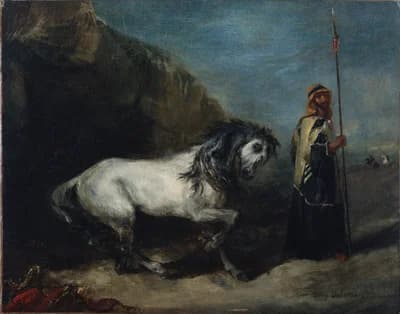
馬を連れたシリアのアラブ人
1829
The Execution of the Doge Marino Faliero
1826
The Barque of Dante
1822
Last Words of the Emperor Marcus Aurelius
1844

The Massacre at Chios
1824

The Women of Algiers
1834

Liberty Leading the People
1830

George Sand's Garden at Nohant
ca. 1842–43

Basket of Flowers
1848–49

Rebecca and the Wounded Ivanhoe
1823

Ovid among the Scythians
1862

Figures in Medieval Dress including a Bishop (recto); Figures in a Landscape (verso)
ca. 1827–29

Hamlet and His Mother
1849

Male Academy Figure: Half-Length, Side View
ca. 1818–20

The Natchez
1823–24 and 1835

Christ Asleep during the Tempest
ca. 1853
Timeline
Considered the spiritual heir to Théodore Géricault, Delacroix was profoundly impacted by 'The Raft of the Medusa.' This influence was a major driving force behind his first masterpiece, 'The Barque of Dante.'1
'The Barque of Dante,' exhibited at the 1822 Salon, faced intense public criticism yet was purchased by the state. This pattern of opposing criticism and official support would persist throughout his life.1
'The Massacre at Chios,' depicting the Greek War of Independence, caused controversy by showing despair rather than heroism. Critics called it a 'massacre of art,' yet it became a landmark of Romanticism.1
After encountering John Constable's work during an 1825 trip to England, Delacroix revolutionized his use of color, adding free brushstrokes and vibrant tones to his landscapes and skies.1
In 'The Death of Sardanapalus,' Delacroix depicted an exotic, tragic scene with vivid colors. Inspired by Byron's play, this masterpiece encapsulates his Romantic passion and themes of violence.1
Instead of visiting classical Greek or Roman ruins, Delacroix traveled to North Africa, finding new inspiration in 'exoticism.' This experience brought even greater color and vitality to his work.1