Artist
Artemisia Gentileschi
Works (9)

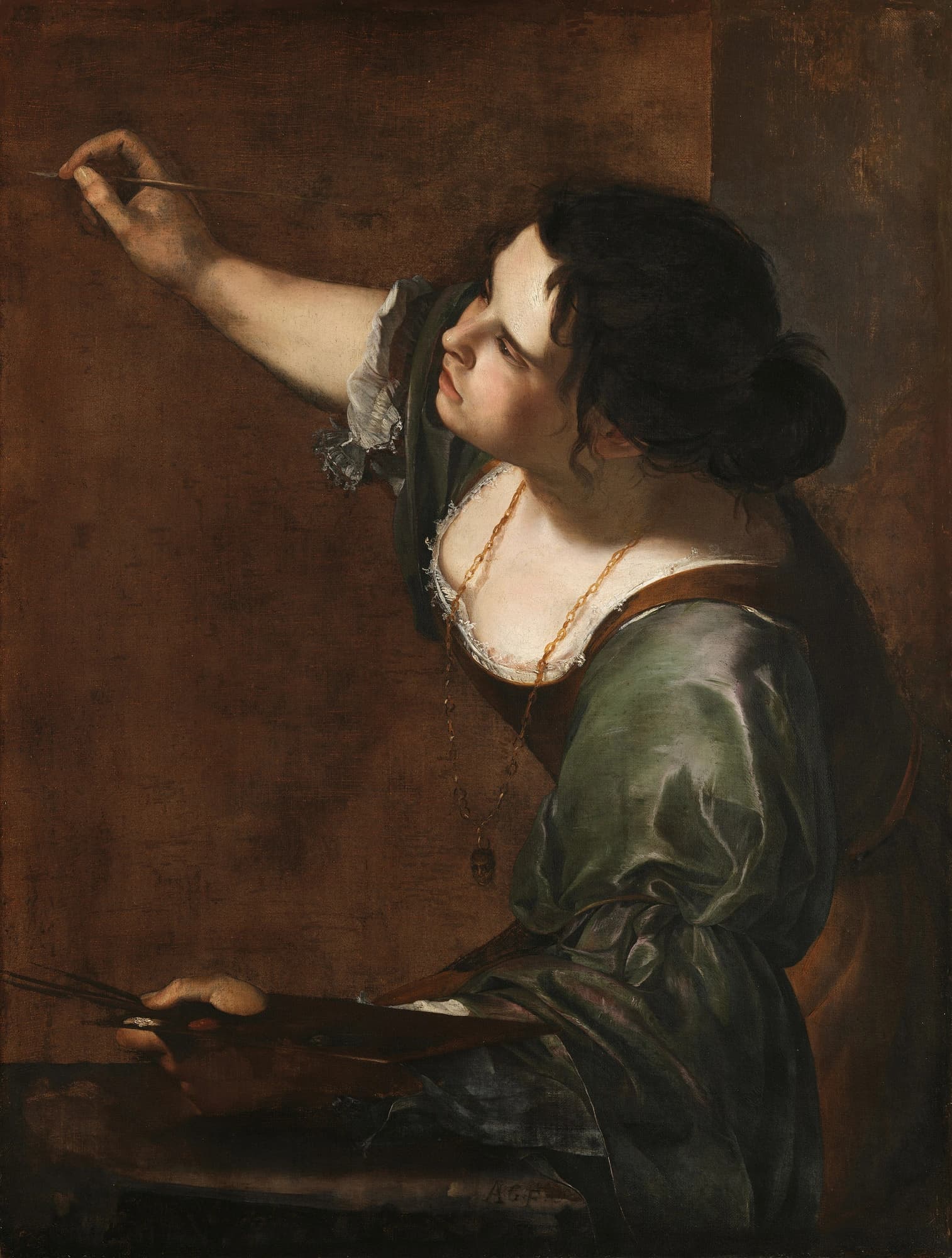
Self-Portrait as the Allegory of Painting
1638

Self-Portrait as a Female Martyr
1615

Judith Beheading Holofernes
1620

Susanna and the Elders
1610
Conversion of the Magdalene
1620
Esther before Ahasuerus
1629

Self-Portrait as a Lute Player
1616

Judith and Maidservant with Head of Holofernes
1623

Judith Slaying Holofernes
1613
Timeline
Born in Rome in 1593 as the eldest daughter of painter Orazio Gentileschi. She trained in her father's workshop and began professional work at 15, showing talent that surpassed her brothers.1
Initially following her father's Caravaggesque style, Artemisia pursued a unique realism that was highly naturalistic and dramatic, contrasting with her father's more idealized approach.1
In Florence, she enjoyed the patronage of the Medici family and succeeded as a court painter. She built a solid reputation and international clientele at a time when female independence was rare.1
At 18, she was raped by her father's colleague Tassi and tortured during the trial to verify her testimony. This trauma is often seen as the backdrop for her powerful and sometimes violent female figures.1
In her masterpiece 'Judith Slaying Holofernes,' she depicts female strength and vengeful passion with intense realism, sublimating her personal trauma into a powerful work of art.1
During her Florentine period, she became the first woman admitted to the Accademia delle Arti del Disegno, an extraordinary achievement that established her social and professional status.1
From 1638 to 1642, she was invited to the court of King Charles I of England, working in London alongside her father Orazio and showcasing her exceptional skills on an international stage.1
Based in Naples in her later years, records show she worked until around 1654. Long forgotten, she has been re-evaluated since the 20th century as a leading master of the Baroque era.1