Artist
Amrita Sher-Gil


Timeline
Born in 1913 to a Punjabi father and a Hungarian mother, her multicultural background formed the basis of her unique artistic sensibility, blending Western and Eastern aesthetics.1
Her uncle Ervin Baktay, an Indologist, recognized her talent early and provided an academic foundation. Her childhood experience painting household servants foreshadowed her eventual return to India.1
Her Paris-era self-portraits are characterized by introspective and narcissistic moods. A professor noted that her rich sense of color would find its true atmosphere in the East rather than the West.1
During her studies in Paris, she mastered Post-Impressionism, influenced by Cézanne and Modigliani. Her 1932 work 'Young Girls' made her the first Asian elected as an Associate of the Grand Salon.1
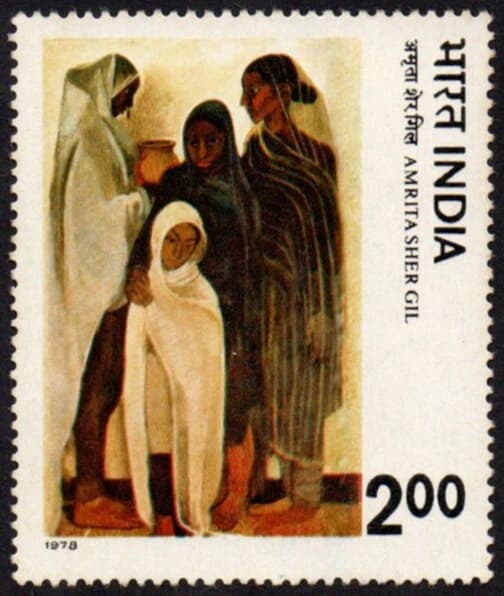
After success in Paris, she returned to India in 1934, convinced her destiny lay there. She found a mission to depict Indian daily life and poverty with empathy using Western techniques.1


After returning to India, she was deeply moved by the Ajanta cave paintings and Mughal traditions, marking a decisive turning point that led her style back toward classical Indian art.1
Following a 1937 trip to South India, she produced a trilogy including 'Bride's Toilet.' These works, blending vivid colors with Indian subjects, are landmarks of modern Indian art.1
She stated, 'Europe belongs to Picasso... India belongs only to me,' reflecting her pride and passion to establish a uniquely Indian modern art rivaling Western masters.1
Known for her bohemian lifestyle, she married her cousin Viktor Egan but had numerous affairs with both men and women. These passionate relationships added emotional depth to her work.1
Though she died at 28, her legacy rivals the pioneers of the Bengal Renaissance. While underappreciated in life, she is now one of India's most expensive and celebrated female painters.1