Artist
Jean-Honoré Fragonard
Works (3)
Timeline
Born in Grasse as the son of a glover, he moved to Paris at age six. Late in life, he returned to his hometown to escape the Revolution, decorating his cousin's house.1
He studied under François Boucher and mastered his style so completely that he was entrusted with executing replicas of his master's paintings.1
In 1752, he won the Prix de Rome. Before departing for Italy, he spent three years studying under Charles-André van Loo to further refine his academic skills.1
During his stay in Rome, he befriended Hubert Robert and toured Italy, where the romantic gardens and fountains inspired the dreamlike settings of his later art.1
He learned loose and vigorous brushstrokes from masters like Rubens and Hals, which gave his work a remarkable sense of facility, exuberance, and movement.1
He turned away from history painting toward scenes of love and voluptuousness for private patrons, characterized by tender color and virtuoso brushwork.1
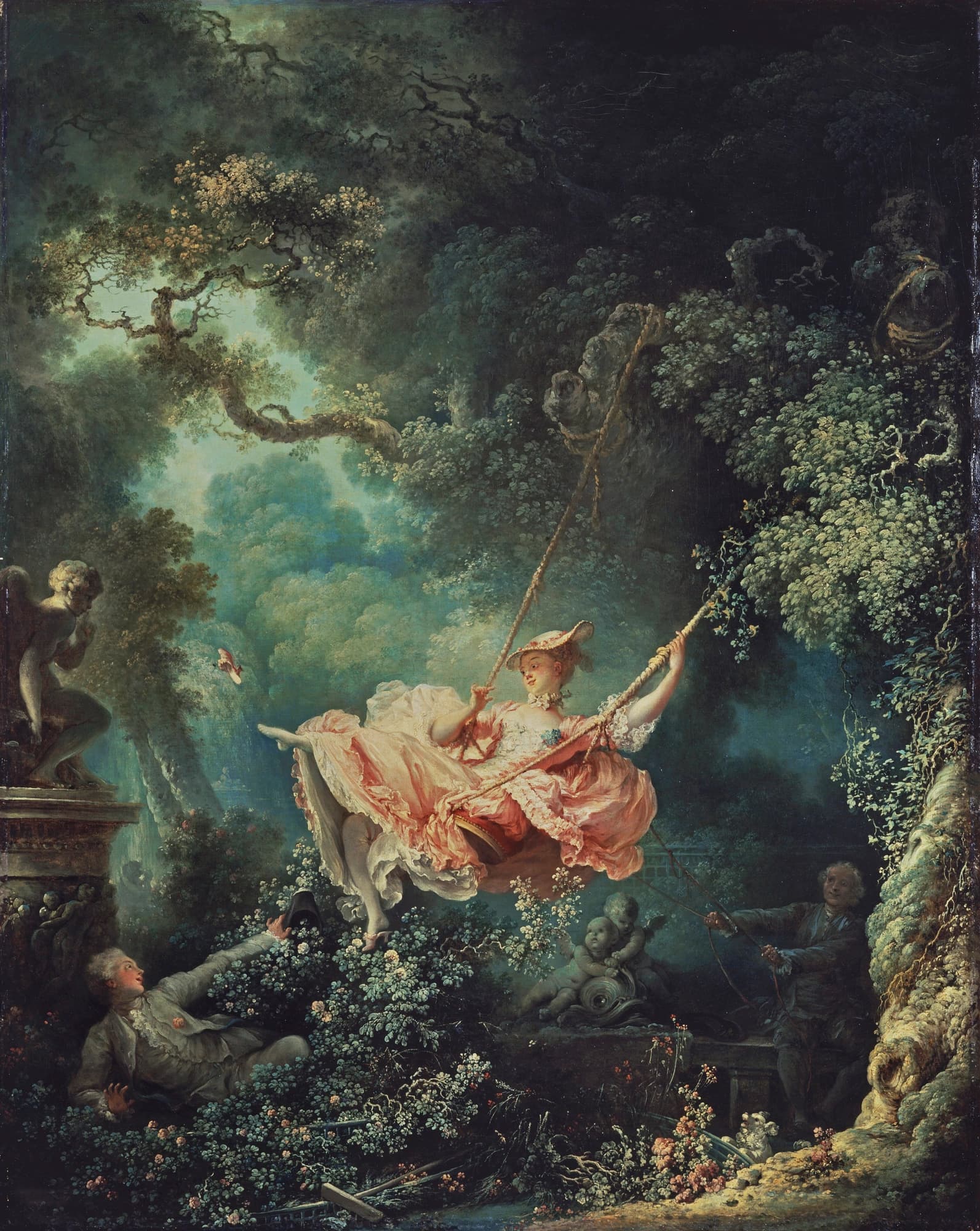
His masterpiece 'The Swing' was commissioned by a nobleman after another artist refused the frivolous subject. Fragonard turned it into a Rococo icon.1

Following a lukewarm response to some of his works, he abandoned the Rococo style to experiment with Neoclassicism, showing his adaptability to changing tastes.1
He took his sister-in-law Marguerite Gérard as a student and assistant, while his son Alexandre-Évariste also became a talented painter and sculptor.1
The French Revolution deprived him of his private patrons, who were guillotined or exiled, forcing the once-popular painter to seek shelter in Grasse.1
His expressive brushstrokes and handling of color had an undoubtable influence on the Impressionists, particularly Renoir and his grand-niece Berthe Morisot.1