Artist
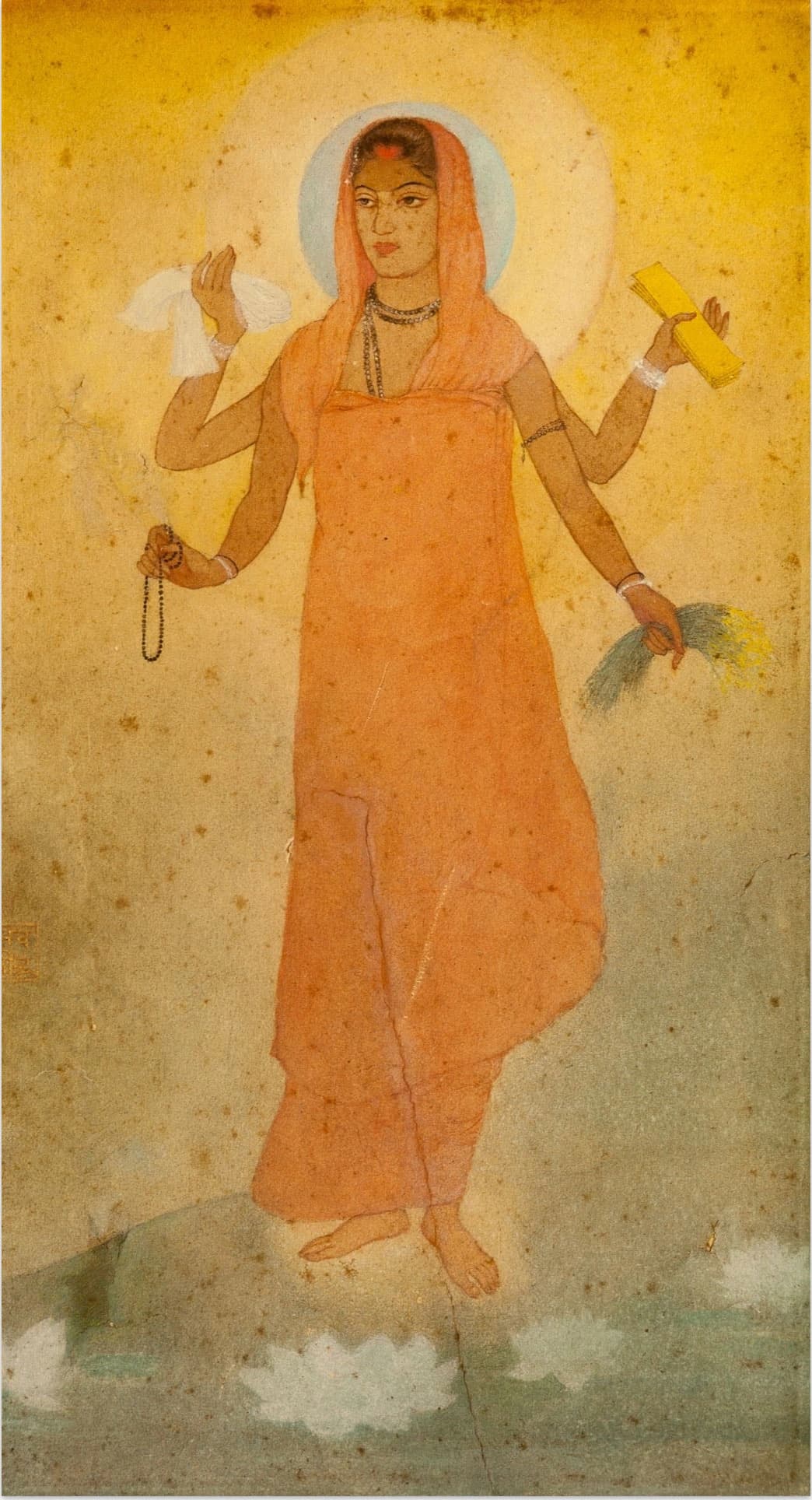
Abanindranath Tagore

Timeline
Born into the distinguished Tagore family in 1871, he was the nephew of poet Rabindranath Tagore. He grew up in a rich artistic environment and later became known as the father of modern Indian painting.1
Initially trained in Western pastels and oils, he later rejected Western realism as 'materialistic.' He advocated for a return to traditional Indian techniques to express the nation's spiritual values.1
Collaborating with E.B. Havell, vice-principal of the Calcutta School of Art, he reformed art education. He modernized Mughal styles to find a new Indian art form independent of Western models.1
He interacted with Japanese figures like Okakura Kakuzo and Yokoyama Taikan. He aimed to build a 'pan-Asian' artistic tradition merging Eastern spirituality, incorporating Japanese techniques into his work.1

In 1907, he founded the Indian Society of Oriental Art and the Bengal School. He practiced 'Swadeshi' values in art, countering British-led education by rooting his work in Indian history and mythology.1
His close friendship with London-based artist William Rothenstein helped lead to his uncle Rabindranath's Nobel Prize and brought international recognition to Abanindranath's own artistic projects.1
The 'Arabian Nights' series, painted in 1930, is one of his finest achievements. He used the stories to depict the cosmopolitan nature of colonial Calcutta from a unique perspective.1
In 1942, he became the Chancellor of Visva Bharati University. He dedicated his later years to Indian education and culture until his death in 1951.1
Most of his works were bequeathed to the Rabindra Bharati Society after his death. Because they remained in storage for years, the full brilliance of his oeuvre has only recently been effectively projected.1