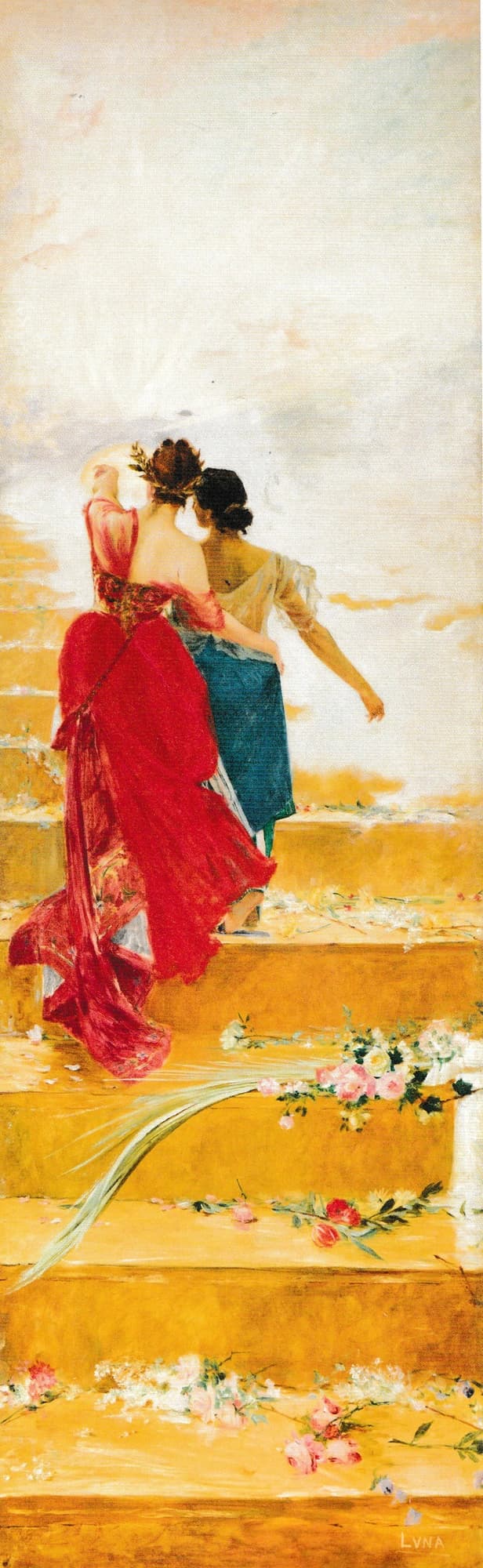
Artist
Juan Luna

Timeline
After moving to Madrid in 1877, Luna traveled to Rome with his mentor Alejo Vera. Exposure to the works of Renaissance masters there formed the foundation of his grand artistic style.1
In 1884, his masterpiece 'Spoliarium' won the gold medal at the Madrid Exposition. This first major achievement for a Filipino artist provided great courage and national identity to his compatriots under colonial rule.1
Despite his gold medal, Luna was denied the Medal of Honor due to racial prejudice. To compensate him, King Alfonso XII personally commissioned 'The Battle of Lepanto' to be displayed in the Spanish Senate.1

Completed in 1886, 'The Blood Compact' depicts the 1565 ritual between a Filipino chieftain and the Spanish governor-general. Created to fulfill his scholarship terms, it is now a historically significant work in Malacañan Palace.1

Around 1891, Luna shifted from classical history painting to social realism. Influenced by Marx, works like 'Les Ignores,' depicting a laborer's funeral, focused on societal ills.1
In 1892, Luna shocked Paris by shooting his wife and mother-in-law. However, he was acquitted on the grounds of temporary insanity, as 'crimes of passion' were often forgiven under the unwritten laws of the time.1

In 2024, Luna's 1884 portrait of Adele della Rocca sold for 31 million pesos at auction. His works continue to maintain extremely high market value and critical acclaim long after his death.1