Artist
José Clemente Orozco

Timeline
Watching the satirical illustrator José Guadalupe Posada work in his shop window on the way to school was Orozco's artistic awakening, sparking his imagination and introduction to the use of color.1
At the age of 21, Orozco lost his left hand in a gunpowder accident while making fireworks. This tragic event profoundly influenced the themes of human suffering and fragility in his later artistic works.1
Orozco was strongly influenced by Dr. Atl's views on Symbolism. He even followed Dr. Atl to Orizaba during the revolutionary turmoil, marking him as a significant spiritual and artistic mentor.1
Witnessing the violence of the Mexican Revolution, including troop massacres and blown-up trains, profoundly affected Orozco, leading him to depict the revolution as a dark tragedy rather than an idealized glory.1
During his mural project at the National Preparatory School, Orozco faced vandalism by conservative students and even destroyed some of his own works to repaint them amidst political conflict.1
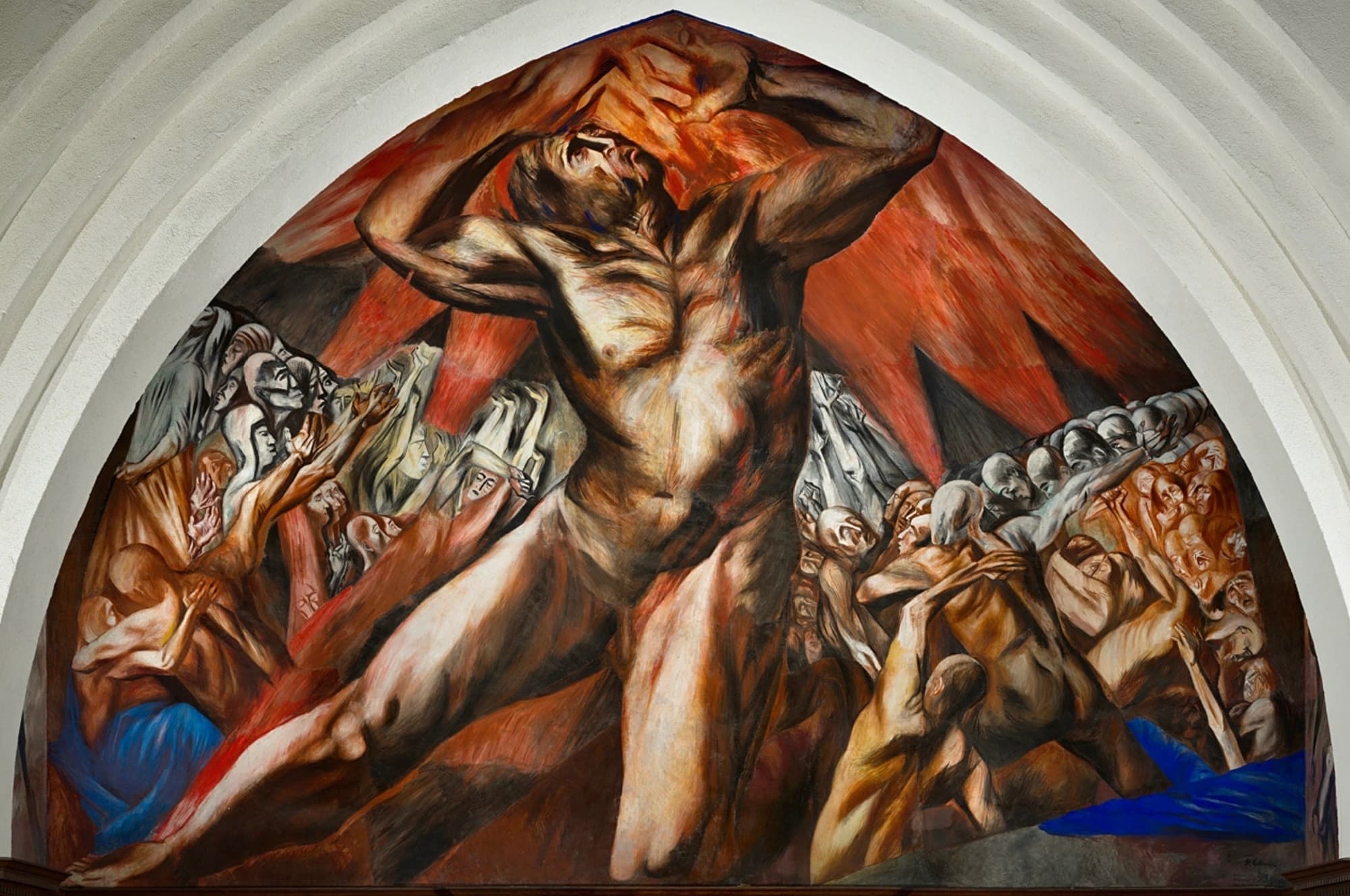
In 1930, Orozco painted 'Prometheus' at Pomona College, the first fresco by a Mexican muralist outside Mexico and considered the first 'modern' fresco in the United States.1
The frescoes at the Hospicio Cabañas in Guadalajara are considered Orozco's masterpiece, representing a pinnacle of the Mexican Mural Renaissance with their powerful execution.1
In 1947, near the end of his life, Orozco illustrated John Steinbeck's book 'The Pearl,' showcasing his sharp observational skills and expressive power in a literary collaboration.1