Menu
美術館展覧会
Utagawa Hiroshige

Artist

Utagawa Hiroshige

Japanese, 1797–1858

Works (50)

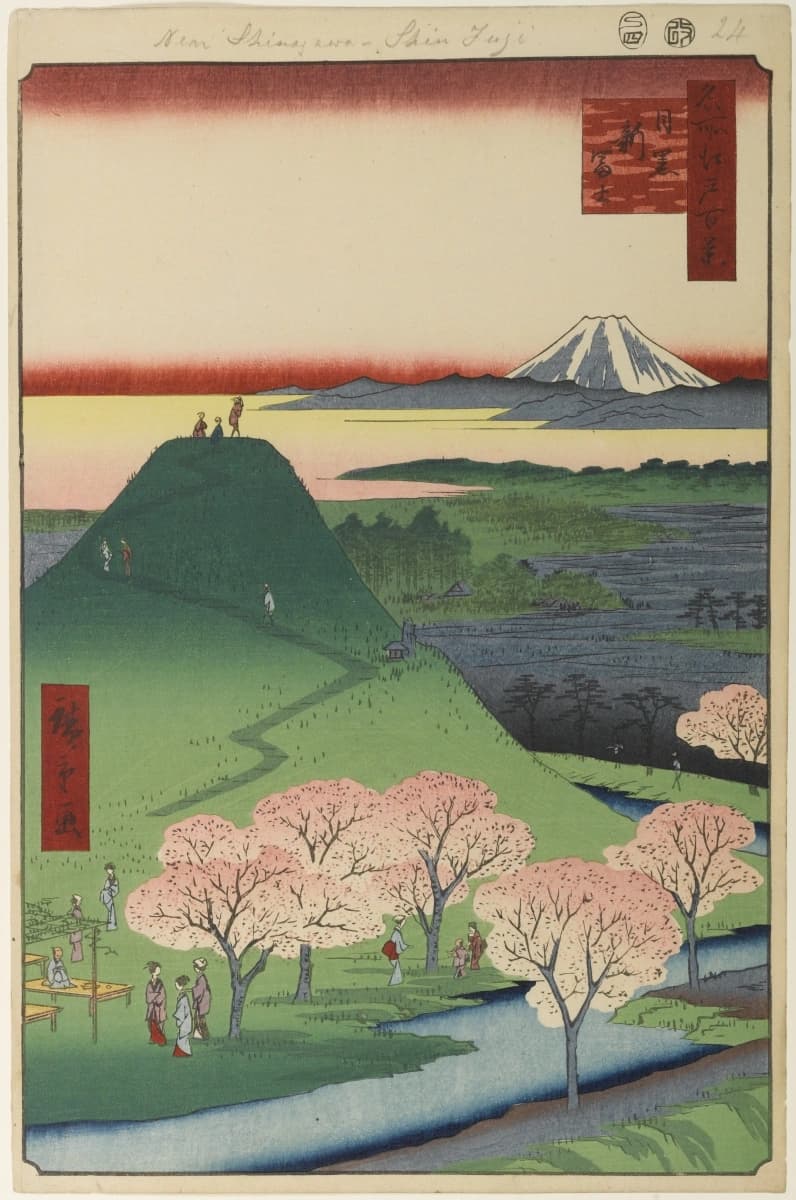
名所江戸百景 目黒新冨士

名所江戸百景 目黒新冨士

Hamamatsu, Toko no Zu

Hamamatsu, Toko no Zu

ca. 1834

Fukuroi; De Chaya

Fukuroi; De Chaya

ca. 1834

Takanawa no Zu

Takanawa no Zu

ca. 1841

Clearing Weather at Awazu (Awazu seiran), from the series Eight Views of Ōmi (Ōmi hakkei)

Clearing Weather at Awazu (Awazu seiran), from the series Eight Views of Ōmi (Ōmi hakkei)

ca. 1834–35

Yushima (Matsu Kane-ya)

Yushima (Matsu Kane-ya)

ca. 1840

Weeping Cherry and Bluebird

Weeping Cherry and Bluebird

ca. 1838

Goyu, from the series "Fifty-three Stations of the Tokaido (Tokaido gojusan tsugi)," also known as the Tokaido with Poem (Kyoka iri Tokaido)

Goyu, from the series "Fifty-three Stations of the Tokaido (Tokaido gojusan tsugi)," also known as the Tokaido with Poem (Kyoka iri Tokaido)

c. 1837/42

Futakawa, from the series "Fifty-three Stations of the Tokaido (Tokaido gojusan tsugi)," also known as the Tokaido with Poem (Kyoka iri Tokaido)

Futakawa, from the series "Fifty-three Stations of the Tokaido (Tokaido gojusan tsugi)," also known as the Tokaido with Poem (Kyoka iri Tokaido)

c. 1837/42

Ishibe: Megawa Village (Ishibe, Megawa no sato), from the series "Fifty-three Stations of the Tokaido (Tokaido gojusan tsugi no uchi)," also known as the Hoeido Tokaido

Ishibe: Megawa Village (Ishibe, Megawa no sato), from the series "Fifty-three Stations of the Tokaido (Tokaido gojusan tsugi no uchi)," also known as the Hoeido Tokaido

c. 1833/34

Autumn Moon over Ishiyama Temple (Ishiyama shugetsu), from the series "Eight Views of Omi (Omi hakkei)"

Autumn Moon over Ishiyama Temple (Ishiyama shugetsu), from the series "Eight Views of Omi (Omi hakkei)"

1857

Futakawa: Sarugababa—No. 34, from the series "Fifty-three Stations of the Tokaido (Tokaido gojusan tsugi)," also known as the Reisho Tokaido

Futakawa: Sarugababa—No. 34, from the series "Fifty-three Stations of the Tokaido (Tokaido gojusan tsugi)," also known as the Reisho Tokaido

c. 1847/52

A Bridge in a Snowy Landscape, from the series "A Collection of Japanese and Chinese Poems for Recitation (Wakan roeishu)"

A Bridge in a Snowy Landscape, from the series "A Collection of Japanese and Chinese Poems for Recitation (Wakan roeishu)"

c. 1842/43

Ryogoku Bridge and the Great Riverbank (Ryogokubashi Okawabata), from the series "One Hundred Famous Views of Edo (Meisho Edo hyakkei)"

Ryogoku Bridge and the Great Riverbank (Ryogokubashi Okawabata), from the series "One Hundred Famous Views of Edo (Meisho Edo hyakkei)"

1856

Moon over Ryogoku Bridge in Summer (Natsu Ryogoku no tsuki), from the series "Famous Places in Edo in the Four Seasons (Shiki Koto meisho)"

Moon over Ryogoku Bridge in Summer (Natsu Ryogoku no tsuki), from the series "Famous Places in Edo in the Four Seasons (Shiki Koto meisho)"

c. 1832/34

Yoshiwara: The Famous Sight of Mount Fuji on the Left (Yoshiwara, meisho hidari Fuji)—No. 15, from the series "Fifty-three Stations of the Tokaido (Tokaido gojusan tsugi)," also known as the Reisho Tokaido

Yoshiwara: The Famous Sight of Mount Fuji on the Left (Yoshiwara, meisho hidari Fuji)—No. 15, from the series "Fifty-three Stations of the Tokaido (Tokaido gojusan tsugi)," also known as the Reisho Tokaido

c. 1847/52

Shirasuka: View of Shiomi Slope (Shirasuka, Shiomizaka no zu), from the series "Fifty-three Stations of the Tokaido (Tokaido gojusan tsugi)," also known as the Tokaido with Poem (Kyoka iri Tokaido)

Shirasuka: View of Shiomi Slope (Shirasuka, Shiomizaka no zu), from the series "Fifty-three Stations of the Tokaido (Tokaido gojusan tsugi)," also known as the Tokaido with Poem (Kyoka iri Tokaido)

c. 1837/42

Sketch for Autumn Moon at Ishiyama Temple (Ishiyama no shugetsu), from the series "Eight Views in Omi Province (Omi hakkei)"

Sketch for Autumn Moon at Ishiyama Temple (Ishiyama no shugetsu), from the series "Eight Views in Omi Province (Omi hakkei)"

c. 1859

Japanese white-eye on flowering branch

Japanese white-eye on flowering branch

1830s–1840s

Akasaka, from the series "Fifty-three Stations of the Tokaido (Tokaido gojusan tsugi)," also known as the Tokaido with Poem (Kyoka iri Tokaido)

Akasaka, from the series "Fifty-three Stations of the Tokaido (Tokaido gojusan tsugi)," also known as the Tokaido with Poem (Kyoka iri Tokaido)

c. 1837/42

Otsu—No. 54, from the series "Fifty-three Stations of the Tokaido (Tokaido gojusan tsugi)," also known as the Reisho Tokaido

Otsu—No. 54, from the series "Fifty-three Stations of the Tokaido (Tokaido gojusan tsugi)," also known as the Reisho Tokaido

c. 1847/52

Okabe: Mount Utsu (Okabe, Utsunoyama)—No. 22, from the series "Fifty-three Stations of the Tokaido (Tokaido gojusan tsugi)," also known as the Reisho Tokaido

Okabe: Mount Utsu (Okabe, Utsunoyama)—No. 22, from the series "Fifty-three Stations of the Tokaido (Tokaido gojusan tsugi)," also known as the Reisho Tokaido

1847–52

Ejiri—No. 19, from the series "Fifty-three Stations of the Tokaido (Tokaido gojusan tsugi)," also known as the Reisho Tokaido

Ejiri—No. 19, from the series "Fifty-three Stations of the Tokaido (Tokaido gojusan tsugi)," also known as the Reisho Tokaido

c. 1847/52

Oystercatchers

Oystercatchers

c. 1833/34

No. 28: Nagakubo, from the series "Sixty-nine Stations of the Kisokaido (Kisokaido rokujukyu tsugi no uchi)"

No. 28: Nagakubo, from the series "Sixty-nine Stations of the Kisokaido (Kisokaido rokujukyu tsugi no uchi)"

c. 1835/38

Satta Peak in Suruga Province (Suruga Satta mine), from the series "Thirty-six Views of Mount Fuji (Fuji sanjurokkei)"

Satta Peak in Suruga Province (Suruga Satta mine), from the series "Thirty-six Views of Mount Fuji (Fuji sanjurokkei)"

1852

Precints of the Akiba Shrine, Ukeji (Ukeji Akiba no keidai), from the series "One Hundred Famous Views of Edo (Meisho Edo hyakkei)"

Precints of the Akiba Shrine, Ukeji (Ukeji Akiba no keidai), from the series "One Hundred Famous Views of Edo (Meisho Edo hyakkei)"

1857

Miya: Shichiri Ferry Crossing, Gate to the Atsuta Shrine, and Nezame Village (Miya, Shichiri no watashi, Atsuta no torii, Nezame no sato)—No. 42, from the series "Fifty-three Stations of the Tokaido (Tokaido gojusan tsugi)," also known as the Reisho Tokaido

Miya: Shichiri Ferry Crossing, Gate to the Atsuta Shrine, and Nezame Village (Miya, Shichiri no watashi, Atsuta no torii, Nezame no sato)—No. 42, from the series "Fifty-three Stations of the Tokaido (Tokaido gojusan tsugi)," also known as the Reisho Tokaido

c. 1847/52

Mishima—No. 12, from the series "Fifty-three Stations of the Tokaido (Tokaido gojusan tsugi)," also known as the Reisho Tokaido

Mishima—No. 12, from the series "Fifty-three Stations of the Tokaido (Tokaido gojusan tsugi)," also known as the Reisho Tokaido

c. 1847/52

Bingo Province: Kannon Temple at Abuto (Bingo, Abuto, Kannondo), from the series "Famous Places in the Sixty-odd Provinces (Rokujuyoshu meisho zue)"

Bingo Province: Kannon Temple at Abuto (Bingo, Abuto, Kannondo), from the series "Famous Places in the Sixty-odd Provinces (Rokujuyoshu meisho zue)"

1853

Kanbara, from the series "Fifty-three Stations of the Tokaido (Tokaido gojusan tsugi)," also known as the Tokaido with Poem (Kyoka iri Tokaido)

Kanbara, from the series "Fifty-three Stations of the Tokaido (Tokaido gojusan tsugi)," also known as the Tokaido with Poem (Kyoka iri Tokaido)

c. 1837/42

Kuwana: Ferryboat at Shichiri Crossing (Kuwana, Shichiri no watashibune)—No. 43, from the series "Fifty-three Stations of the Tokaido (Tokaido gojusan tsugi)," also known as the Reisho Tokaido

Kuwana: Ferryboat at Shichiri Crossing (Kuwana, Shichiri no watashibune)—No. 43, from the series "Fifty-three Stations of the Tokaido (Tokaido gojusan tsugi)," also known as the Reisho Tokaido

c. 1847/52

Chiryu, from the series "Fifty-three Stations of the Tokaido (Tokaido gojusan tsugi)," also known as the Tokaido with Poem (Kyoka iri Tokaido)

Chiryu, from the series "Fifty-three Stations of the Tokaido (Tokaido gojusan tsugi)," also known as the Tokaido with Poem (Kyoka iri Tokaido)

c. 1837/42

No. 56: Mieji, from the series "Sixty-nine Stations of the Kisokaido (Kisokaido rokujukyu tsugi no uchi)"

No. 56: Mieji, from the series "Sixty-nine Stations of the Kisokaido (Kisokaido rokujukyu tsugi no uchi)"

c. 1835/38

Hodogaya: Katabira River and Katabira Brige (Hodogaya, Katabiragawa Katabirabashi)—No. 5, from the series "Fifty-three Stations of the Tokaido (Tokaido gojusan tsugi)," also known as the Reisho Tokaido

Hodogaya: Katabira River and Katabira Brige (Hodogaya, Katabiragawa Katabirabashi)—No. 5, from the series "Fifty-three Stations of the Tokaido (Tokaido gojusan tsugi)," also known as the Reisho Tokaido

c. 1847/52

Asakusa Rice Fields and Torinomachi Festival (Asakusa tanbo Torinomachi mode), from the series "One Hundred Famous Views of Edo (Meisho Edo hyakkei)"

Asakusa Rice Fields and Torinomachi Festival (Asakusa tanbo Torinomachi mode), from the series "One Hundred Famous Views of Edo (Meisho Edo hyakkei)"

1857

Macaw on a pine branch

Macaw on a pine branch

c. 1835

Oumayagashi, from the series "One Hundred Famous Views of Edo (Meisho Edo hyakkei)"

Oumayagashi, from the series "One Hundred Famous Views of Edo (Meisho Edo hyakkei)"

1857

Shirasuka: Shiomi Slope,no. 33 from the series Fifty-Three Stations of the Tokaido (Tōkaidō gojūsan tsugi)

Shirasuka: Shiomi Slope,no. 33 from the series Fifty-Three Stations of the Tokaido (Tōkaidō gojūsan tsugi)

1847-52

Kanbara: Evening Snow (Kanbara, yoru no yuki), from the series "Fifty-three Stations of the Tokaido (Tokaido gojusan tsugi no uchi)," also known as the Hoeido Tokaido

Kanbara: Evening Snow (Kanbara, yoru no yuki), from the series "Fifty-three Stations of the Tokaido (Tokaido gojusan tsugi no uchi)," also known as the Hoeido Tokaido

c. 1833/34

Snow at Benzaiten Shrine in Inokashira Pond (Inokashira no ike Benzaiten no yashiro yuki no kei), from the series "Snow, Moon, and Flowers at Famous Places (Meisho setsugekka)"

Snow at Benzaiten Shrine in Inokashira Pond (Inokashira no ike Benzaiten no yashiro yuki no kei), from the series "Snow, Moon, and Flowers at Famous Places (Meisho setsugekka)"

c. 1844/45

No. 32: Seba, from the series "Sixty-nine Stations of the Kisokaido (Kisokaido rokujukyu tsugi no uchi)"

No. 32: Seba, from the series "Sixty-nine Stations of the Kisokaido (Kisokaido rokujukyu tsugi no uchi)"

c. 1835/38

No. 37: Miyanokoshi, from the series "Sixty-nine Stations of the Kisokaido (Kisokaido rokujukyu tsugi no uchi)"

No. 37: Miyanokoshi, from the series "Sixty-nine Stations of the Kisokaido (Kisokaido rokujukyu tsugi no uchi)"

c. 1835/38

Maisaka: The Ferry at Imagiri (Maisaka, Imagiri funawatashi), from the series "Fifty-three Stations of the Tokaido (Tokaido gojusan tsugi)," also known as the Tokaido with Poem (Kyoka iri Tokaido)

Maisaka: The Ferry at Imagiri (Maisaka, Imagiri funawatashi), from the series "Fifty-three Stations of the Tokaido (Tokaido gojusan tsugi)," also known as the Tokaido with Poem (Kyoka iri Tokaido)

c. 1837/42

Arai, from the series "Fifty-three Stations of the Tokaido (Tokaido gojusan tsugi)," also known as the Tokaido with Poem (Kyoka iri Tokaido)

Arai, from the series "Fifty-three Stations of the Tokaido (Tokaido gojusan tsugi)," also known as the Tokaido with Poem (Kyoka iri Tokaido)

c. 1837/42

Mishima: Morning Mist (Mishima, asagiri), from the series "Fifty-three Stations of the Tokaido Road (Tokaido gojusan tsugi no uchi)," also known as the Hoeido Tokaido

Mishima: Morning Mist (Mishima, asagiri), from the series "Fifty-three Stations of the Tokaido Road (Tokaido gojusan tsugi no uchi)," also known as the Hoeido Tokaido

c. 1833/34

Mitsuke: Ferries Crossing the Tenryu River (Mitsuke, Tenryugawa funawatashi), from the series "Fifty-three Stations of the Tokaido (Tokaido gojusan tsugi)," also known as the Tokaido with Poem (Kyoka iri Tokaido)

Mitsuke: Ferries Crossing the Tenryu River (Mitsuke, Tenryugawa funawatashi), from the series "Fifty-three Stations of the Tokaido (Tokaido gojusan tsugi)," also known as the Tokaido with Poem (Kyoka iri Tokaido)

c. 1837/42

Hamamatsu, from the series "Fifty-three Stations of the Tokaido (Tokaido gojusan tsugi)," also known as the Tokaido with Poem (Kyoka iri Tokaido)

Hamamatsu, from the series "Fifty-three Stations of the Tokaido (Tokaido gojusan tsugi)," also known as the Tokaido with Poem (Kyoka iri Tokaido)

c. 1837/42

Snow at Akabane Bridge in Shiba (Shiba Akabane no yuki), from the series "Famous Places in the Eastern Capital (Toto meisho)"

Snow at Akabane Bridge in Shiba (Shiba Akabane no yuki), from the series "Famous Places in the Eastern Capital (Toto meisho)"

c. 1843/47

The Sumida River in Winter Snow (Fuyu Sumidagawa no yuki), from the series "Famous Places in Edo in the Four Seasons (Shiki Koto meisho)"

The Sumida River in Winter Snow (Fuyu Sumidagawa no yuki), from the series "Famous Places in Edo in the Four Seasons (Shiki Koto meisho)"

1834/35

Timeline

1797

歌川広重は1797年に誕生し、1858年に没するまで活動した、江戸時代後期を代表する浮世絵師である。1

Utagawa Hiroshige was born in 1797 in the Yayosu Quay area of Edo.2

江戸の定火消しである安藤家に生まれ、家督を継いだ後に浮世絵師へと転身した。本名は安藤重右衛門であり、幼少期から絵心に優れていた。3

1809

FebAfter losing his mother and father in succession in 1809, Utagawa Hiroshige took over the duties of a fire warden at the age of twelve.4

1811

15歳の時に歌川豊広に入門し、翌年には師の名と自らの名から一文字ずつ取った「歌川広重」の画号を授かり、絵師としてのキャリアを歩み始めた。3

1818

Utagawa Hiroshige debuted under the art name 'Ichiyūsai' around 1818, marking the beginning of his career as a ukiyo-e artist.4

1828

当初は役者絵や美人画を描いていたが、1828年に師の豊広が没したことをきっかけとして、以降は風景画を活動の主軸に据えるようになった。3

1832

浮世絵の師である豊広だけでなく、大岡雲峰に師事して南画を学ぶなど、多様な技法を習得することで自身の芸術性を深めていった。3

Moon over Ryogoku Bridge in Summer (Natsu Ryogoku no tsuki), from the series "Famous Places in Edo in the Four Seasons (Shiki Koto meisho)"
1833

1833年から発表された「東海道五十三次」は、遠近法を用いた立体的な描写が当時の人々に高く評価され、風景画家としての地位を不動のものとした。3

Ishibe: Megawa Village (Ishibe, Megawa no sato), from the series "Fifty-three Stations of the Tokaido (Tokaido gojusan tsugi no uchi)," also known as the Hoeido Tokaido
Oystercatchers
Kanbara: Evening Snow (Kanbara, yoru no yuki), from the series "Fifty-three Stations of the Tokaido (Tokaido gojusan tsugi no uchi)," also known as the Hoeido Tokaido
Mishima: Morning Mist (Mishima, asagiri), from the series "Fifty-three Stations of the Tokaido Road (Tokaido gojusan tsugi no uchi)," also known as the Hoeido Tokaido
1850

歌川広重は1850年代に、富士山を題材とした連作である『不二三十六景』および『冨士三十六景』を世に送り出した。5

歌川広重は、先行する浮世絵師である葛飾北斎よりも後の時代に活動し、1850年代に作品を出版した人物である。5

1851

版画のみならず肉筆画でも優れた技量を発揮し、天童藩の依頼で描かれた200点以上の作品群は「天童広重」として広く知られている。3

1854

『名所江戸百景』の制作背景には、安政の大地震からの復興を祈念するという、世直しを意図した側面があったと指摘されている。6

1856

晩年の代表作「名所江戸百景」では、風景を縦長に切り取る斬新な構図を採用し、近景と遠景を巧みに重ねる独自の表現スタイルを確立した。3

『名所江戸百景』は安政三年(1856年)から順次刊行され、当初は100図を目標としていたが、評判を呼び開版の翌年には100図に達した。7

歌川広重は、安政3年(1856年)から安政5年(1858年)にかけて、連作浮世絵の名所絵である『名所江戸百景』を制作した。6

Ryogoku Bridge and the Great Riverbank (Ryogokubashi Okawabata), from the series "One Hundred Famous Views of Edo (Meisho Edo hyakkei)"
1858

1858年に62歳でこの世を去った。死因は当時江戸で猛威を振るっていたコレラへの感染であり、辞世の歌を遺して西方浄土へと旅立った。3

広重は安政五年(1858年)に没するまで『名所江戸百景』の続刊を続けており、本作は彼の最晩年の活動を象徴する作品群となっている。7

1868

Hiroshige's death, coupled with Westernization after the Meiji Restoration in 1868, is seen as the beginning of a rapid decline in the ukiyo-e genre.2

Sources

  1. [1]太田記念美術館 歌川広重「名所江戸百景」展
  2. [2]Hiroshige - Wikipedia
  3. [3]Wikipedia
  4. [4]歌川広重 - Wikipedia
  5. [5]Wikipedia 富士山-信仰の対象と芸術の源泉
  6. [6]Wikipedia 名所江戸百景
  7. [7]静岡市東海道広重美術館 名所江戸百景
  8. [8]Utagawa Hiroshige - Wikipedia, la enciclopedia libre
  9. [9]富士山世界遺産国民会議 富士山 芸術と文化の山