
Artist
Rembrandt van Rijn
Dutch, 1606–1669
Works (38)

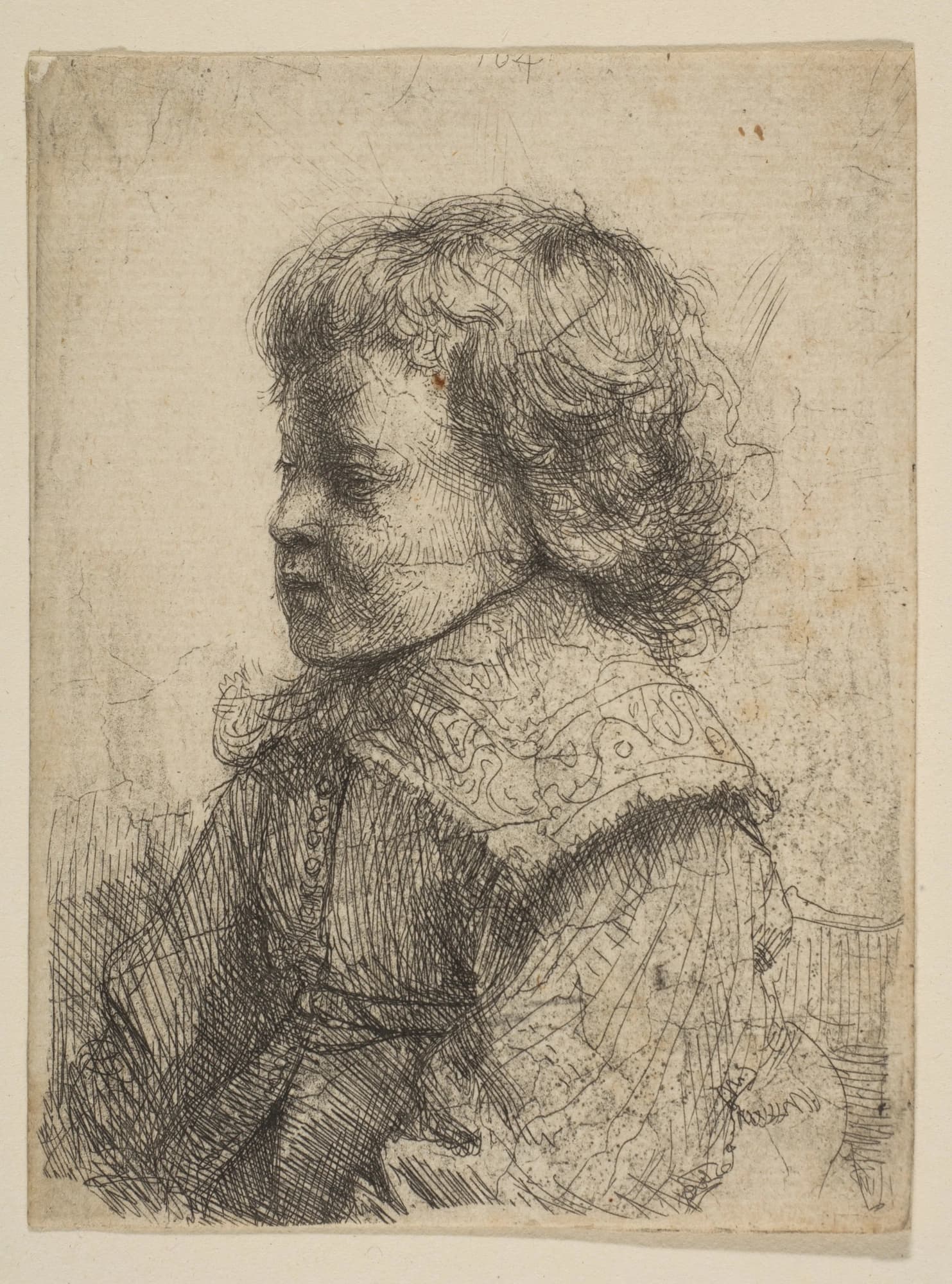
Portrait of a Boy, in Profile
1641

Young Woman with a Red Necklace
ca. 1645

The Three Trees
1643

Self-Portrait with Saskia
1636

The Star of the Kings: A Night Piece
c. 1651

The Raising of Lazarus: The Larger Plate
c. 1632

The Angel Appearing to the Shepherds
1634

The Shell
1650

The Omval
1645

Landscape with Cottages and a Hay Barn: Oblong
1641

Noah's Ark
c. 1660

Reclining Female Nude
1658

The Artist's Mother Seated at a Table, Looking Right: Three Quarter Length
c. 1631

Christ Before Pilate: Large Plate
1635

Jan Lutma, Goldsmith
1656

The Descent from the Cross: Second Plate
1633

The Monk in the Cornfield
c. 1646

The Phoenix or The Statue Overthrown
1658

The Hundred Guilder Print
c. 1648

Kostverloren Castle in Decay
c. 1652

Seated Female Nude
1660/62

Young Woman at an Open Half-Door
1645

Christ Crucified between the Two Thieves: "The Three Crosses"
1653

Self-Portrait Etching at a Window
1648

Adam and Eve
1638

Old Man with a Gold Chain
1631

Three Oriental Figures (Jacob and Laban?)
1641

Man in a Red Cloak

Flora
ca. 1654

Cottage near the Entrance to a Wood
1644

The Last Supper, after Leonardo da Vinci
1634–35

Satire on Art Criticism
1644

Aristotle with a Bust of Homer
1653

Self-Portrait
1660

Portrait of Gerard de Lairesse
1665–67

Man in a Turban
1632

Herman Doomer (ca. 1595–1650)
1640

Portrait of a Man ("The Auctioneer")
probably ca. 1658–62
Timeline
He studied under history painter Pieter Lastman in Amsterdam for six months. This brief apprenticeship had a decisive influence on his later focus on historical and biblical subjects.2
In 1629, Rembrandt was discovered by the statesman Constantijn Huygens, who procured important commissions from the court of The Hague for him.1
In 1629, he was discovered by statesman Constantijn Huygens, which led to important commissions from the Dutch court, marking a major turning point in his early career.2
Rembrandt created "The Anatomy Lesson of Dr. Nicolaes Tulp" in 1632.1
Rembrandt married Saskia van Uylenburgh in 1634.1
In 1639, he moved to a house in Amsterdam's Jewish quarter. He used his Jewish neighbors as models for Old Testament scenes to achieve greater realism and humanity.2
Rembrandt's son Titus, born in 1641, was the only child to survive into adulthood.1
His late-life partner Hendrickje Stoffels supported him as a model and housekeeper. Though condemned by the church for their relationship, she was a vital source of creative inspiration.2
Due to excessive collecting of art and antiques, he declared insolvency in 1656. Despite losing his home and assets, his passion remained, leading to late masterpieces with bold brushwork.2