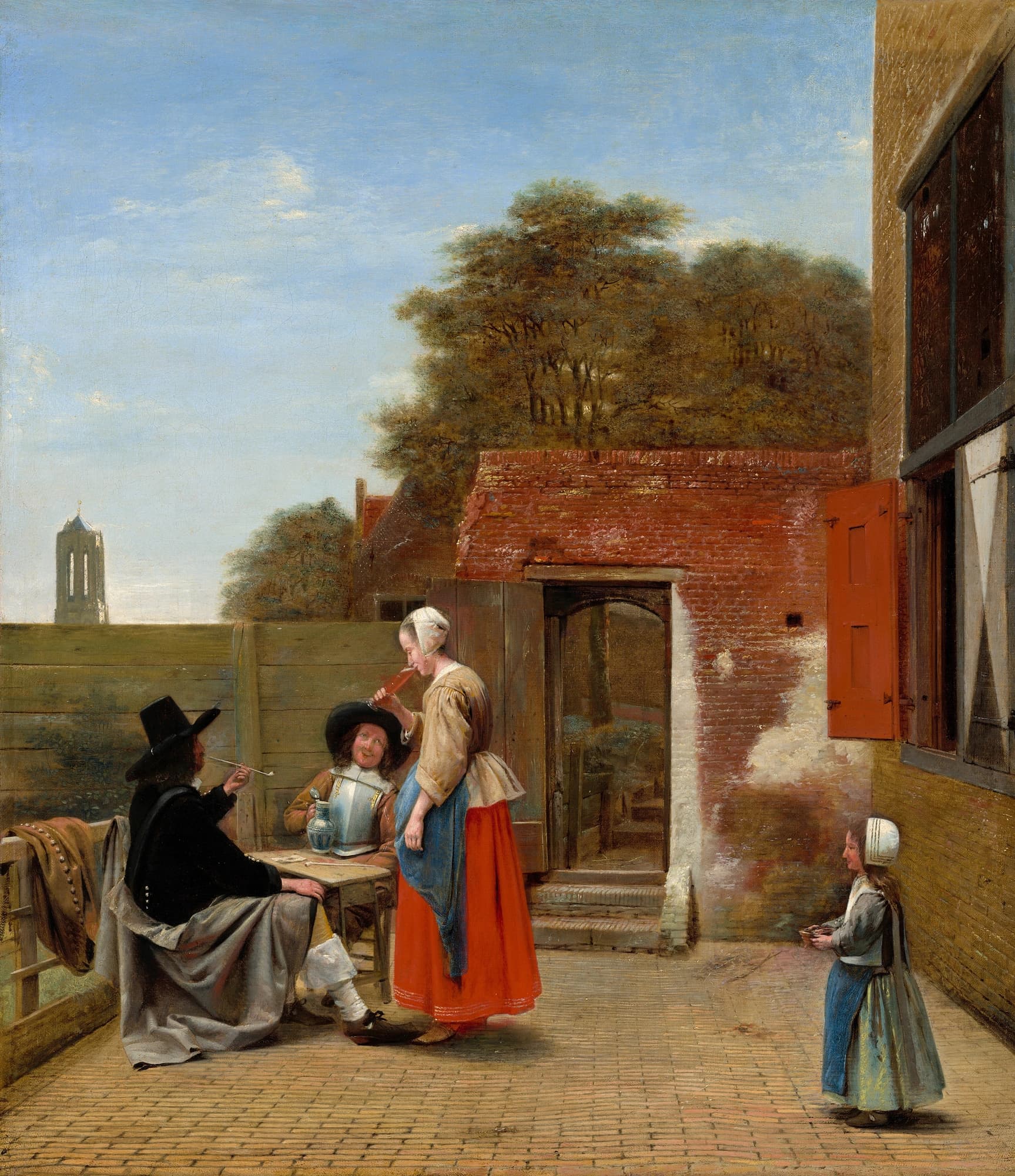
Artist
Pieter de Hooch
Works (3)


Timeline
From around 1650, he worked as a servant and painter for a linen merchant. This experience is believed to have influenced his empathetic portrayal of domestic workers in his later masterpieces.2
From around 1650, Pieter de Hooch worked as a painter and servant for the linen merchant and art collector Justus de la Grange.1
Pieter de Hooch created works such as 'Man Offering a Glass of Wine to a Woman' around 1653.1
Pieter de Hooch married Jannetje van der Burch in 1654 and they had seven children.1
Pieter de Hooch married in Delft in 1654 and fathered seven children.1
Pieter de Hooch married Jannetje van der Burch in 1654 and fathered seven children.1
Pieter de Hooch married in Delft in 1654, started a family, and began depicting domestic scenes from this period.1
While his early works depicted soldiers and peasants, he shifted his focus to quiet domestic scenes around 1654 after his marriage, reaching a peak in his treatment of light and color.2
He joined the Delft Guild of St. Luke in 1655, working alongside Vermeer. The two artists shared themes of quiet domesticity and are thought to have influenced each other's styles.2
Following the Rampjaar in 1672, the Dutch art market declined, potentially impacting Pieter de Hooch's financial situation.1
Following the 'Rampjaar' (Year of Disaster) in 1672, the Dutch art market collapsed. By 1674, his income was so low that he disappeared from tax registers, marking a period of financial hardship.2
For a long time, it was believed he died in a lunatic asylum, but records show that was actually his son. The artist's exact date and circumstances of death remain a mystery.2
Pieter de Hooch was confirmed to be alive after 1679, continuing his activities though many aspects of his later life remain unknown.1
Pieter de Hooch was alive after 1679, but his exact date of death is unknown.3
Pieter de Hooch was active after 1679 and is believed to have died around 1684.3