
Artist
Paul Cézanne
French, 1839–1906
Works (48)
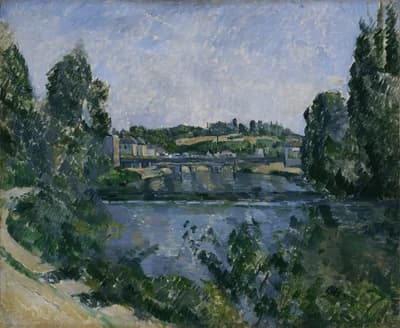
ポントワーズの橋と堰
1881

プロヴァンスの風景
1879-1882年
A Modern Olympia
1873
View of Auvers-sur-Oise
1878

Still Life with Apples and Pears
ca. 1891–92

Antoine Dominique Sauveur Aubert (born 1817), the Artist's Uncle
1866

The Gulf of Marseille Seen from L'Estaque
ca. 1885

The Fishermen (Fantastic Scene)
ca. 1875
Apples
1878–79

Gustave Boyer (b. 1840) in a Straw Hat
1870–71

Antoine Dominique Sauveur Aubert (born 1817), the Artist's Uncle, as a Monk
1866
View of the Domaine Saint-Joseph
late 1880s

Rocks at Fontainebleau
1890s

Still Life with a Ginger Jar and Eggplants
1893–94

Still Life with Jar, Cup, and Apples
ca. 1877

Mercury (after Pigalle)
1885/1895

A Study for the Card Players
1890–92

Figure Studies Around an Engraving of an Ornamental Vase
1870/72

Self-Portrait
1898

Large Bathers
1896–c. 1898

Milk Jug and Spirit Stove
1879–82

Landscape at Auvers
1873

Hercules Resting
1897

L'Estaque
1870/1872

Study for L'Autopsie
1867/69

Sketchbook No. 2 (L'Estaque)
1875–86

Road in Provence
c. 1885

Bathers
published 1897

Academic Nude, Seen from the Back
1862

Study of a Harlequin
c. 1888

Small Bathers
1896–97

Guillaumin with the Hanged Man
1873

Bathers
1890–1900

Pistachio Tree at Château Noir
c. 1900

Standing Bather, Seen from the Back
1879-82

Montagne Sainte-Victoire (The Arc Valley)
c. 1885

Man Wearing a Straw Hat
1905/06

Bathers
1890–94

The Three Skulls
1902/06

Madame Cézanne (Hortense Fiquet, 1850–1922) in a Red Dress
1888–90

Bathers
1874–75

The Card Players
1890–92

The Plate of Apples
c. 1877

The Vase of Tulips
c. 1890

Auvers, Panoramic View
1873–75

Madame Cezanne in a Yellow Chair
1888–90

The Basket of Apples
c. 1893

The Bathers
1899-1904
Timeline
Born in 1839 in Aix-en-Provence as the son of a banker. His financial security, rare for artists of the time, allowed him to pursue his unique artistic vision without immediate financial pressure.2
JanPaul Cézanne was born on January 19, 1839, in Aix-en-Provence, France.1
JanPaul Cézanne was born on January 19, 1839, in Aix-en-Provence, France.1
He formed a deep friendship with writer Émile Zola during his school years. Zola encouraged his passion for art and was a key supporter when Cézanne moved to Paris to pursue painting.2
Though he studied law at his father's request, he couldn't abandon art. His father eventually accepted his career choice and supported him with a large inheritance of 400,000 francs.2
The family estate, Jas de Bouffan, was a vital creative base. He painted the 'Four Seasons' murals there and repeatedly used its trees and buildings as subjects throughout his life.2
He applied to the École des Beaux-Arts twice but was rejected both times. This rejection by academic institutions pushed him further toward his innovative and independent style.2
He met Camille Pissarro in Paris, forming a master-disciple bond. They painted outdoors together, and Cézanne learned Impressionist techniques while seeking his own formal order.2
Cézanne's paintings were shown in the first exhibition of the Salon des Refusés in 1863.1
Initially ridiculed by critics, his innovation was widely recognized after his first solo exhibition held by dealer Ambroise Vollard in 1895, which had a profound impact on younger artists.2
Sources
- [1]Paul Cézanne - Wikipedia
- [2]en.wikipedia.org
- [3]Paul Cezanne (1839 - 1906) | National Gallery, London
- [4]Paul Cézanne - Simple English Wikipedia, the free encyclopedia
- [5]Wikipedia: Paul Cézanne
- [6]Wikipedia: Post-Impressionism
- [7]Wikipedia: Impressionism
- [8]Wikipedia: Aix-en-Provence
- [9]Wikipedia: Salon (Paris)
- [10]Wikipedia: Émile Zola
- [11]Wikipedia: Camille Pissarro
- [12]Wikipedia: Cubism
- [13]Wikipedia: Realism (arts)
- [14]Wikipedia: Mont Sainte-Victoire
- [15]Wikipedia: Modernism