Artist
Jan van Eyck
1390–1441
Works (12)

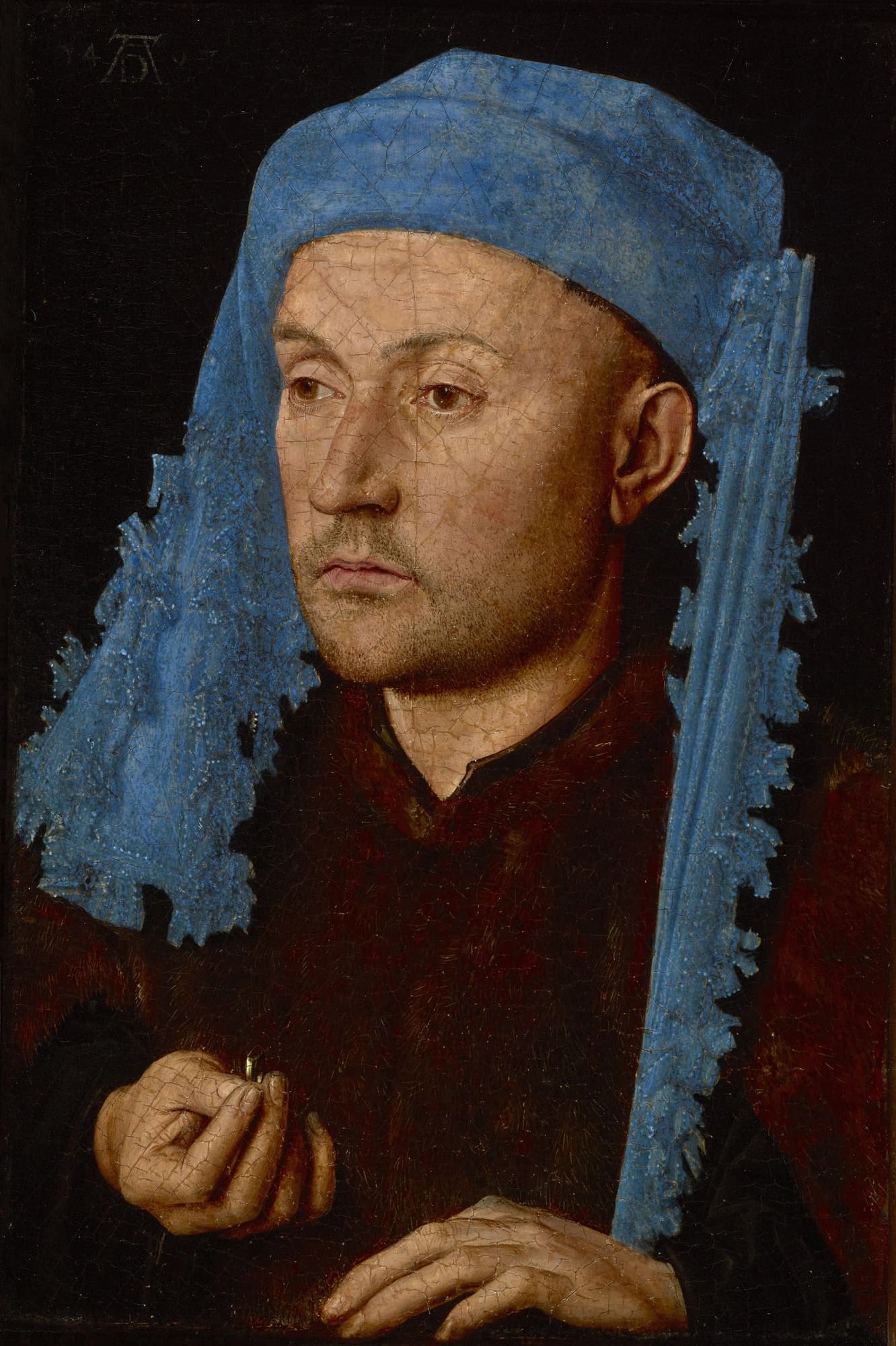
Portrait of a Man with a Blue Chaperon
1435

Madonna of Chancellor Rolin
1500

Portrait of a Man (Self Portrait?)
1433
Léal Souvenir
1432

Annunciation
1435

Madonna with Canon Joris van der Paele
1436

Dresden Triptych
1437

Arnolfini Portrait
1434
The Madonna in the Church
1430

Ghent Altarpiece
1432

Virgin and Child in a Niche
ca. 1440–50

The Crucifixion; The Last Judgment
ca. 1436–38
Timeline
Born around 1380 in Maaseik, present-day Belgium. He was highly educated, with knowledge of Latin, Greek, and Hebrew, which was rare for painters of his time.1
As court painter to Philip the Good, he enjoyed high pay and rare artistic freedom, allowing him to paint 'whenever he pleased' without guild restrictions.1
He served as a diplomat and secret envoy for the Duke, notably traveling to Lisbon in 1428 to paint Isabella of Portugal for marriage negotiations.1
He moved to Bruges in 1429, where he married Margaret and produced masterpieces like the Arnolfini Portrait before his death in 1441.1
He used the motto 'ALS ICH KAN' (As I can), a pun on his name, reflecting a level of self-confidence and artistic identity rare for his era.1
JulJan van Eyck died on July 9, 1441, in Bruges.3