Artist
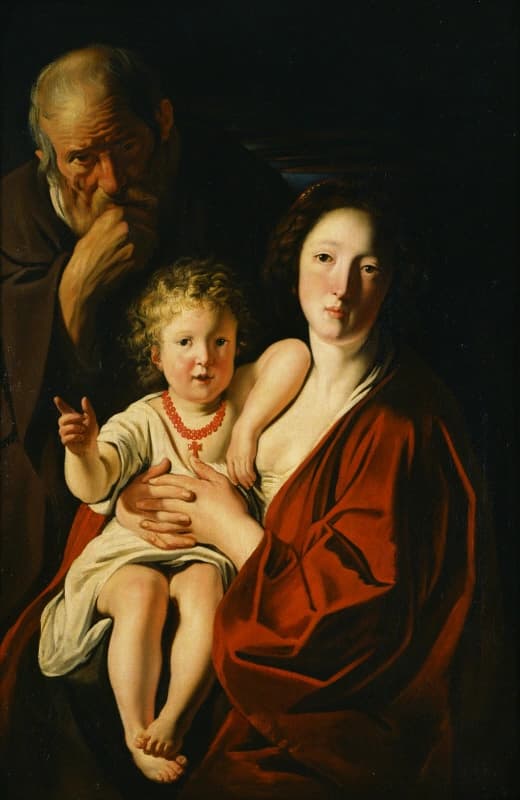
Jacob Jordaens
Works (3)
Timeline
Born in 1593 to a wealthy linen merchant in Antwerp, Jordaens received a solid education in mythology and the Bible, which formed the foundation for his later large-scale history and allegorical paintings.1
Admitted as a master 'waterscilder' (water painter) in 1615, Jordaens initially specialized in tempera works and tapestry cartoons, which influenced the dynamic compositions of his later paintings and tapestry designs.1
Jordaens studied under his only teacher, Adam van Noort, and married van Noort's eldest daughter, Catharina, in 1616. His close relationship with the van Noort family was a defining element of his early life and career.1

In 1621, he became dean of the Guild of Saint Luke, accepting only on the condition that he wouldn't be liable for previous debts, showing a pragmatic side that supported his prolific and stable career.1
In 1628, he was commissioned alongside Rubens and Van Dyck to paint altarpieces for the Augustinian church in Antwerp, proving his high standing among Flemish painters even early in his career.1
In 1636, he participated in the decoration of the Torre de la Parada for Philip IV of Spain, creating mythological paintings based on Ovid's Metamorphoses following Rubens' designs.1
After the deaths of Rubens and Van Dyck in the 1640s, Jordaens became the leading Flemish Baroque painter, maintaining his robust, realistic style over courtly refinement.1