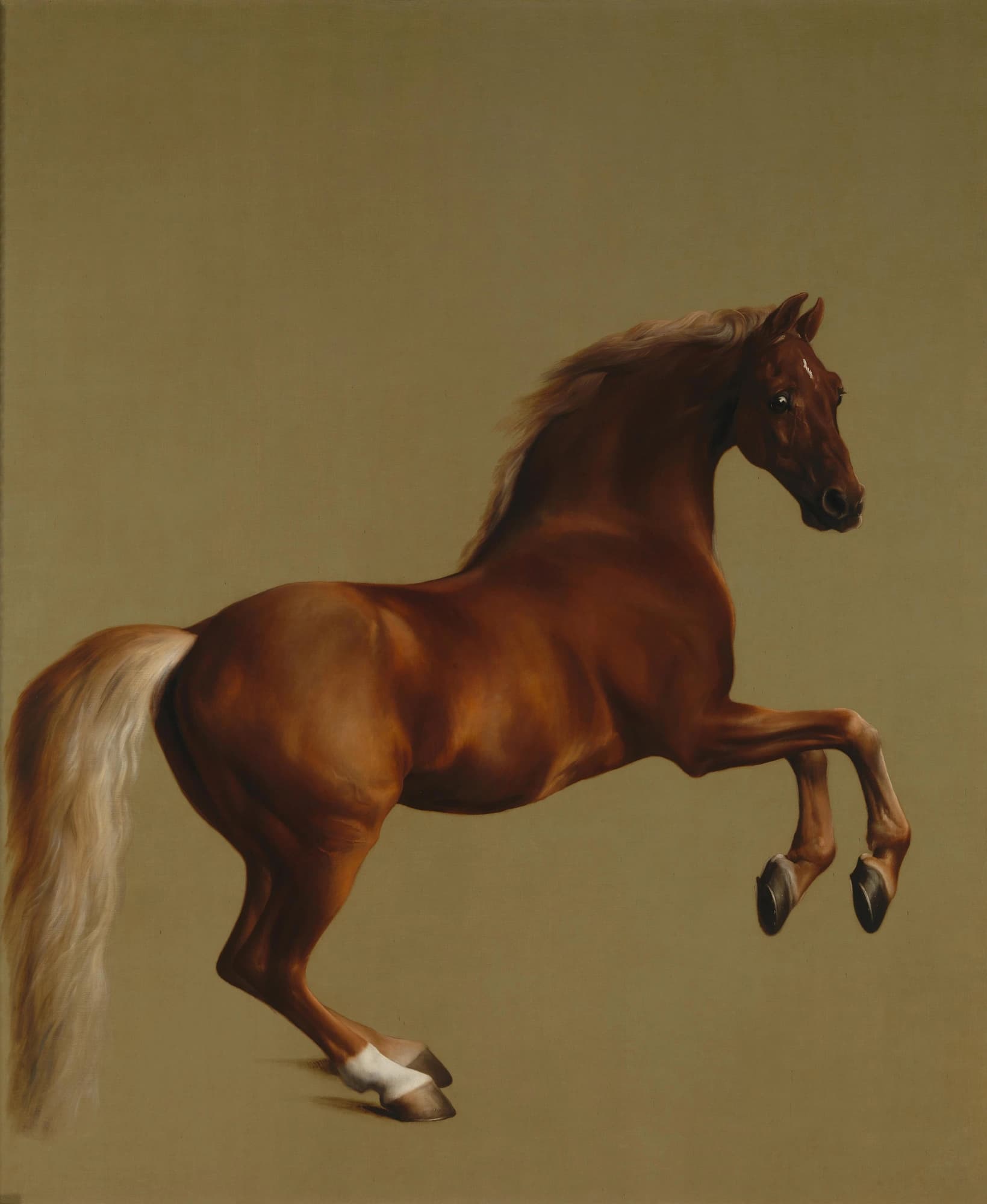
Artist
George Stubbs


Timeline
AugGeorge Stubbs was born on August 25, 1724, in Liverpool, England.1
Stubbs was largely self-taught, developing his skills independently of contemporaries like Joshua Reynolds after a very brief apprenticeship.2
From 1745, Stubbs studied human anatomy under a surgeon in York and produced illustrations for a midwifery textbook, integrating science into art.2
Stubbs visited Italy in 1754, later stating his motive was to convince himself that nature is always superior to Greek or Roman art.2
Around 1758, he moved to London, which remained his base.3
In 1759, the Duke of Richmond commissioned three large pictures from Stubbs, securing his career.1
The publication of 'The Anatomy of the Horse' in 1766 shocked aristocratic patrons and established Stubbs as a scientific explorer of form.2
In the 1770s, Stubbs collaborated with Josiah Wedgwood to create paintings on large enamel panels, demonstrating his pursuit of technical innovation.2
In his later years, Stubbs enjoyed the patronage of the Prince of Wales, maintaining high regard from royalty and aristocracy throughout his life.2
JulGeorge Stubbs died on July 10, 1806, at the age of 81.1