Artist
Claude Lorrain
Works (2)
Timeline
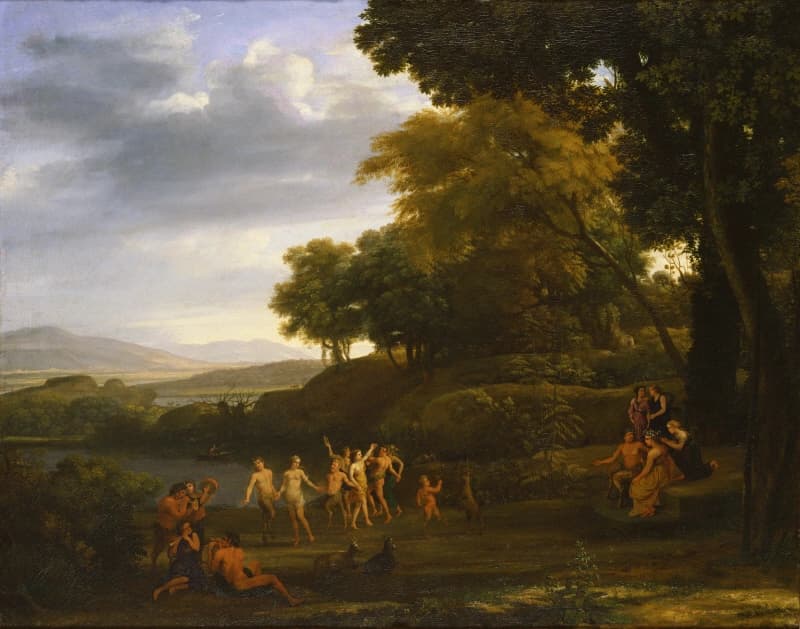
Born in the Duchy of Lorraine around 1600, he spent most of his life in Italy. Before the 19th century, he was regarded as a painter of the 'Roman School' and was a pioneer in establishing landscape as a significant genre.1
He frequently sketched outdoors at dawn and dusk to study nature directly. He sometimes made oil studies on the spot, and this practice of direct observation provided the realism in his depiction of light and atmosphere.1
He apprenticed under Agostino Tassi in Rome. According to one account, he was initially hired as a pastry cook and servant in Tassi's household before his artistic talent was discovered and he began his training.1
By the late 1630s, he was established as Italy's leading landscapist. He received commissions from powerful figures across Europe, including Pope Urban VIII and Philip IV of Spain, commanding high fees for his work.1
To prevent forgeries, he created the 'Liber Veritatis' (Book of Truth), recording 195 of his finished paintings in drawings. It includes the names of purchasers, making it an invaluable historical record.1
In his later years, despite suffering from gout, his paintings became larger but with fewer figures. His style evolved to become more carefully painted, possessing a refined and serene poetic quality.1
He continued to paint until his death in 1682. His final work, 'Ascanius Shooting the Stag of Sylvia,' was commissioned by Prince Lorenzo Onofrio Colonna, one of his most important late patrons.1