Artist
Duccio di Buoninsegna
Works (1)

Timeline
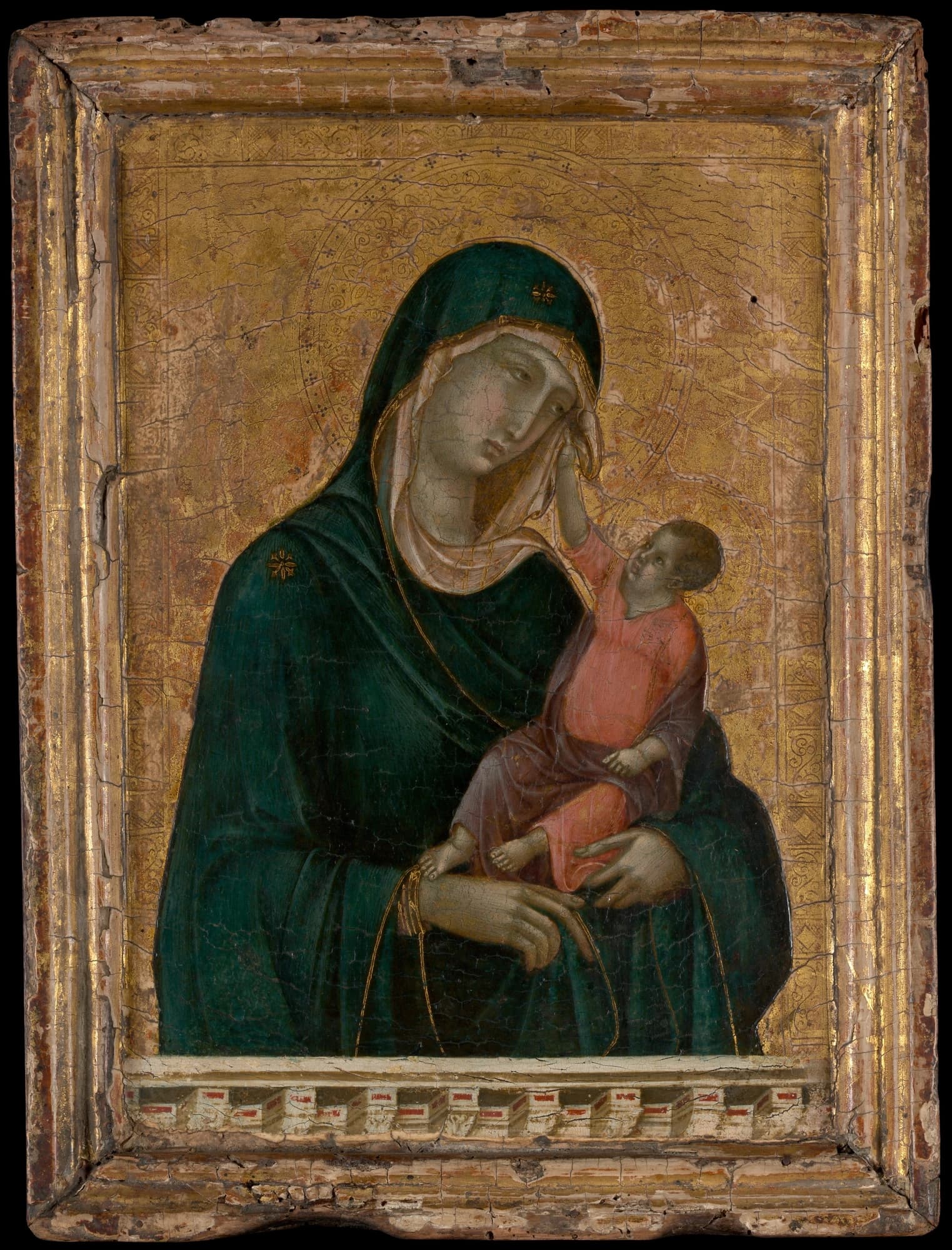
Active in Siena during the late 13th and early 14th centuries, Duccio is considered the founder of the Sienese school, blending Byzantine traditions with a graceful Gothic style to become a medieval Italian master.1
Though active from roughly 1268 to 1311, only about 13 of his works survive today. His earliest recorded work dates to 1278, when at age 23 he was paid to paint twelve account book cases.1
In 1285, he was commissioned to paint the 'Rucellai Madonna' for Santa Maria Novella in Florence. This early masterpiece showcases his innovative style through its spatial organization and elegant figures.1
Between 1308 and 1311, he created the 'Maestà' for Siena Cathedral. Considered his greatest masterpiece, its completion was celebrated by the entire city with a grand procession and festivities.1
Duccio di Buoninsegna's most ambitious project, the Maestà altarpiece for Siena Cathedral, was completed in 1311.2
Despite his talent, records show frequent debts and fines. He had seven children, but due to his financial mismanagement, his family disowned him and renounced their inheritance after his death.1