Artist
Gustave Caillebotte

Timeline
Before his art career, he earned a law degree and served in the Franco-Prussian War. Starting to paint during his service, this period marked his first steps toward becoming an artist with a realistic and detached perspective.1
Around 1874, he befriended Degas and Giuseppe de Nittis, joining artists working outside the Academy. He debuted at the second Impressionist exhibition and participated in five of their eight exhibitions in total.1
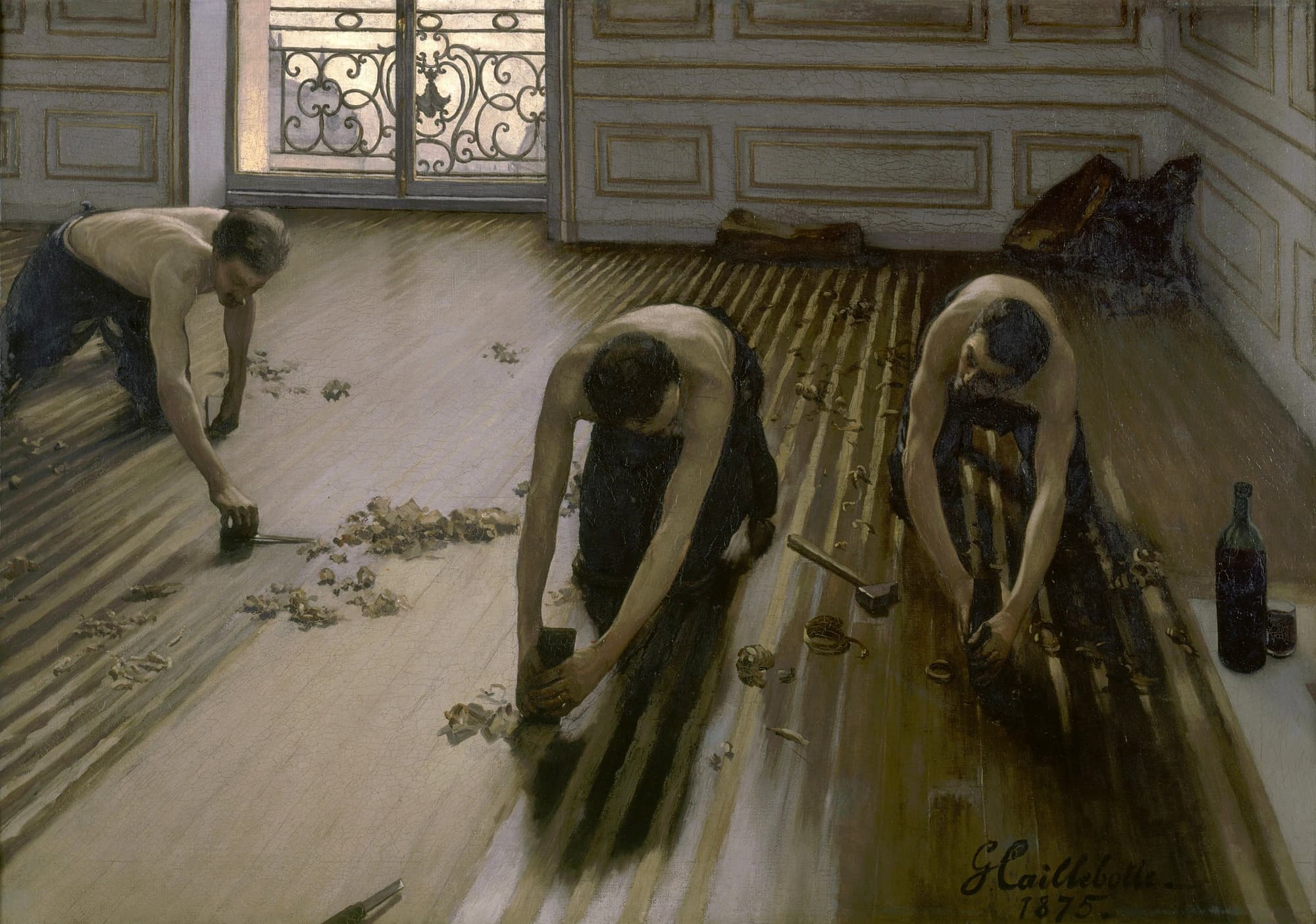
His masterpiece 'The Floor Scrapers' was rejected by the 1875 Salon as 'vulgar.' At the time, depicting urban laborers realistically was considered a taboo in the art world, though rural peasants were acceptable subjects.1

At the 3rd Impressionist Exhibition in 1877, he took a leadership role, managing everything from renting space to hanging works. He was not just a painter but a key organizer who sustained the Impressionist movement.1
'Paris Street; Rainy Day' is known for its flat colors and photo-realistic effect. Its modern atmosphere demonstrates a pioneering sensibility that resonates with later American Realists like Edward Hopper.1
Born into a wealthy family, Caillebotte was a crucial patron of the Impressionists. While painting himself, he supported his peers by purchasing their works, and his bequeathed collection became the core of France's Impressionist holdings.1
During his life, his role as a patron overshadowed his talent as a painter. It took until 1994, 100 years after his death, for him to finally receive his first international retrospective exhibition.1
In 2022, the French government declared his masterpiece 'Boating Party' a national treasure. His realistic perspective, once viewed as unconventional, is now a vital part of France's cultural identity.1