Artist
George Bellows
United States, 1882–1925
Works (1)

Timeline
Bellows declined an offer to play professional baseball to pursue painting in New York. His athletic background informed the sense of motion and vitality in his later works.1
Studying under Robert Henri, Bellows became a key figure of the Ashcan School, advocating for the depiction of contemporary American life in all its gritty forms.1
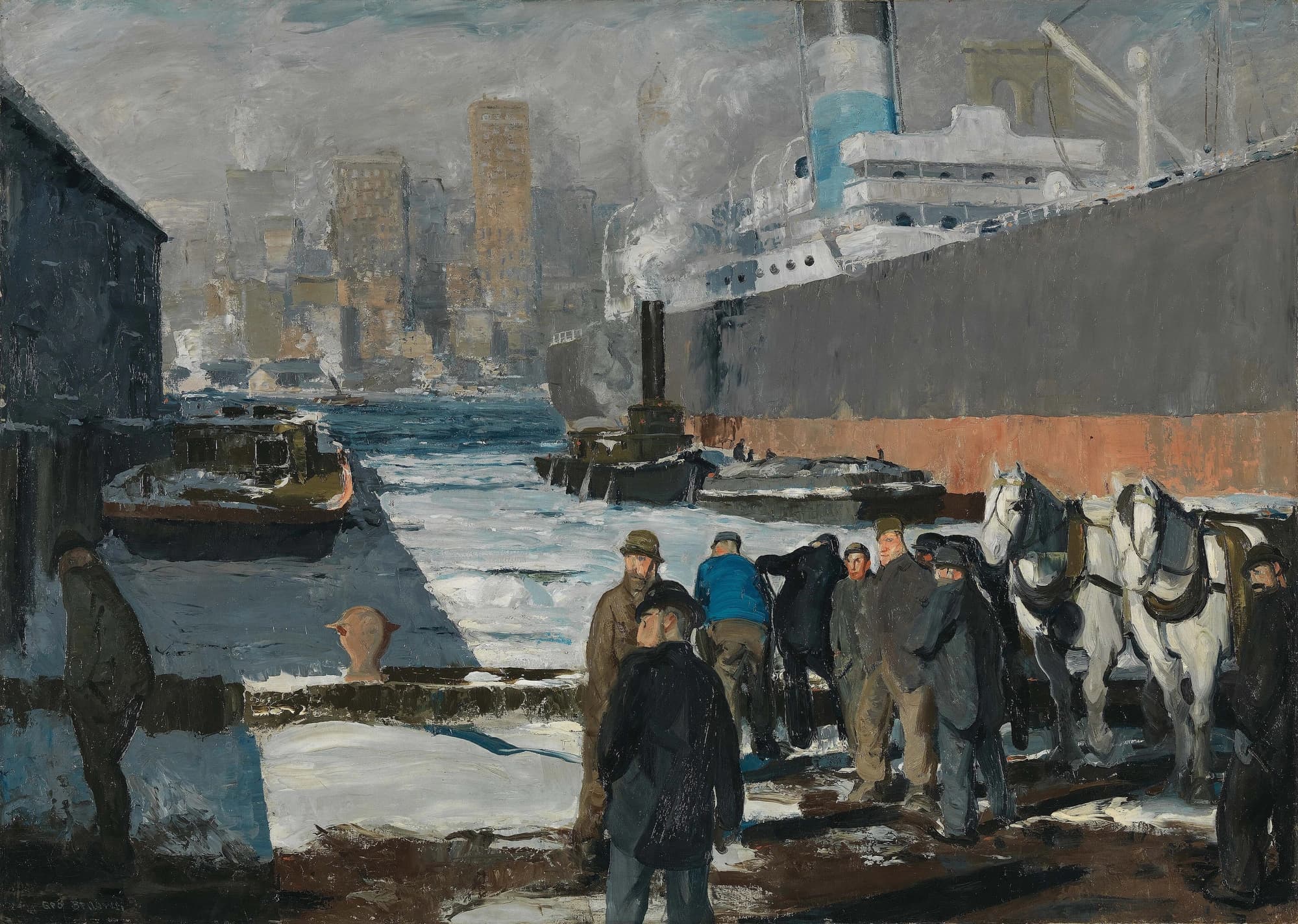
His New York snow scenes (1907–1915) use stark contrasts between pure snow and grimy city structures to ironically depict the struggle of working-class life.1
Socially conscious, Bellows served on the board of the socialist journal 'The Masses,' though he prioritized artistic freedom over any specific ideological policy.1
By installing a press in his studio in 1916, Bellows helped establish lithography as a fine art in the U.S., producing over a hundred significant images.1
When criticized for painting war scenes he hadn't witnessed, Bellows famously retorted that he wasn't aware Leonardo da Vinci 'had a ticket to paint the Last Supper.'1
In his later years, Bellows shifted from fluid muscularity to a more programmatic approach to color and design, often focusing on domestic life and his family.1
Bellows died at age 42 from peritonitis. Despite his tragically short career, he was regarded as the most acclaimed American artist of his generation.1