Artist
Henry Ossawa Tanner
Works (5)


Timeline
Born in 1859 in Pittsburgh to a bishop father and a mother who escaped slavery; his middle name 'Ossawa' commemorates the anti-slavery struggle in Osawatomie.1
Enrolled at the Pennsylvania Academy of the Fine Arts in 1879 as the only Black student, studying under Thomas Eakins, whose progressive focus on anatomy profoundly influenced his realism.1
After a failed photography studio venture, Bishop Joseph Crane Hartzell and his wife became his patrons, securing him a teaching job and supporting his eventual move to Europe.1
Facing severe racism in Philadelphia that he described as 'torture' in his autobiography, he was driven to seek a permanent professional life in the more accepting environment of France.1
Moved to Paris in 1891 to study at the Académie Julian, finding a refuge from American racism and an environment where his talent could be recognized internationally.1
In his 1893 masterpiece 'The Banjo Lesson,' he challenged racial stereotypes by with a dignified, realistic portrayal of intergenerational knowledge sharing in a Black family.1
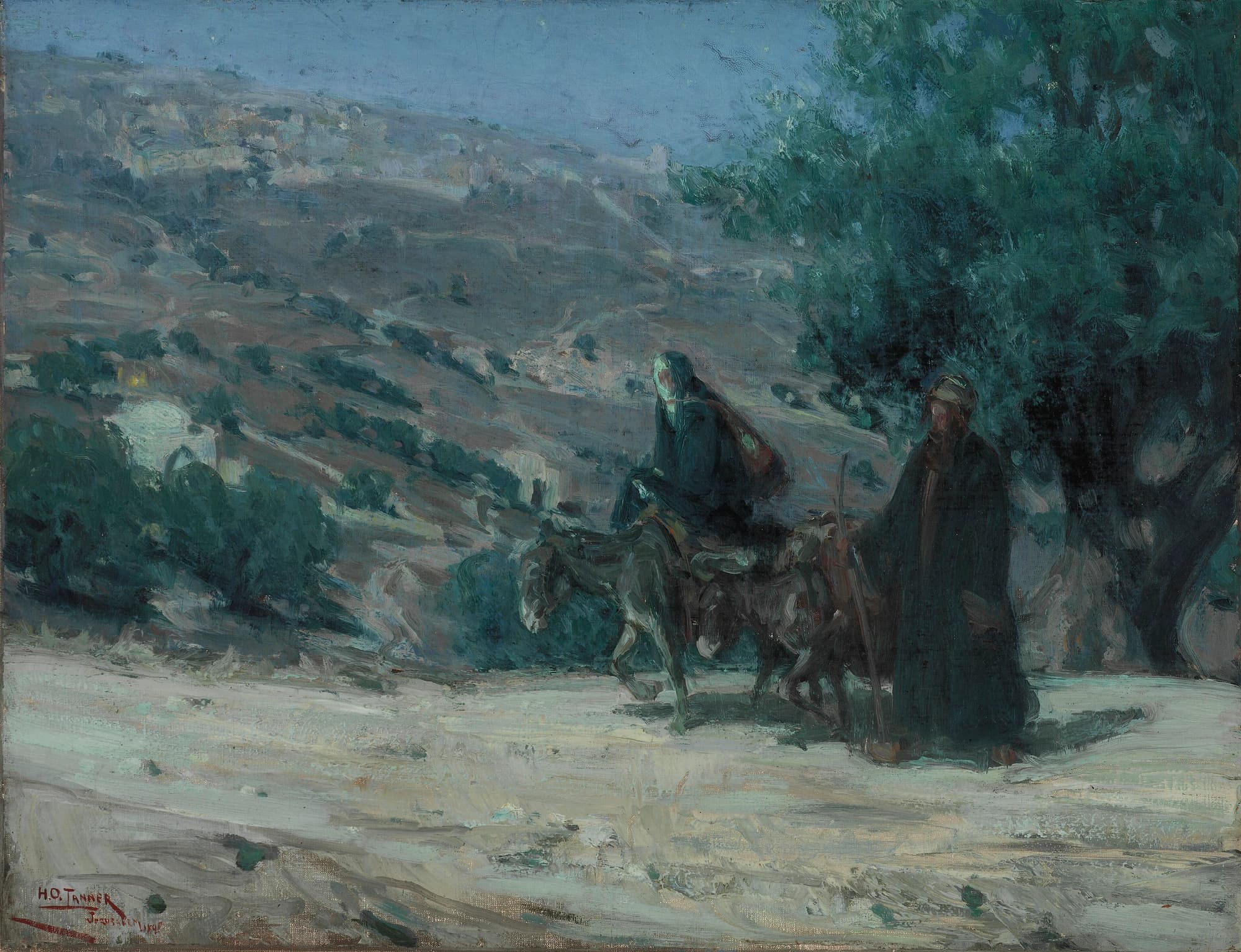
From the mid-1890s, he developed a signature palette of indigo and turquoise known as 'Tanner blues,' using light symbolically to depict the intersection of the divine and humanity.1
Influenced by his upbringing as a minister's son, he focused on religious subjects later in his career, gaining acclaim at the Paris Salon for spiritual works like 'The Annunciation.'1
In 1923, the French government elected him a Chevalier of the Legion of Honor, marking his status as the first African-American painter to achieve international acclaim.1