Artist
Filippo Lippi
Works (4)


Timeline
Born around 1406 in Florence and orphaned at a young age, Lippi was sent to a Carmelite convent at age eight. He took his vows at sixteen, building his artistic foundation while receiving religious education.1
In his early years, Lippi was deeply moved by Masaccio's innovative frescoes in the Brancacci Chapel. His influence was so strong that contemporaries said the spirit of Masaccio had entered into Lippi.1
Cosimo de' Medici became a powerful patron of Lippi. An anecdote tells of Lippi being locked in a room to force him to work, only for him to escape using a rope made of bedsheets.1
Despite being a priest, Lippi's life was marked by lawsuits and forgery scandals. He struggled with poverty throughout his life and worked hard to support six marriageable nieces.1
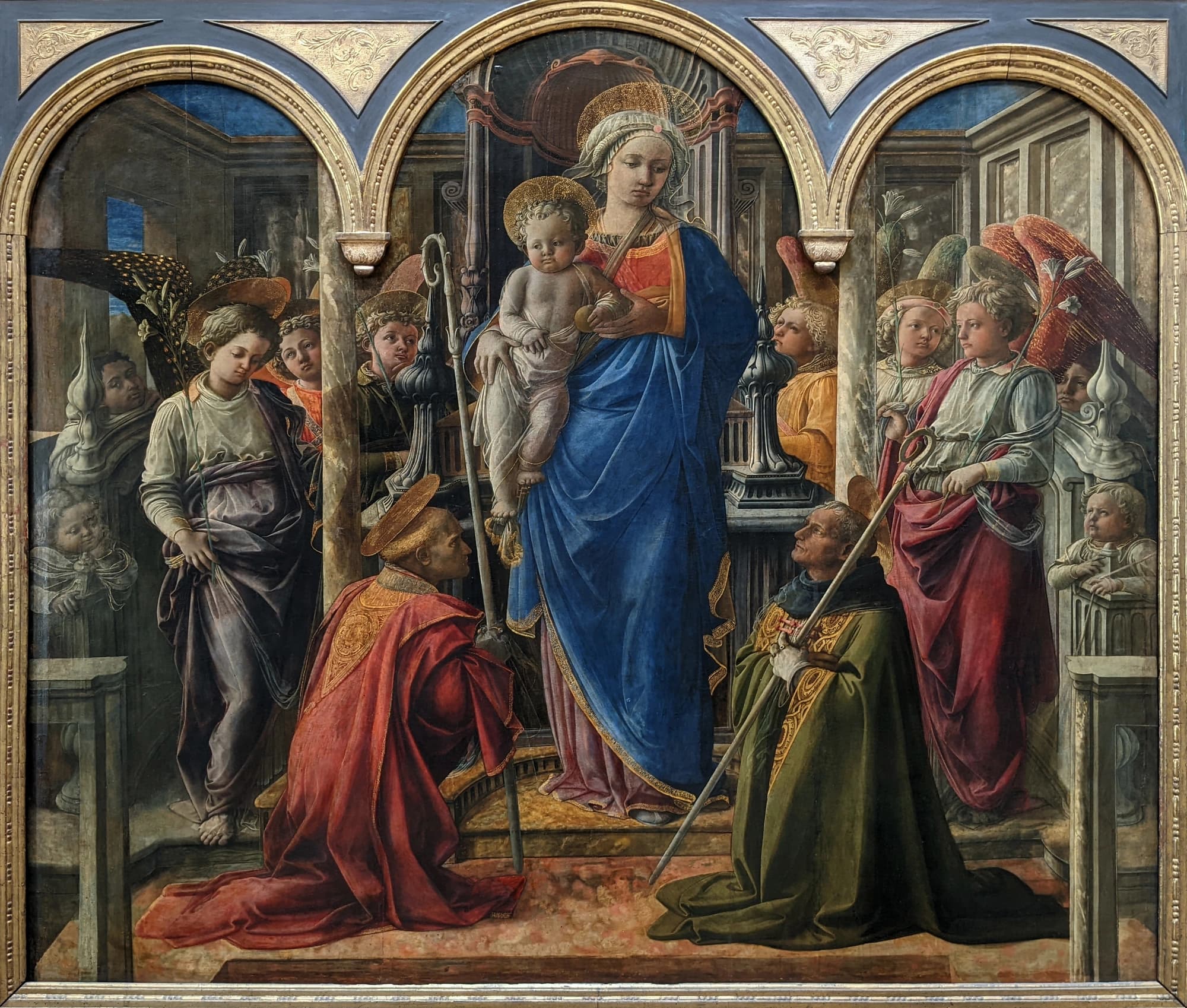
The frescoes in Prato Cathedral, depicting the stories of St. Stephen and St. John the Baptist, are Lippi's most important works. Salome's dancing figure prefigured Botticelli's dynamic style.1
In 1456, while working in Prato, Lippi caused a scandal by abducting the nun Lucrezia Buti. She later became the model for many of his Madonna paintings.1
In his final years, Lippi worked on the 'Life of the Virgin' frescoes in Spoleto Cathedral. He died there in 1469, with rumors of poisoning adding to his already turbulent life story.1