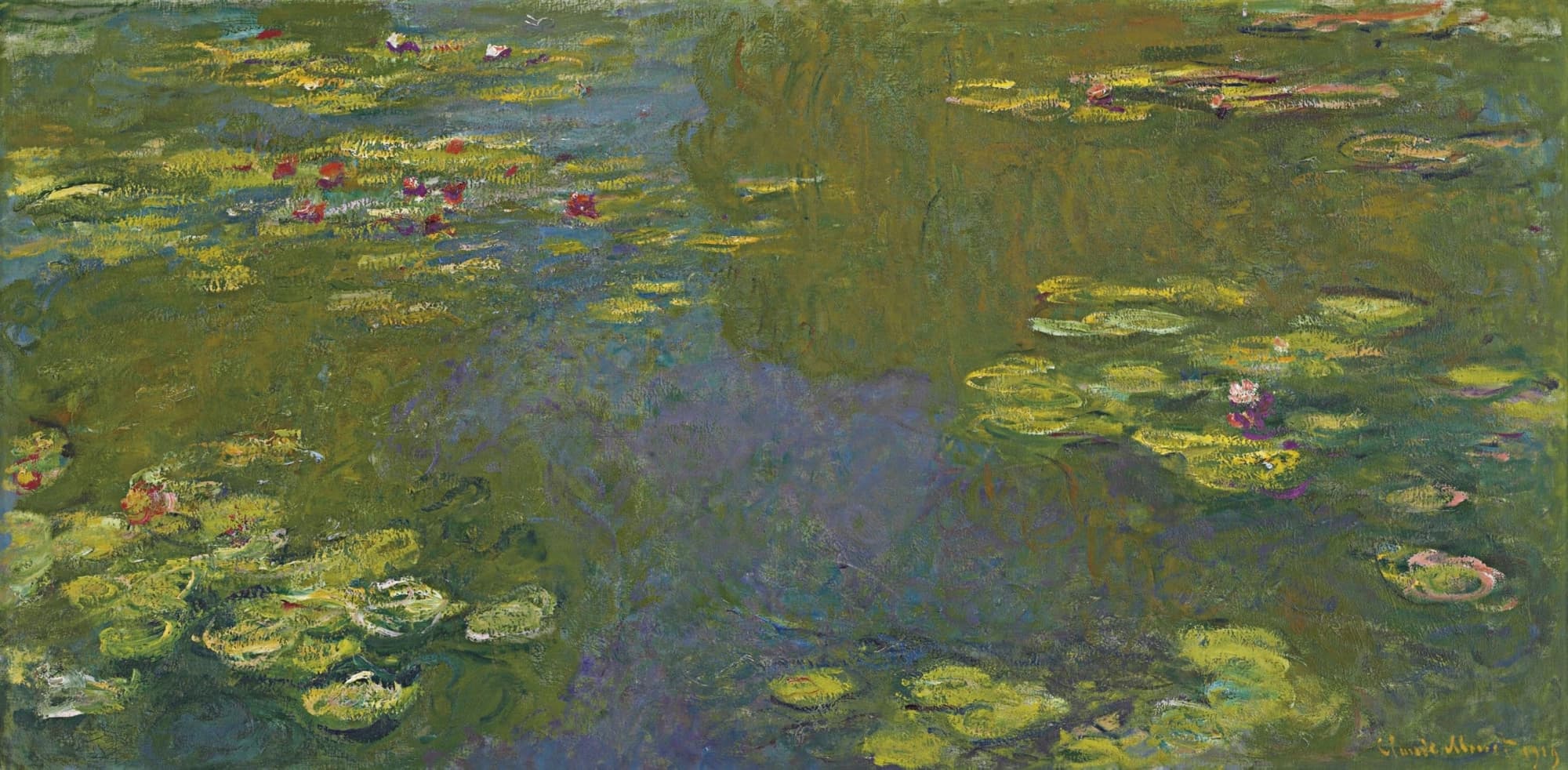
When you hear "a Monet painting," the first thing that comes to mind is probably the water lilies floating on the surface of a pond.
That quiet pond is, without a doubt, Monet’s signature image. And yet his true greatness may lie somewhere else entirely. To paint the same scene again and again — morning, noon, and evening; clear skies and fog — across the shifting play of light. This practice, known as a "series," is the very core of who Monet was as a painter. He was trying to catch, on canvas, a moment of light that would never come again.
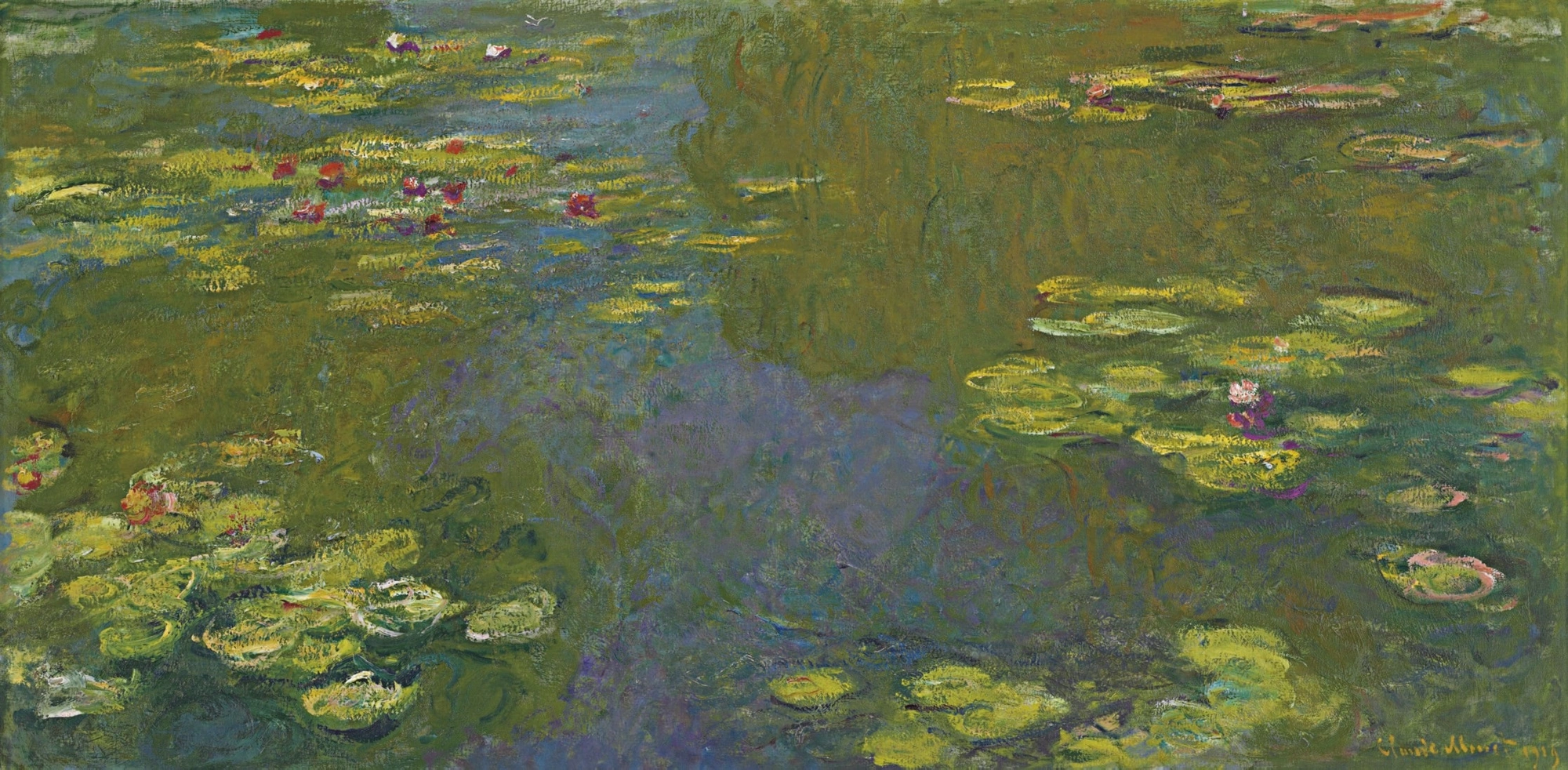
Let us begin with that signature image, the water lilies. This "Water Lily Pond" was painted in 1919, in Monet’s final years. The horizon and the sky have vanished from the picture, and the view is narrowed to the water alone. Before you know it, you are drawn into the pond itself, where even the reflected sky and surrounding trees are rendered with great delicacy. As we will see, Monet’s road to this pond was a very long one.[4]
What was Impressionism, really?
The very name "Impressionism" was born from a single painting by Monet. In 1874, Monet and his companions held an exhibition independent of the Salon (the official exhibition), and there he showed "Impression, Sunrise." Taking its title from this painting, a critic coined the half-mocking term "Impressionism" — and the name has stayed in the history of art ever since.[1,2]
So what were the Impressionists trying to paint? What they pursued was not the "local color" that an object possesses, but the "impression" that changes moment by moment with sunlight and its reflections. Monet established a technique called "broken color," laying down quick strokes of unmixed paint to bring brightness and immediacy to the picture. To do this, he valued stepping out of the studio and painting outdoors, in the open air.[1,2]
The man Monet
What kind of man was Monet himself? It all began when, at eighteen, he met the landscape painter Boudin. Boudin took Monet outdoors and taught him to paint in oils under the open sky. The boy who until then had drawn caricatures gained here his "eye for seeing light."[1]
Then, in 1883, Monet settled in a village near Paris called Giverny. Here he began not only to paint, but to cultivate the very subjects he painted with his own hands. A garden of flowers, and a garden of water. The water-lily pond that would become the most famous in the world took shape, little by little, on this land.[1,3]
The same subject, in light and time — the invention of the series
Once settled at Giverny, Monet threw himself, from the 1890s, into a single experiment: painting the same motif again and again under different conditions of light — the "series." Haystacks — mere mounds of dried grass — painted across morning and evening, summer and winter: from this series onward, Monet made "the fleeting light itself" his true subject.[1]
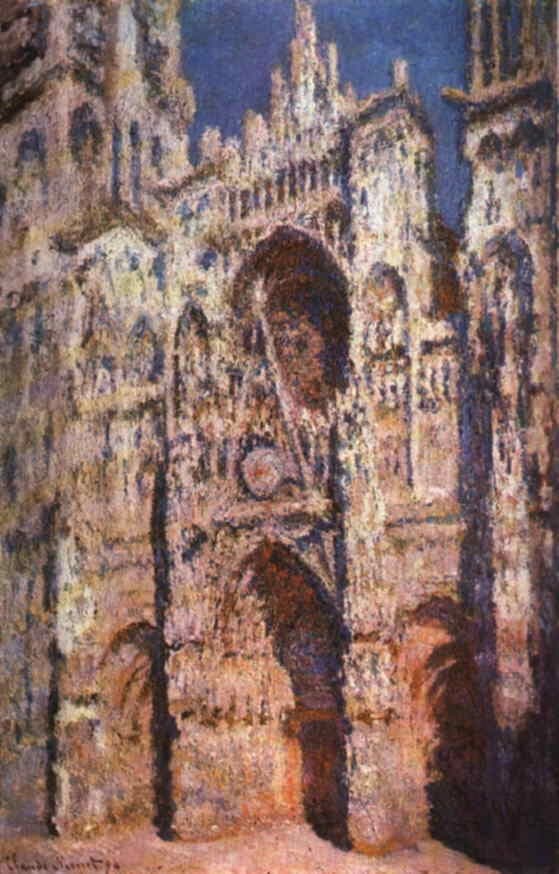
Its finest example is "Rouen Cathedral." From 1892 to 1894, Monet rented a room in a building across from the cathedral and, from almost the same angle, chased the light as it shifted with the hour, the season, and the atmosphere. The number of works reached, astonishingly, thirty. A solid structure that appears fixed and unchanging, and light that never stops changing — this very contradiction was the subject of the series.[5]
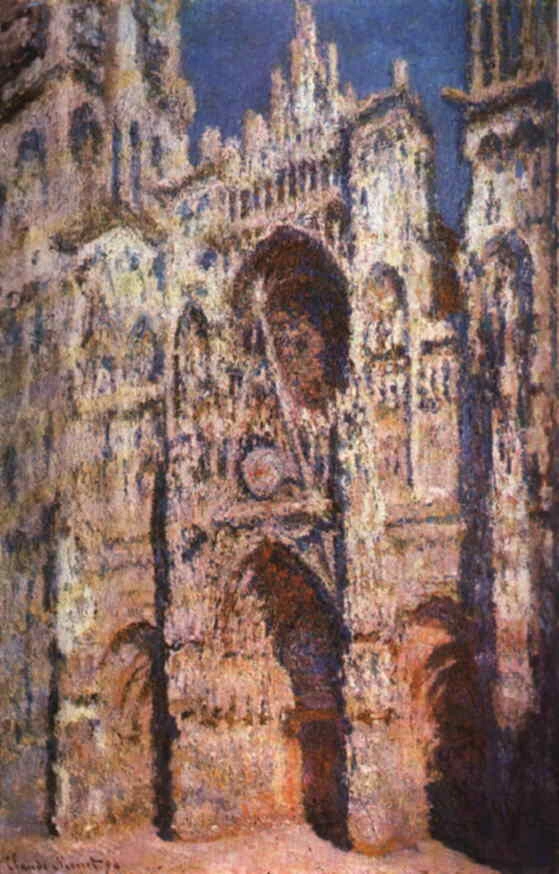
The cathedral Monet painted still rises over Rouen, in northern France.
View on Google MapsMonet built the paint up thickly, so that its surface is caked like the very stone wall of the cathedral. In 1895, at an exhibition held at the gallery of the dealer Durand-Ruel, twenty of the works in this series were shown. His friend Pissarro wrote to his son that he had found in them the "marvelous unity" he had long been seeking.[5]
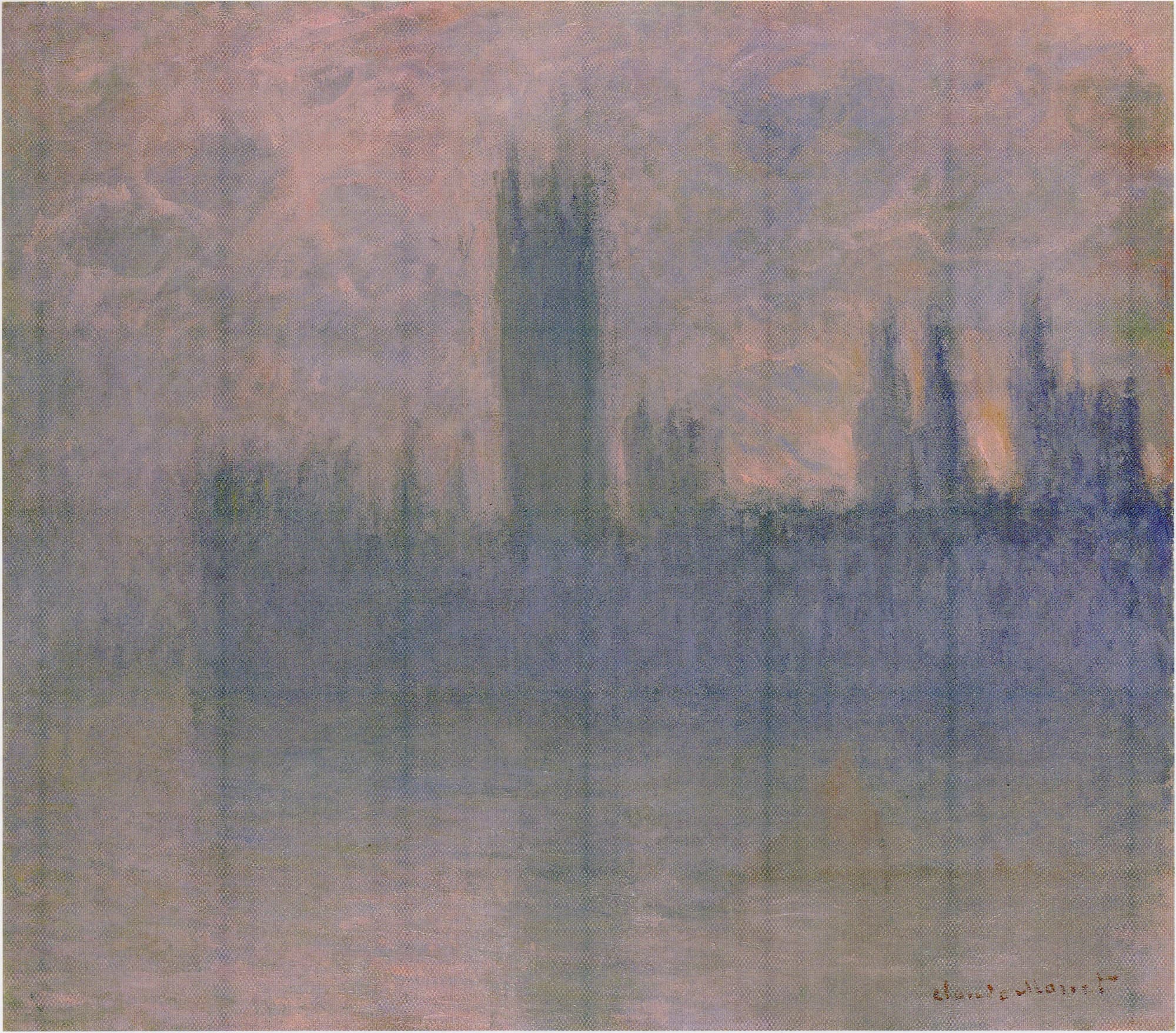
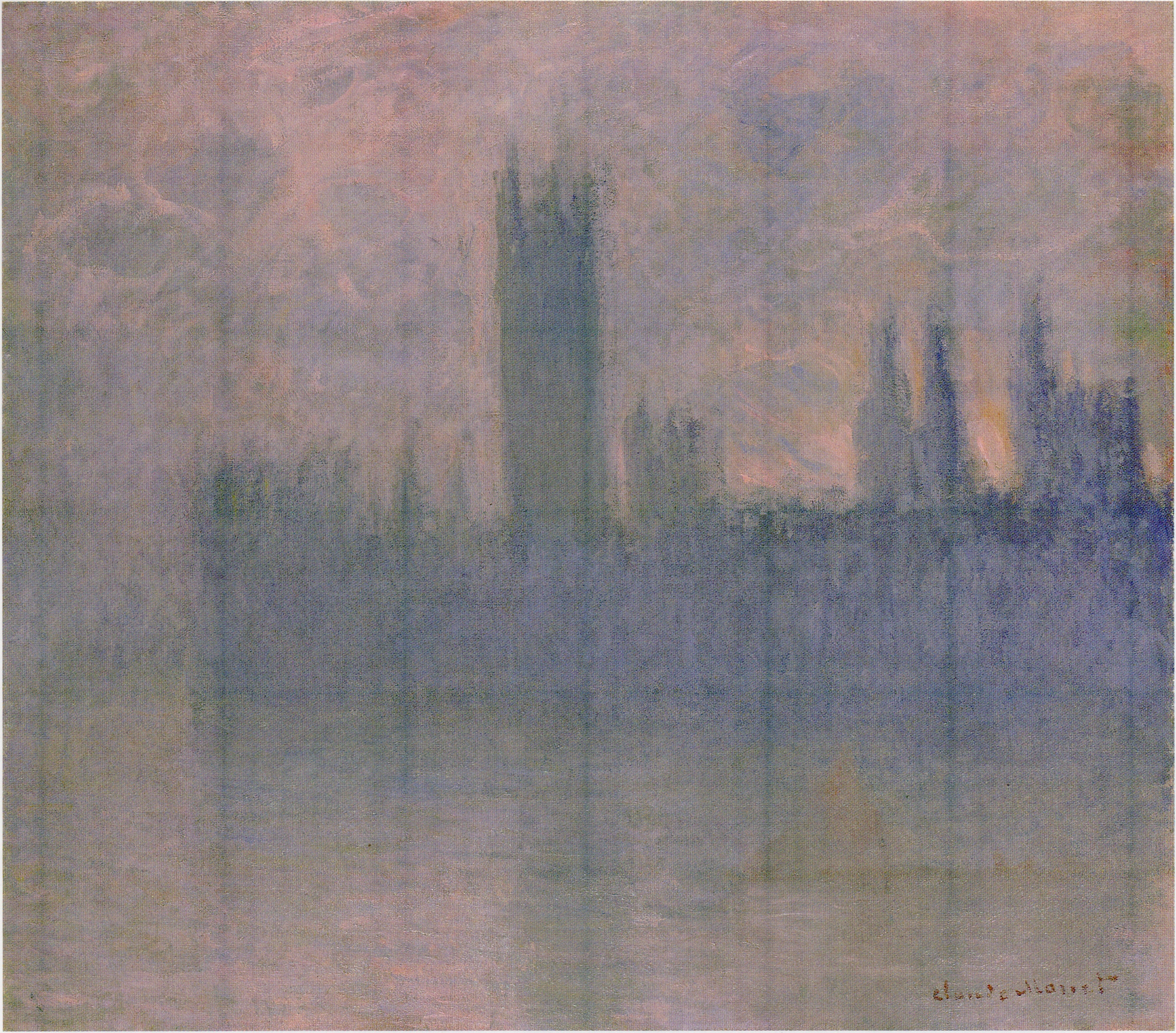
Chasing the light, Monet eventually crossed the sea. The Houses of Parliament in London. What drew him was the fog of the city, a by-product of the Industrial Revolution. From the windows and terrace of St Thomas’ Hospital overlooking the Thames, keeping to the same viewpoint, he painted the building across different hours of the day and different weathers. The outlines of the structure dissolving into the fog mirror Monet’s interest in painting the very state of the atmosphere.[6]
Water lilies — the garden he reached at last
Haystacks, the cathedral, the London fog. Monet, who kept chasing the shifting light, arrived at last at the pond in his own garden. In 1893 he bought more land to the south of his house at Giverny and created a "water garden." This was the beginning of the pond that would become the stage for the water-lily series. In the first series, from 1899 to 1900, the Japanese-style bridge over the pond stood at the center. In time the bridge disappeared, and the water came to fill the entire picture.[4]
Monet’s "water garden," where the lilies were born, still survives at Giverny — and you can visit it.
View on Google MapsAnd so we return to that "Water Lily Pond" from the opening. It was painted in 1919, just after the end of the First World War. In his late years, Monet’s brush moved toward an expression close to abstraction, in which form melts into color. This picture is said to have had a great influence on later abstract expressionist painters such as Pollock and Rothko. A single garden pond opened the door to the painting of the twentieth century.[4]
Chasing the light, with new eyes
Water lilies, Rouen Cathedral, the Houses of Parliament in London. However varied the subjects, what Monet tried to catch was always one and the same: that single moment of light that will never return. That the same scene can change so much with the light — the eye of a painter who grasped this truth lives on in the experiment of the series.
Water lilies, Rouen Cathedral, the London fog. Standing before this run of shifting light, perhaps our own eyes change a little too. The eye of a painter who painted the same scene again and again quietly changes the way we see the familiar.