A brief, brilliant light — just thirty-three years
What kind of painting would you imagine, if a painter had left, in a life of only thirty-three years, a brushwork so distinctive it became a buzzword? Maeda Kanji — an oil painter who stirred the Japanese art world after his return home, and whose manner gave rise to the very word "Maeda-style." In his hospital sickroom he completed the large canvas "The Sea"; in April 1930, of a tumour in the nasal cavity, he passed away. Thirty-three. Far too early a curtain-fall.[1]
And yet, standing before the works he left, what reaches us is not their brevity but something like a "thirst for the real." Let us trace that gaze, just a little.
From Tottori to Paris, meeting Courbet
Maeda Kanji was born in Tottori Prefecture and graduated from the Tokyo School of Fine Arts in 1921. Late the following year, 1922, he crossed to Europe and began working with Paris as his base. Just before leaving, it is said, he had been painting in a kind of pointillism; but at the Académie de la Grande Chaumière in Paris, what he threw himself into was the realism of Courbet.[1,2]
While the painters around him turned toward Fauvism, Maeda leaned instead, and deeply, into the realism at the root of Western painting. Feeling, it is said, a human sympathy for Courbet's realism, here he came to a conscious method: to grasp his subject through "three elements — texture, mass, and the sense of real existence." That a thing is truly there — how to fix that certainty within a picture.[2]
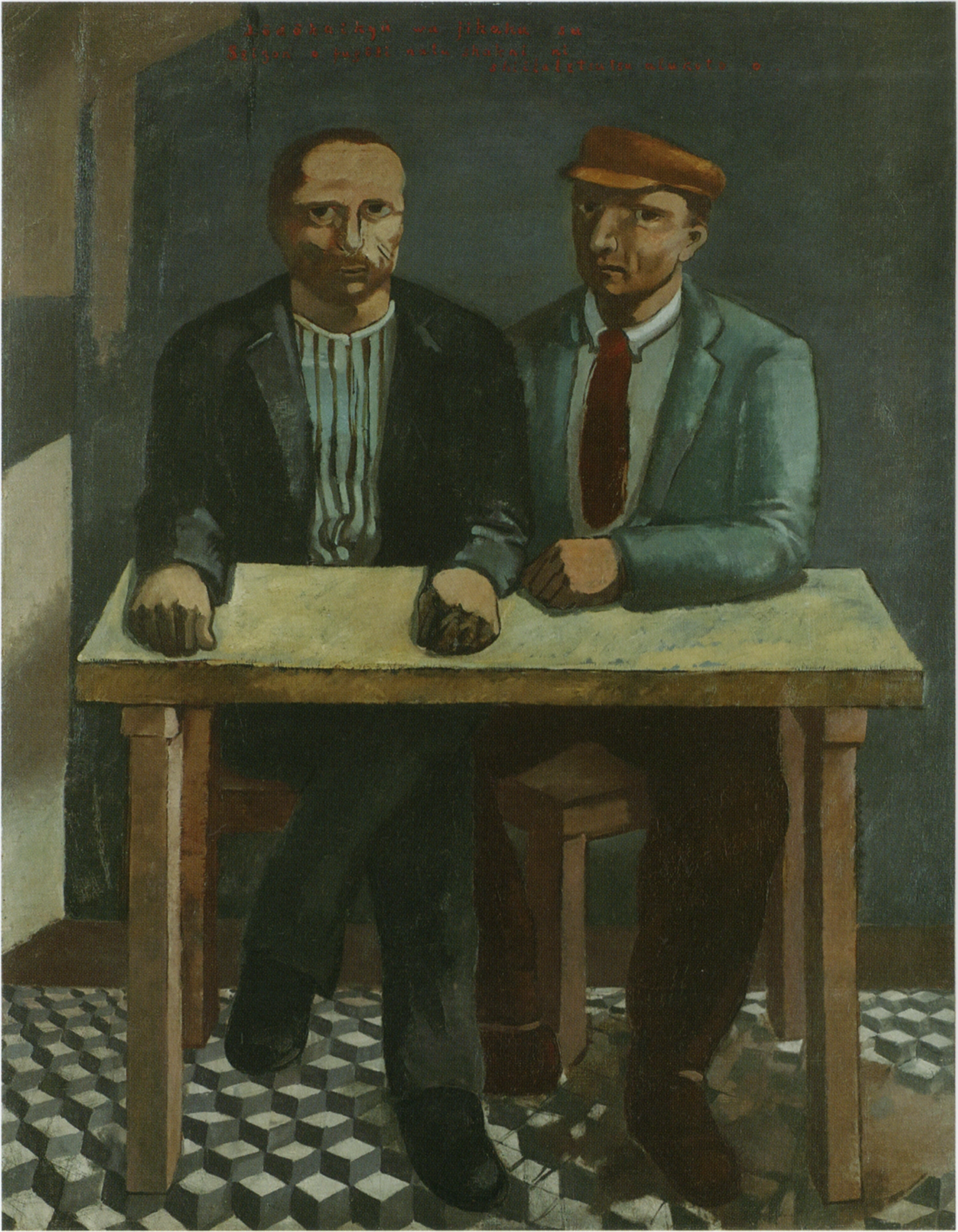
In Paris he was reunited with Fukumoto Kazuo, a Marxist theorist from his home region, and is said to have taken a deep ideological influence from him. In 1923 he made "Two Workers," and turned to the people at the bottom of society and to factories as his subjects. He also mingled with Saeki Yūzō, Satomi Katsuzō and others, and reportedly dubbed his circle the "piglets of Paris" — an episode in which one senses the heat of young painters.[1,2]
"Maeda-style" — a heavy, weighty colour
After returning home in 1925, Maeda's manner shifted toward a weighty realism with a firm grasp of form. Works with a classical air, such as "Nude" and "Woman in Black," date from this time. A handling of space, and a sense of colour heavy in the hand — that is the texture of his canvases.[2]
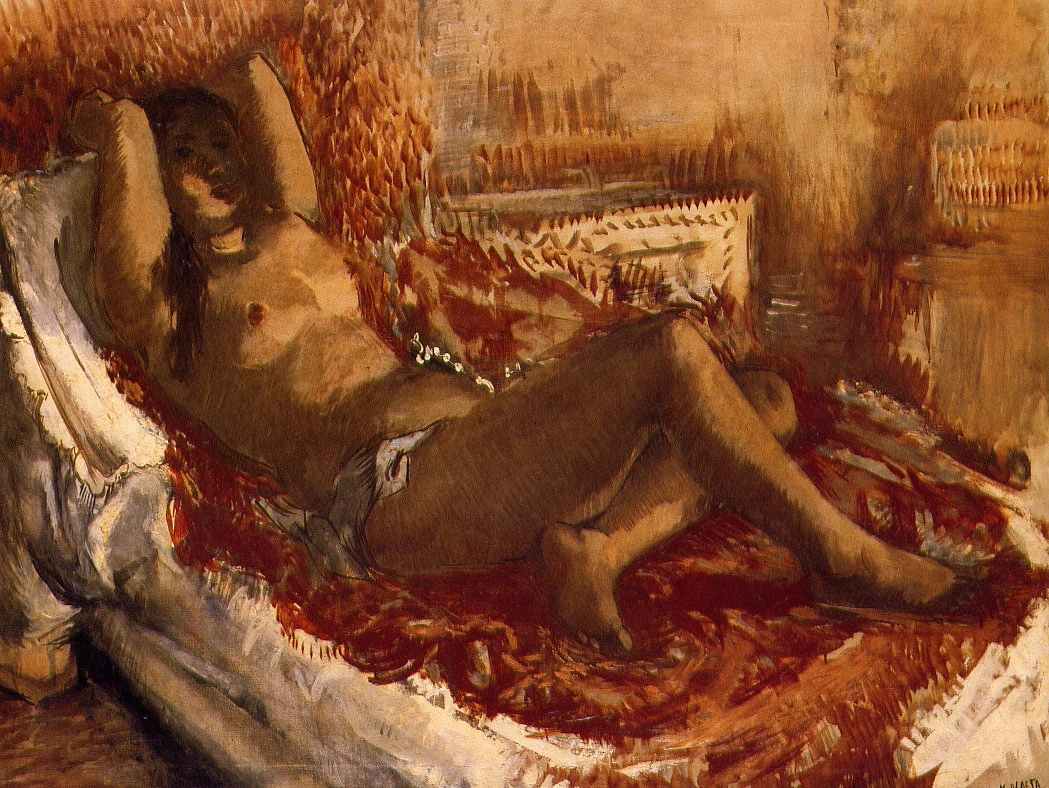
Known as a master of figurative realism, Maeda fused classical composition with a Fauvist touch, and is said to have influenced the art world of the day so strongly that his manner gave rise to the buzzword "Maeda-style." Paintings of workers, subjects such as "Polish Sisters," and "Girl with a Red Hat," designated an Important Cultural Property. Among his models was the singer Awaya Noriko, later known for "Wakare no Blues." His paintings stood, perhaps, just where the pursuit of realism crossed the air of the age.[1,2]
Raising the next generation, leading a group
In 1928, Maeda built a studio-cum-home in Suginami, Tokyo, and opened the "Maeda Institute of Realism." Under the banner of a new realism, while guiding younger artists, he deepened his own pursuit of realist painting. Around the same time he founded the 1930 Association, acting as its mainstay.[1,2]
Meanwhile at the Teiten he won repeated special selections, received the Imperial Art Academy Prize in 1929, and that same year was chosen as a juror. To paint, to teach, to lead a group — considering the density of this activity, one realises how many roles were packed into those thirty-three years.[1]
His last work, "The Sea," painted in a sickroom
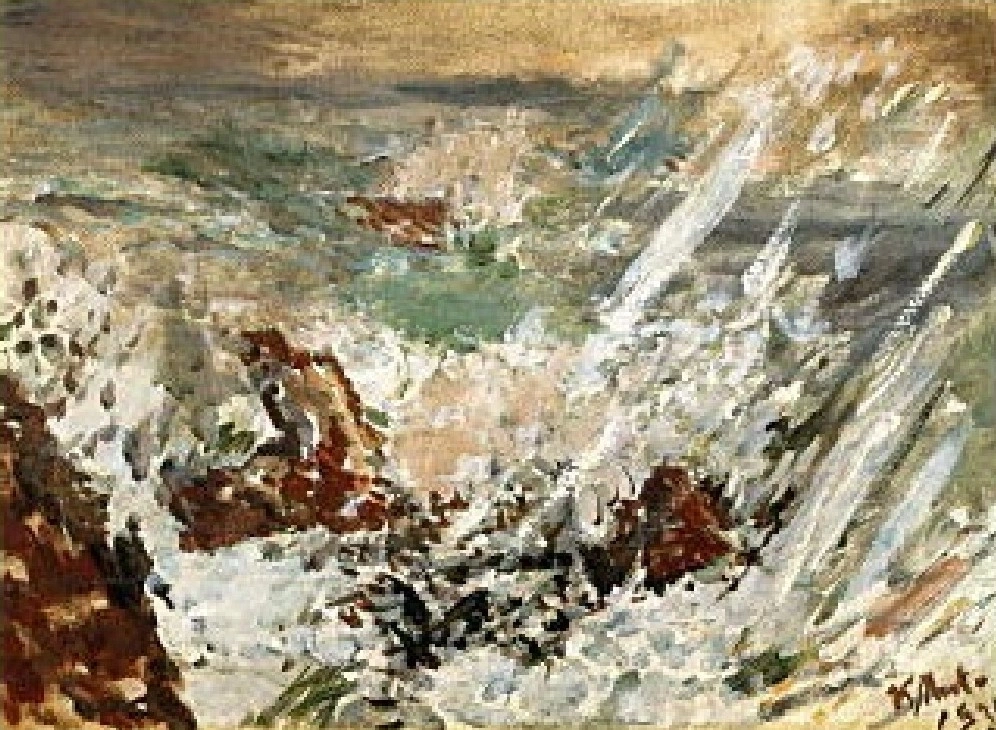
And so, in his hospital sickroom, Maeda completed his final major work, "The Sea." Taking up the brush while carrying his illness, he passed away in April 1930. The sea, something that spreads out without end — with what thoughts did he gaze upon it, at the last? A canvas reached by a painter who kept chasing the texture, mass, and real existence of things. Even to imagine it lets something quiet steal into the heart.[1]
The weight of the real
The realism he learned in Paris, his gaze upon society, and the brushwork they called "Maeda-style." The appeal of Maeda's paintings may lie in a certain "weight": colour heavy in the hand, and the certainty that the subject is truly there.
The "Nude" of 1925 and of 1928, the Important Cultural Property "Girl with a Red Hat," the works of workers and of the Polish sisters, and his last work "The Sea" — each carries the gaze of a painter who ran through just thirty-three years.


