Symbolism
Memento Mori: Skulls and Vanitas in Art
A skull in a painting is almost never an accident. For centuries, artists slipped skulls, snuffed candles, and wilting flowers into otherwise serene scenes as a quiet warning: remember that you must die. This gallery zooms into those reminders, cropped from the original works. Click any detail to see the full painting.
24 details · cropped from original museum images
What these details mean
The vanitas tradition turned everyday objects into a meditation on mortality. The most common symbols and what they mean:
- Skull
- A memento mori — a direct reminder that death comes for everyone and that earthly achievement is fleeting.
- Snuffed candle
- A life extinguished; the fragile, easily-broken flame of human existence.
- Hourglass or clock
- Time running out — the brevity of life and the inevitability of the end.
- Wilting flowers
- Beauty and youth fading; the transience of worldly pleasure.
- Bubbles
- Homo bulla — "man is a bubble," here one moment and gone the next.
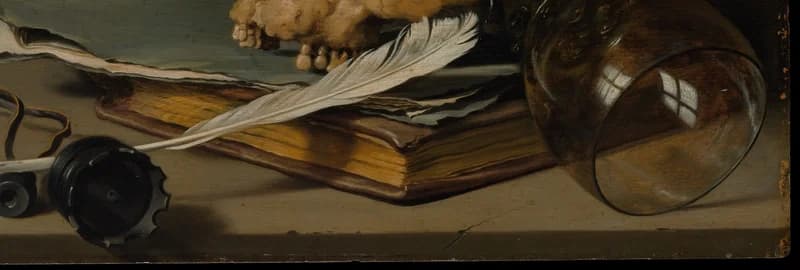
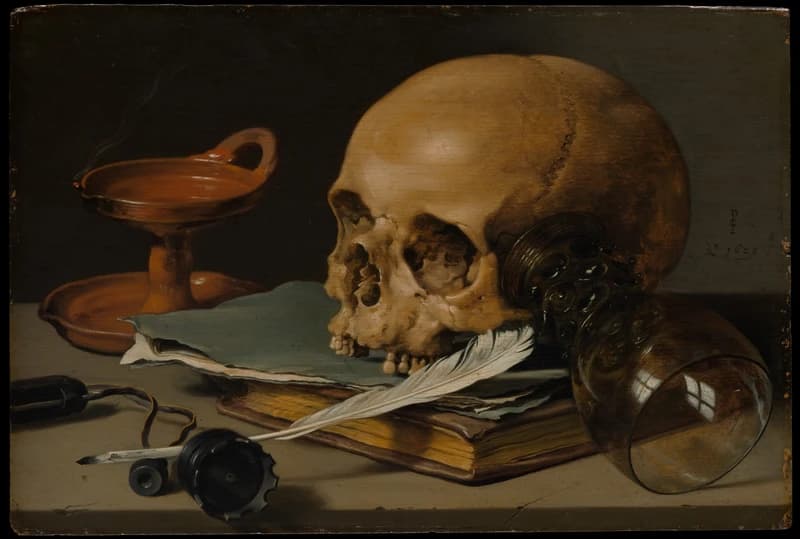
Human skull
Pieter Claesz · Still Life with a Skull and a Writing Quill
The Metropolitan Museum of Art
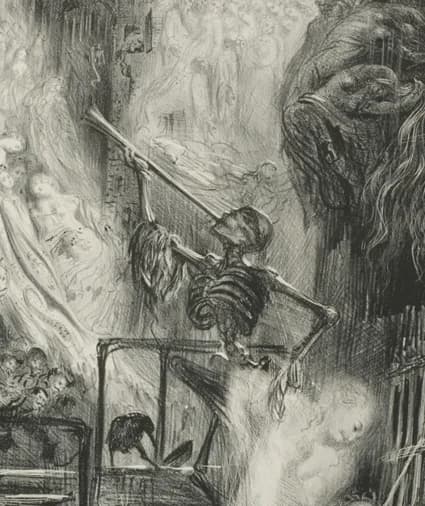
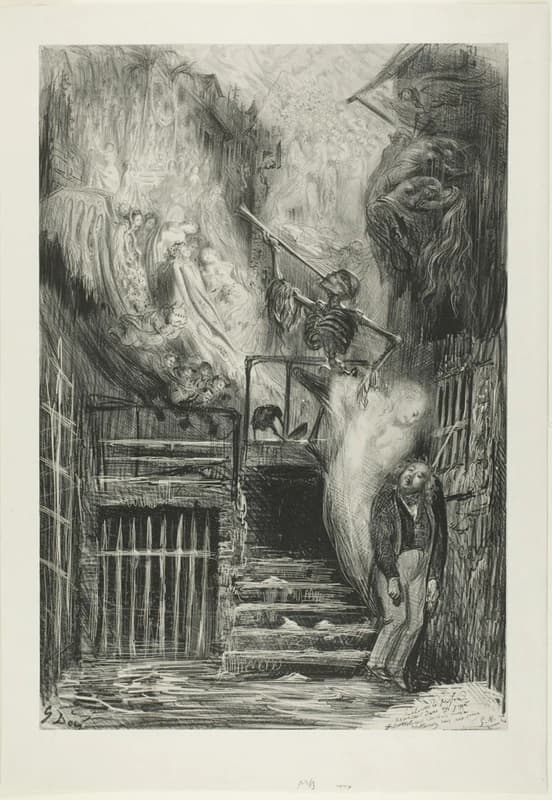
skeleton playing a trumpet
Gustave Doré · La Rue de la Vieille Lanterne: The Suicide of Gérard de Nerval
Art Institute of Chicago
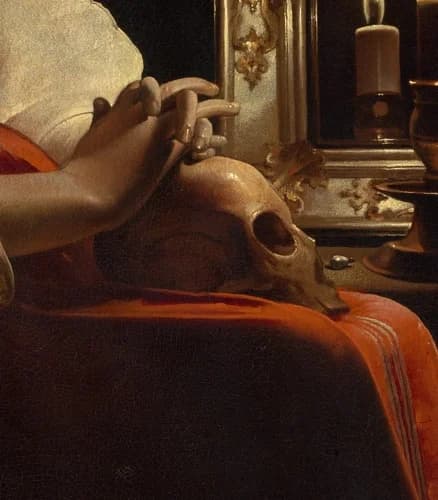
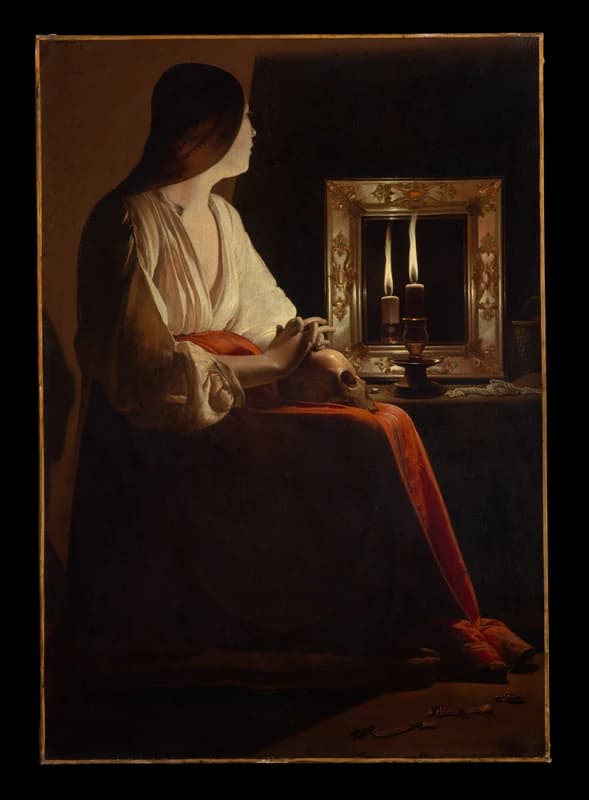
skull on lap
Georges de La Tour · The Penitent Magdalen
The Metropolitan Museum of Art
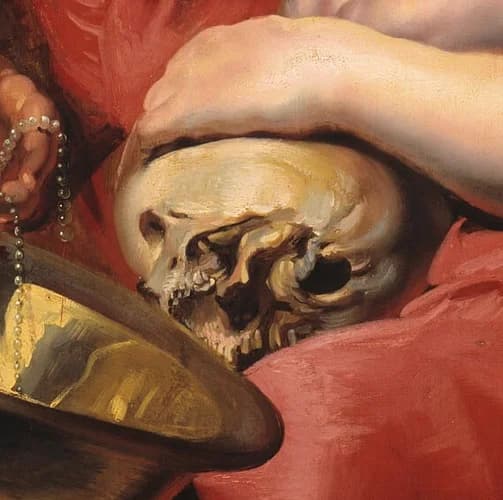
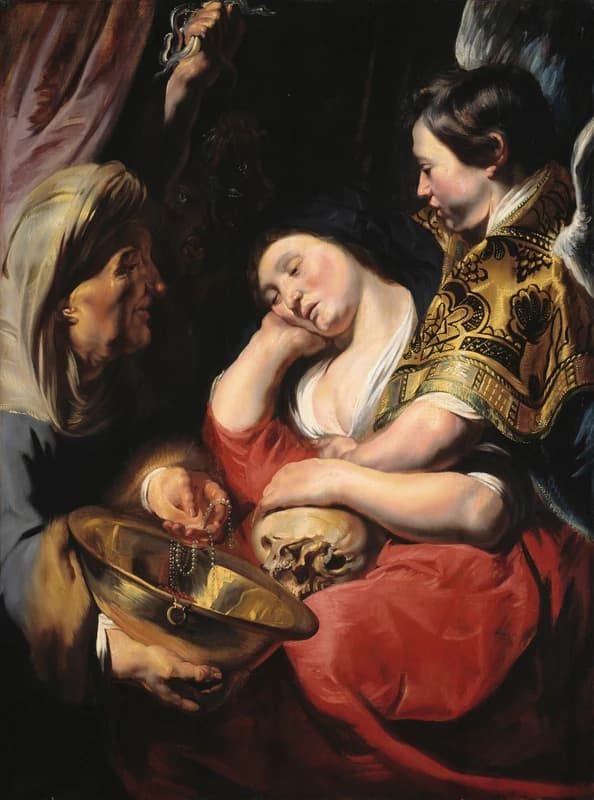
skull (memento mori)
Jacob Jordaens (Flemish, 1593-1678) · The Temptation of the Magdalene
Art Institute of Chicago
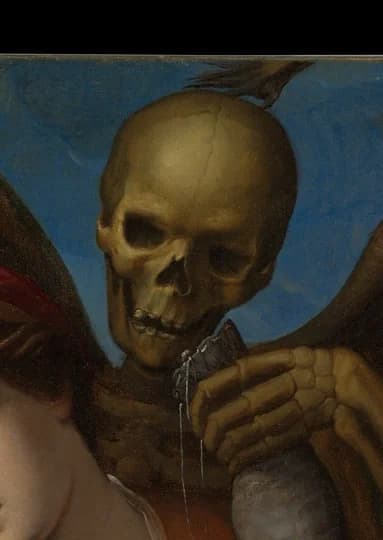
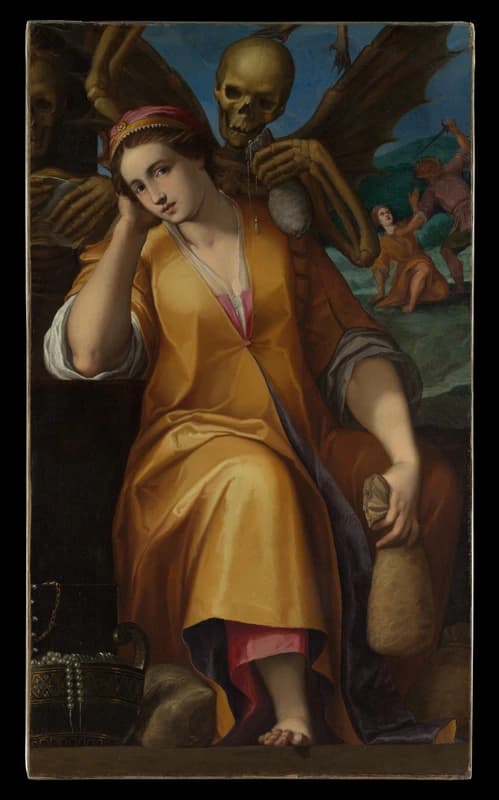
Skull of the skeleton representing Death
Jacopo Ligozzi · Allegory of Avarice
The Metropolitan Museum of Art
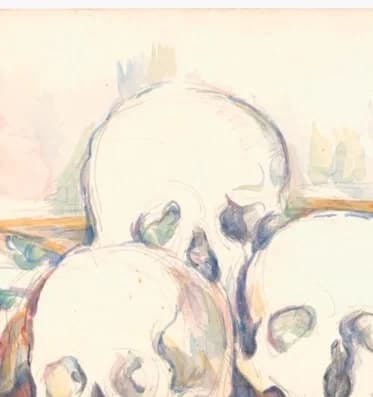
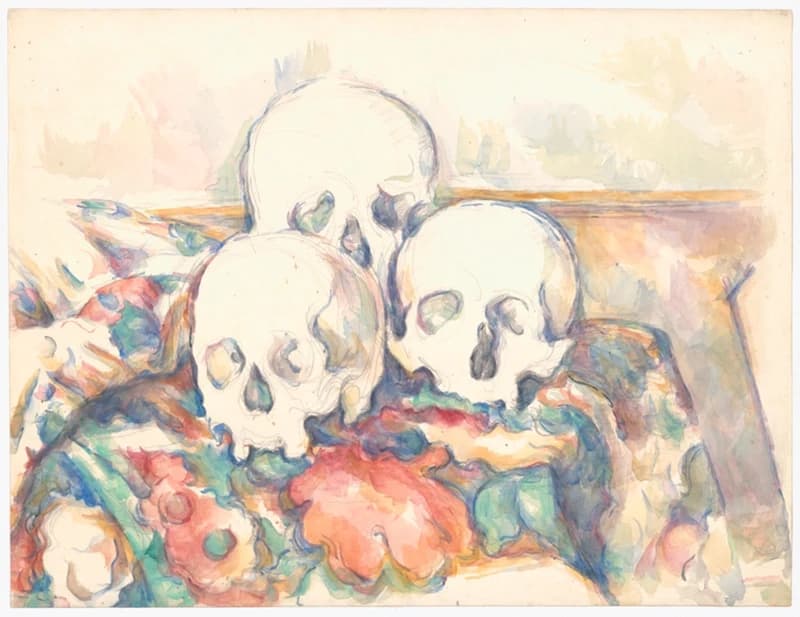
top central skull
Paul Cézanne · The Three Skulls
Art Institute of Chicago
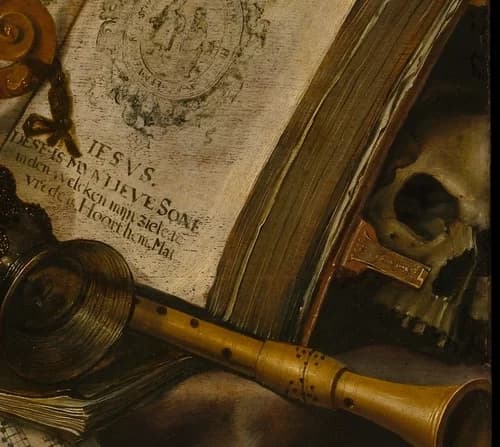
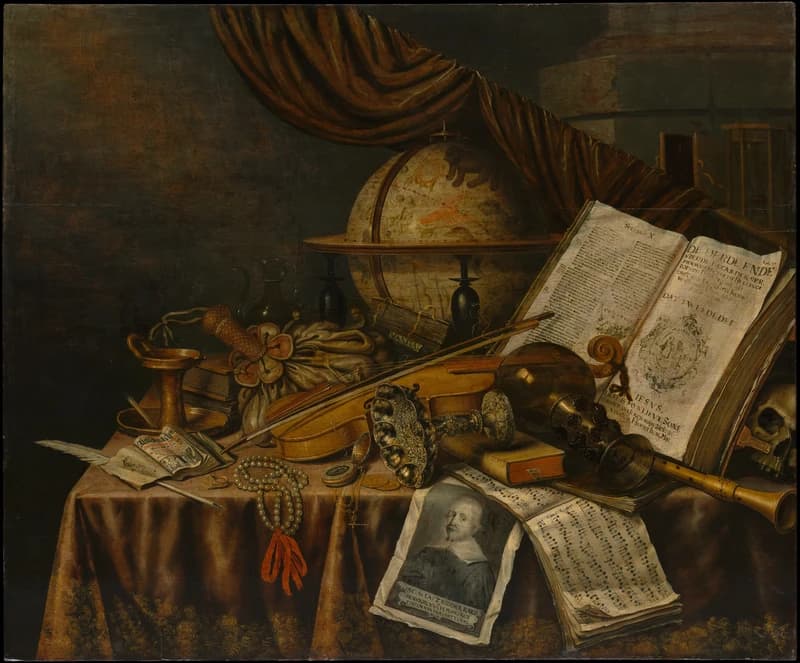
human skull
Edwaert Collier · Vanitas Still Life
The Metropolitan Museum of Art
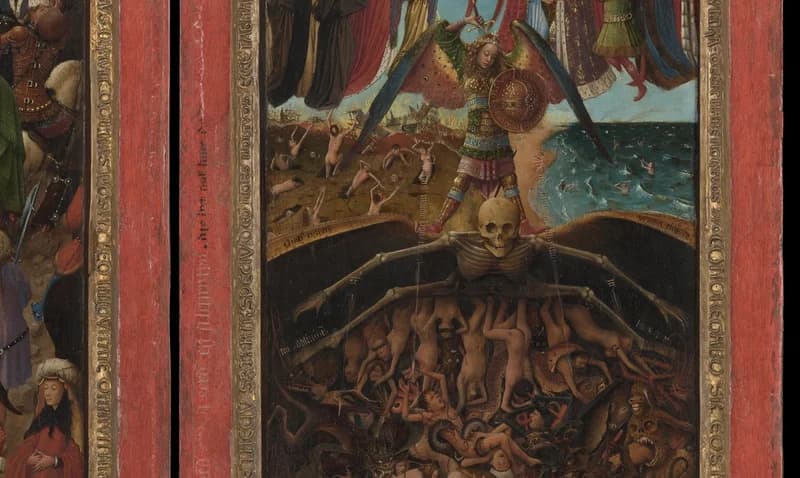
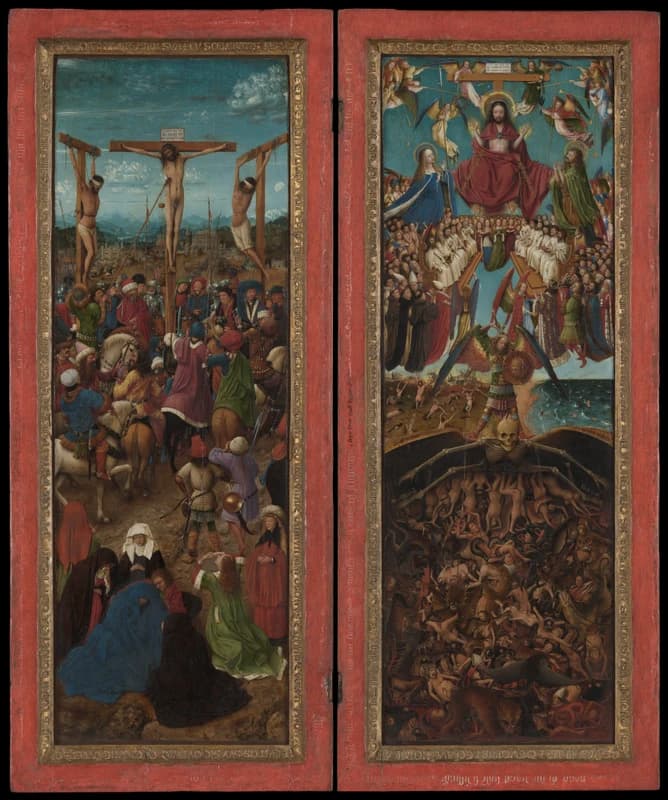
Skeleton representing Death
Jan van Eyck · The Crucifixion; The Last Judgment
The Metropolitan Museum of Art
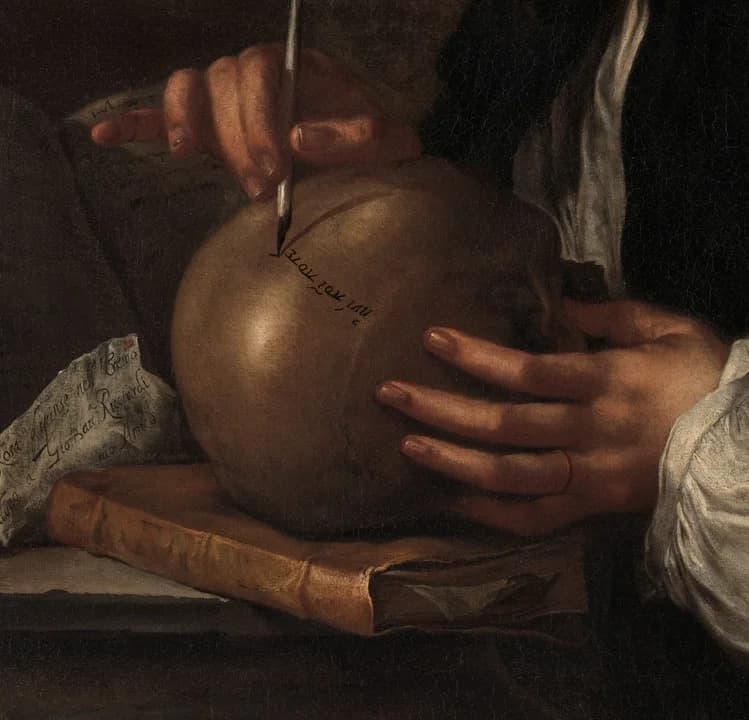
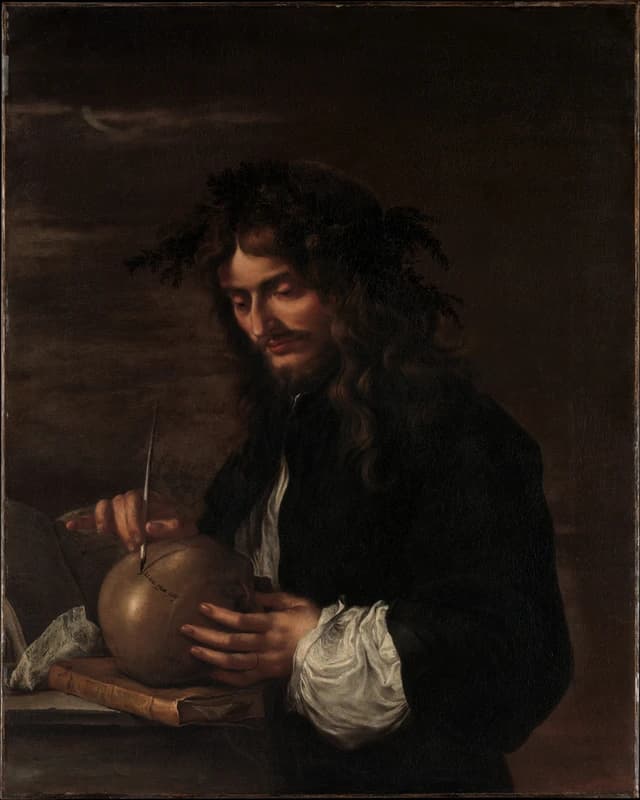
Memento mori skull
Salvator Rosa · Self-Portrait
The Metropolitan Museum of Art
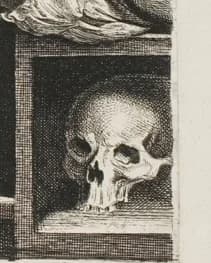
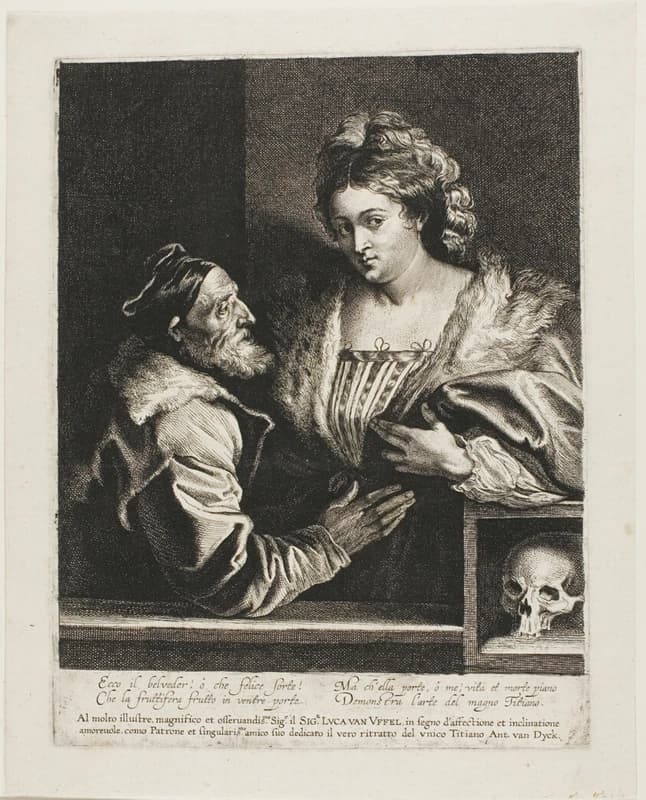
skull symbolizing death
Lucas Vorsterman (Dutch, 1595-1675) · Titian and His Mistress
Art Institute of Chicago
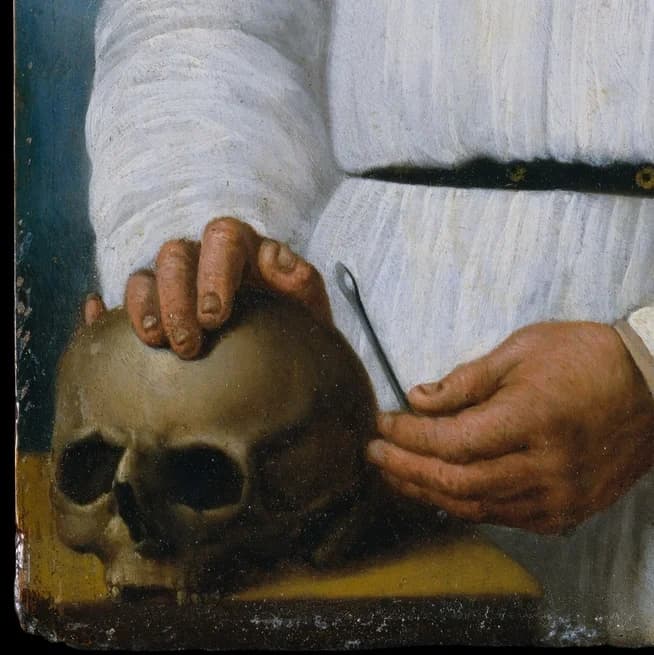
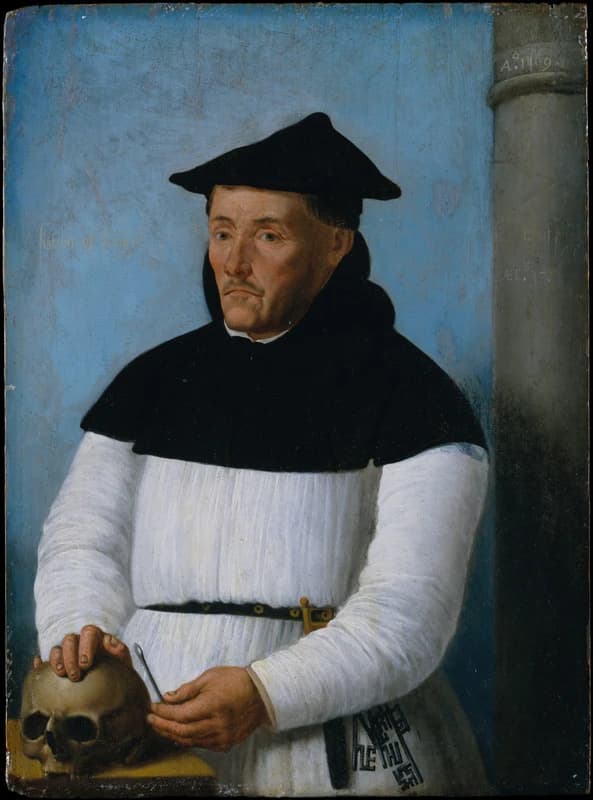
Human skull
Netherlandish Painter · Portrait of a Surgeon
The Metropolitan Museum of Art
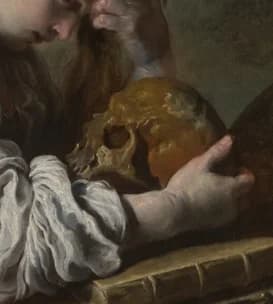
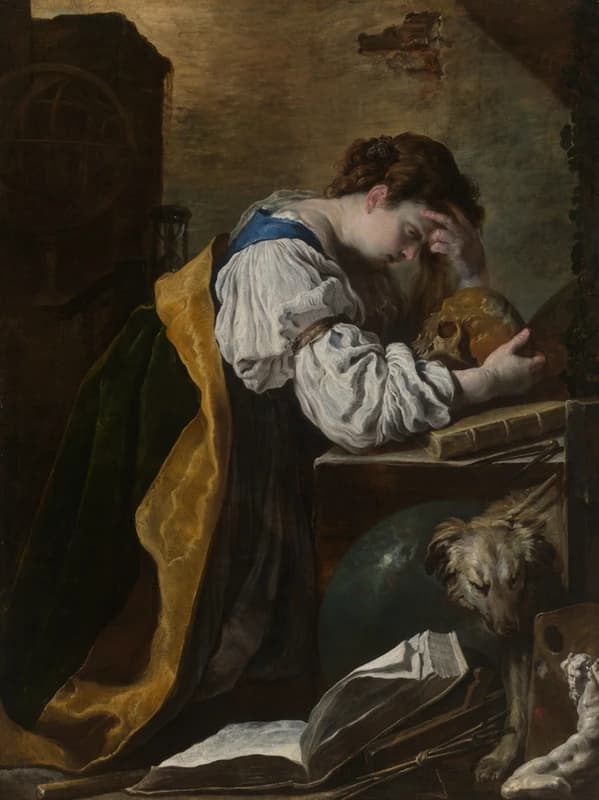
skull as a symbol of death
Domenico Fetti (Italian, c. 1589–1623) · Melancholia
Art Institute of Chicago
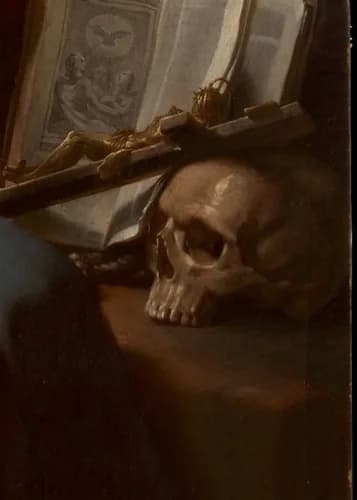
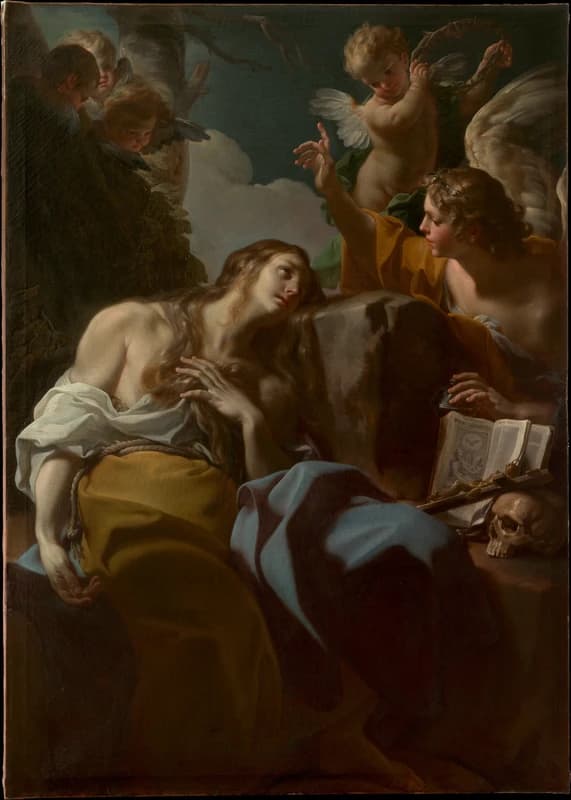
Skull symbolizing death
Corrado Giaquinto · The Penitent Magdalen
The Metropolitan Museum of Art
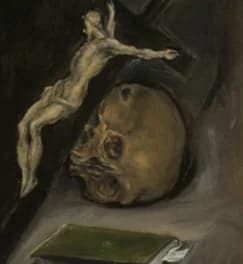
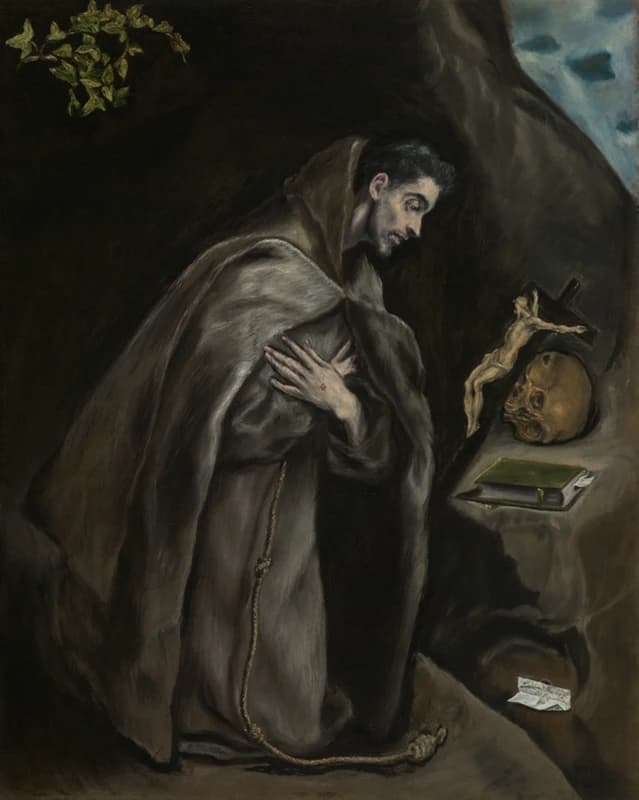
Skull (Memento Mori)
El Greco (Doménikos Theotokópoulos; Greek, active in Spain, 1541–1614) · Saint Francis Kneeling in Meditation
Art Institute of Chicago
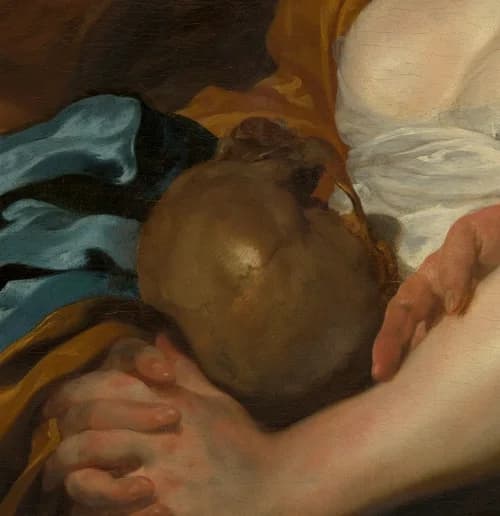
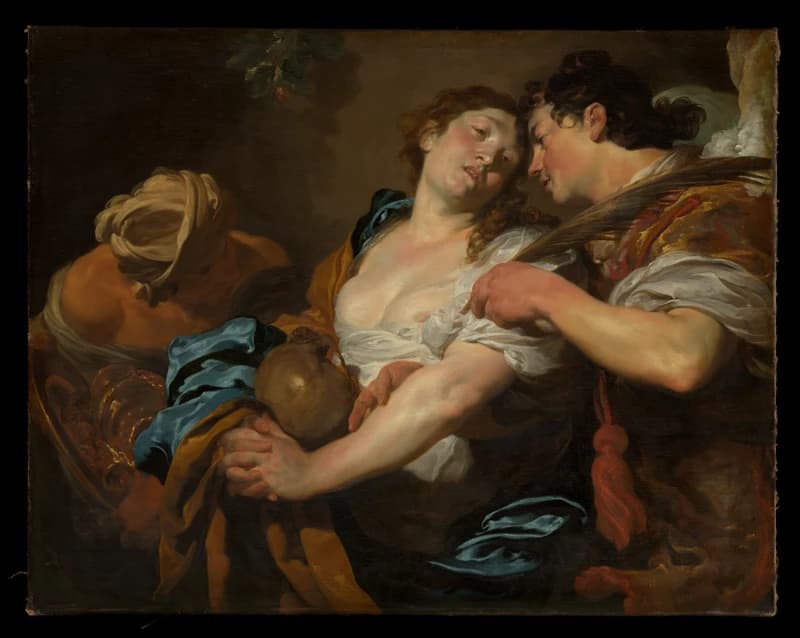
skull (memento mori)
Johann Liss · The Temptation of Saint Mary Magdalen
The Metropolitan Museum of Art
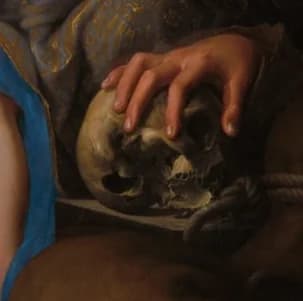
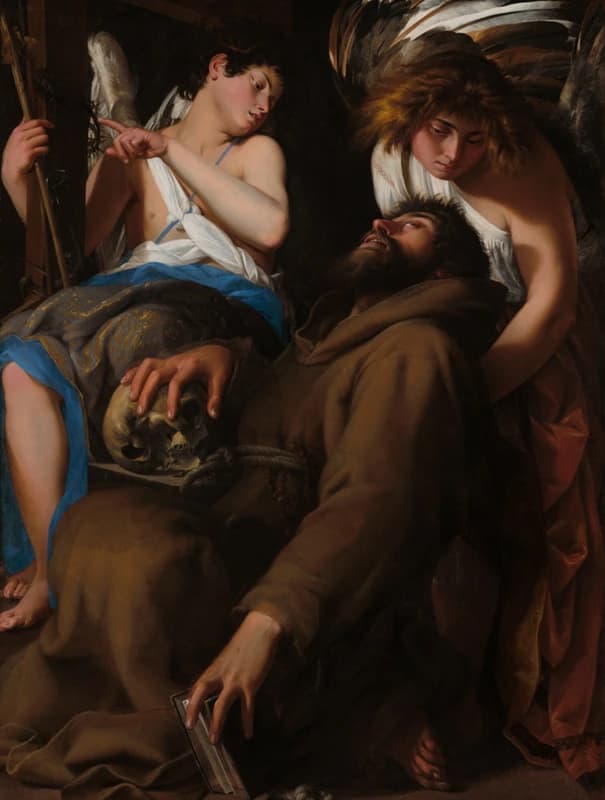
Skull (memento mori)
Giovanni Baglione (Italian, 1566–1643) · The Ecstasy of Saint Francis
Art Institute of Chicago
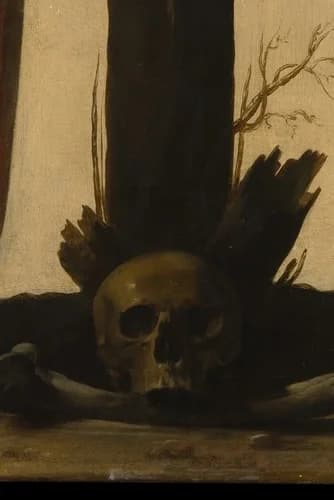
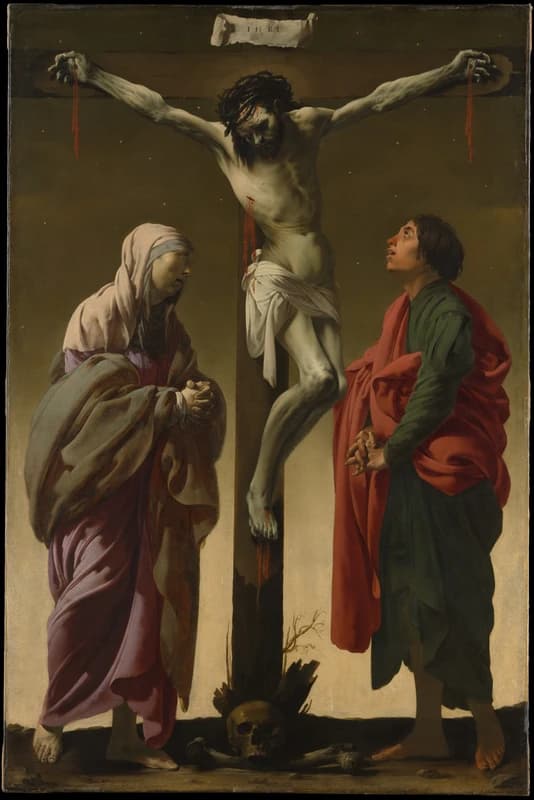
Skull of Adam
Hendrick ter Brugghen · The Crucifixion with the Virgin and Saint John
The Metropolitan Museum of Art
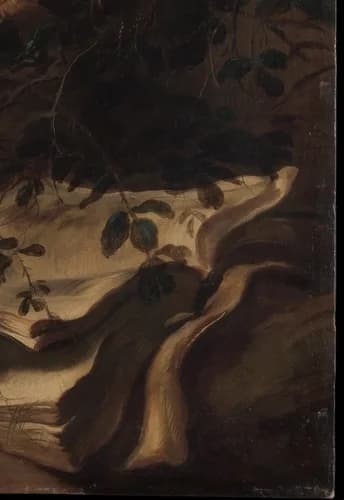
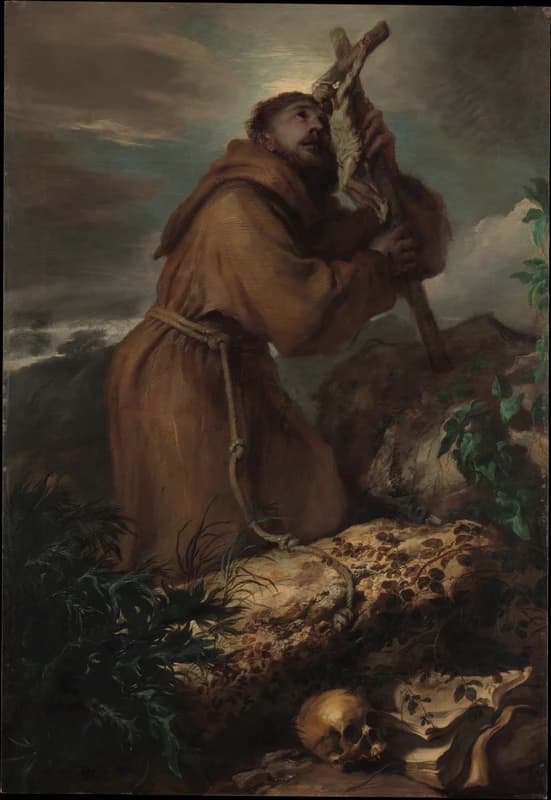
Skull at the feet (Vanitas)
Giovanni Benedetto Castiglione (Il Grechetto) · Saint Francis in Ecstasy
The Metropolitan Museum of Art
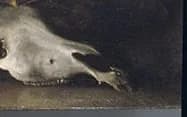
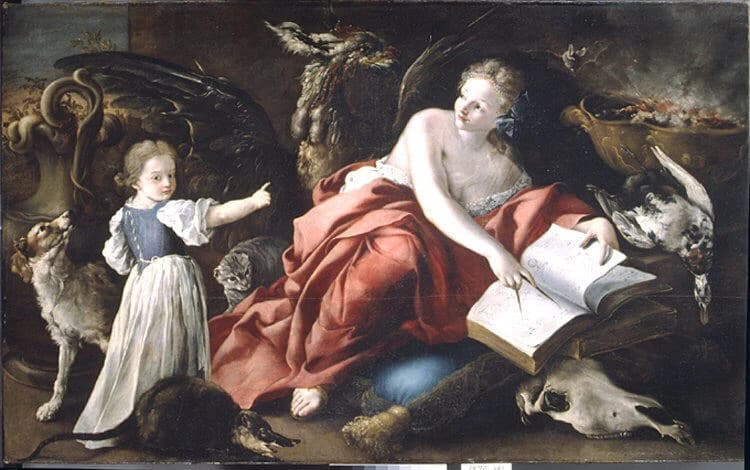
Horse skull
Domenico Guidobono · An Allegory
The Metropolitan Museum of Art
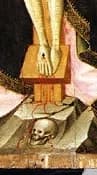
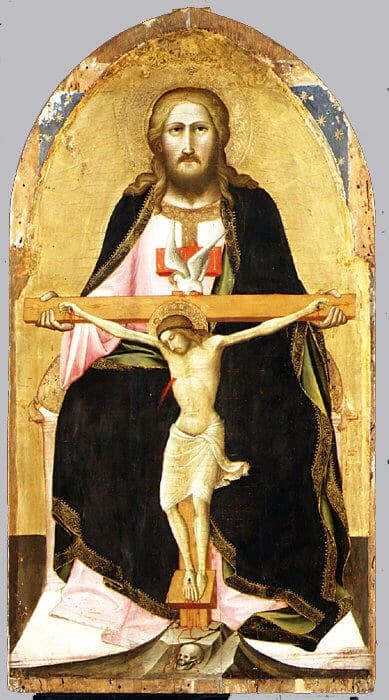
Skull at the base (Skull of Adam)
Agnolo Gaddi · The Trinity
The Metropolitan Museum of Art
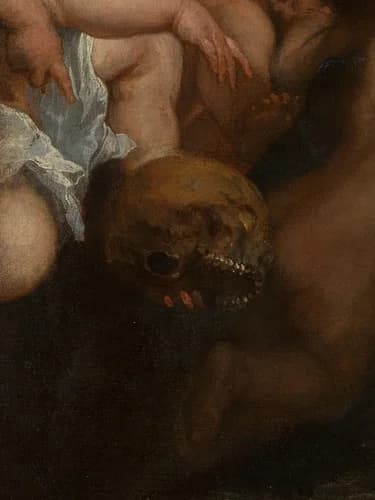
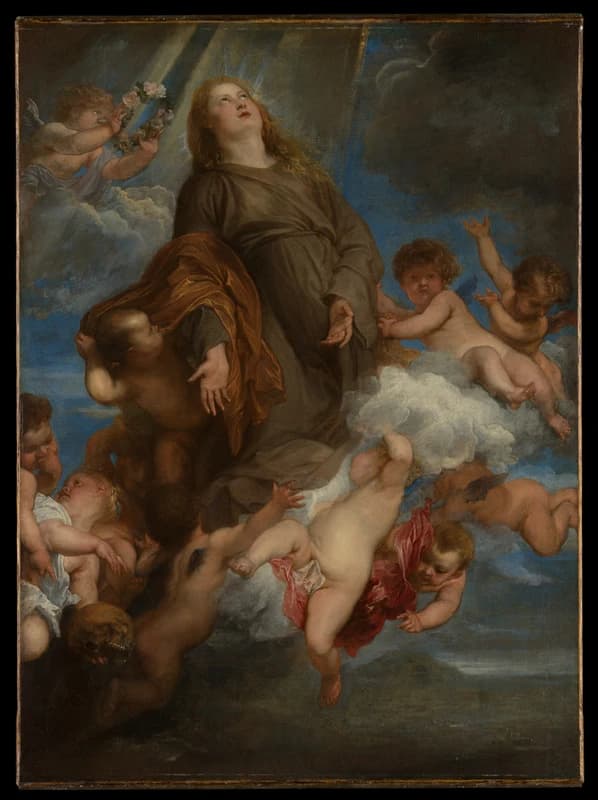
Skull symbolizing death
Anthony van Dyck · Saint Rosalie Interceding for the Plague-stricken of Palermo
The Metropolitan Museum of Art
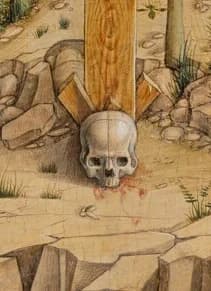
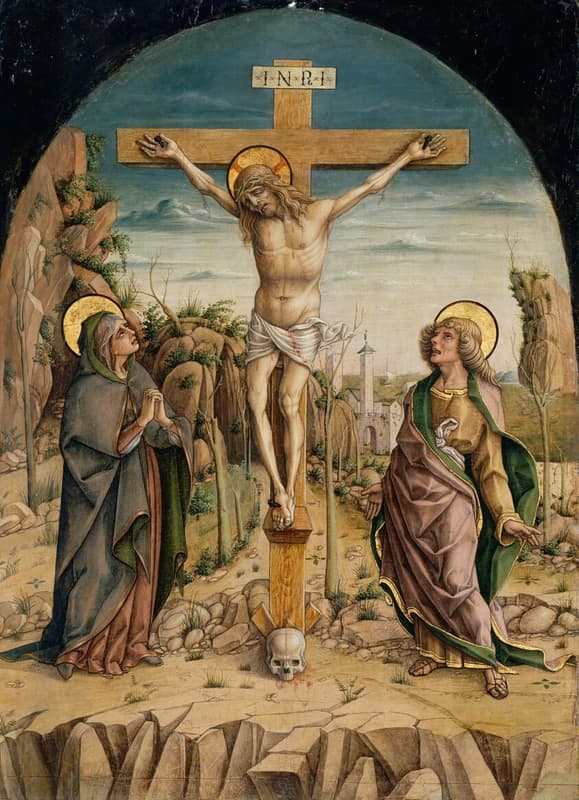
Skull of Adam
Carlo Crivelli (Italian, about 1430–about 1495) · The Crucifixion
Art Institute of Chicago
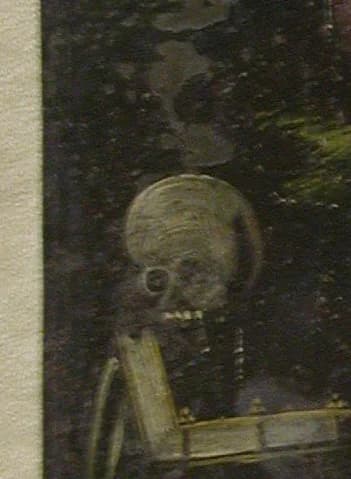
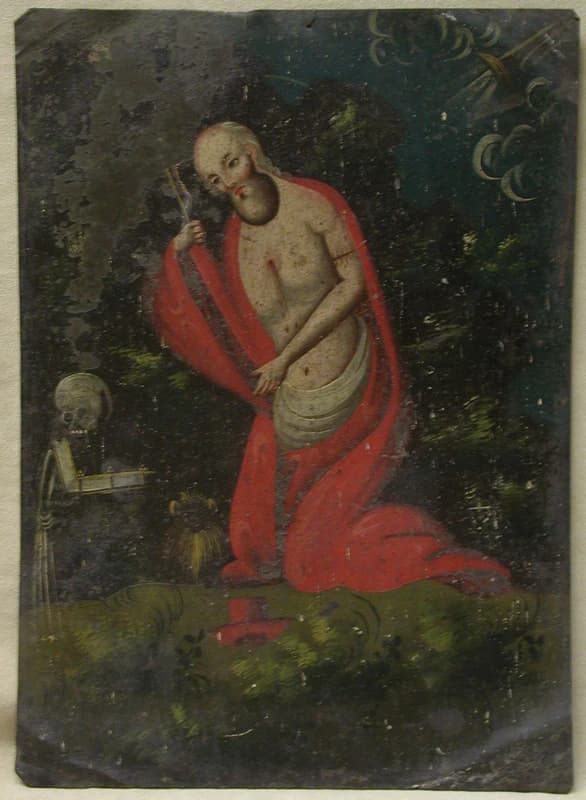
Skull (Memento Mori)
Saint Jerome
The Metropolitan Museum of Art
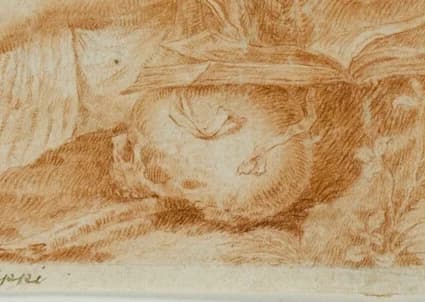
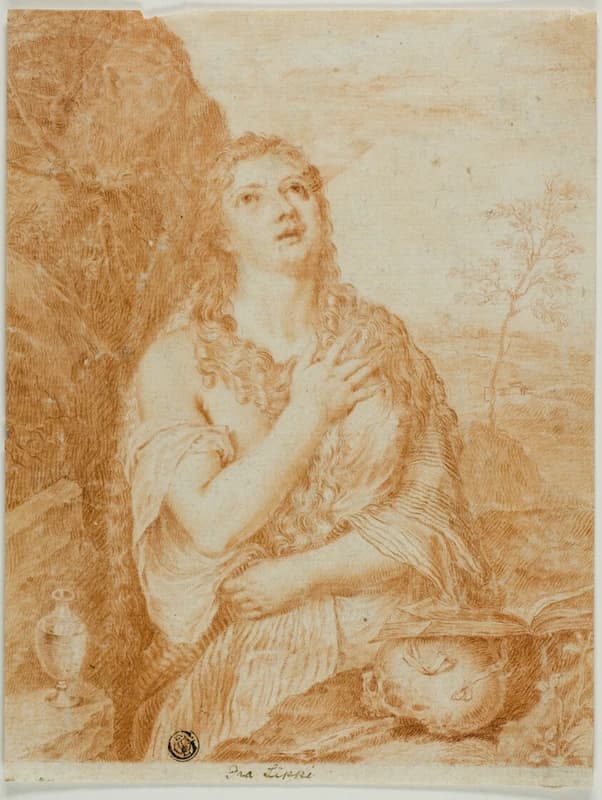
skull as memento mori
After Tiziano Vecellio, called Titian · Penitent Magdalene
Art Institute of Chicago