Artist
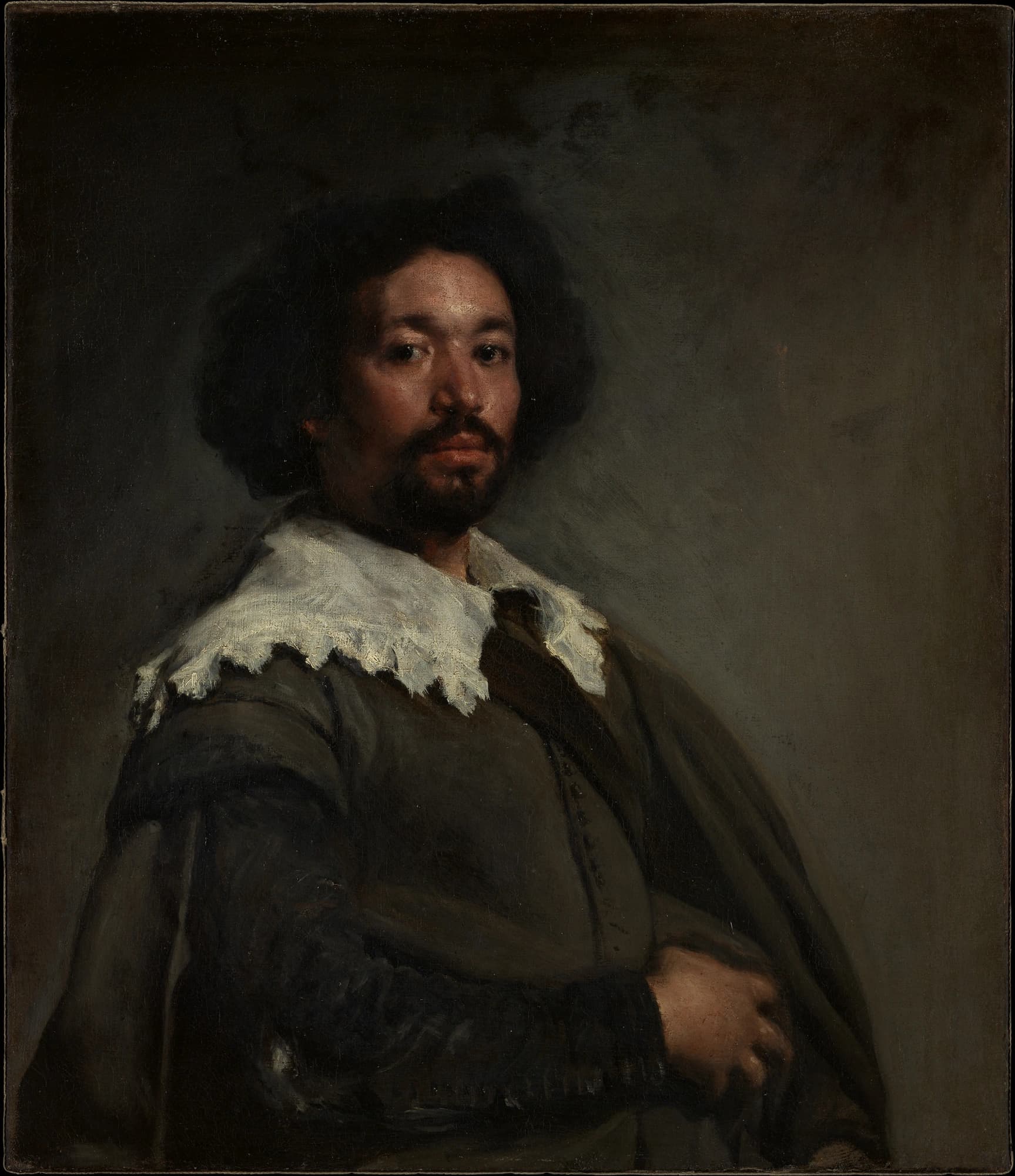
Velázquez (Diego Rodríguez de Silva y Velázquez)
Works (3)


Timeline
During his early years in Seville, he gained prominence with a realistic style known as 'bodegones,' which combined still life with genre scenes.1
He married Juana, the daughter of his teacher Francisco Pacheco, who recognized his talent early on and helped pave his way to the royal court.1
He was strongly influenced by Tenebrism, characterized by dramatic light and shadow, which he used to emphasize texture and three-dimensionality.1
He served as the court painter to King Philip IV of Spain for over 30 years, earning the King's deep trust and producing numerous royal portraits.1
His interaction with Peter Paul Rubens in 1628 and Rubens' advice to visit Italy led to a significant transformation in his artistic style.1
Through two trips to Italy, he absorbed the color palettes of Renaissance masters, evolving his technique into a freer and more fluid brushwork.1
His 'Portrait of Pope Innocent X,' painted in Italy, is considered one of the greatest portraits for its insightful depiction of the subject's character.1
In his later years, he mastered a technique where loose brushstrokes blend visually from a distance, profoundly influencing the later Impressionist movement.1

His masterpiece 'Las Meninas' features a complex composition including the Infanta, the artist himself, and the King and Queen, challenging the viewer's perspective.1
Beyond his artistic success, he aspired to noble status and was finally admitted to the Order of Santiago shortly before his death.1