Artist
Théodore Géricault
Works (7)
Timeline
Géricault trained under Carle Vernet in English sporting art from 1808, and under Pierre-Narcisse Guérin from 1810. Despite his impulsive temperament clashing with Guérin's strict classicism, his talent was recognized.1
From 1810 to 1815, he copied works by Rubens, Titian, and others at the Louvre. He found a vitality in these Old Masters that he felt was lacking in the prevailing Neoclassical school of his time.1
His first major work, 'The Charging Chasseur,' exhibited at the 1812 Paris Salon, was a youthful success. Its Rubens-inspired dynamism and contemporary subject matter marked him as a pioneer of Romanticism.1
A trip to Italy (1816–17), partly to flee a romantic entanglement with his aunt, ignited a fascination with Michelangelo. This influenced the monumental and powerful figure compositions of his later masterpieces.1
'The Raft of the Medusa' depicted a contemporary shipwreck scandal that the government tried to cover up. The monumental painting served as a public indictment of the corrupt establishment.1


'The Raft of the Medusa' bridges Neoclassicism and Romanticism by fusing classical figure structures with a turbulent subject. His contemporary, Eugène Delacroix, even posed for one of the figures.1

While in London (1820-21), Géricault witnessed urban poverty and produced lithographs based on these observations. These works were notable for their lack of sentimentality and stark realism.1


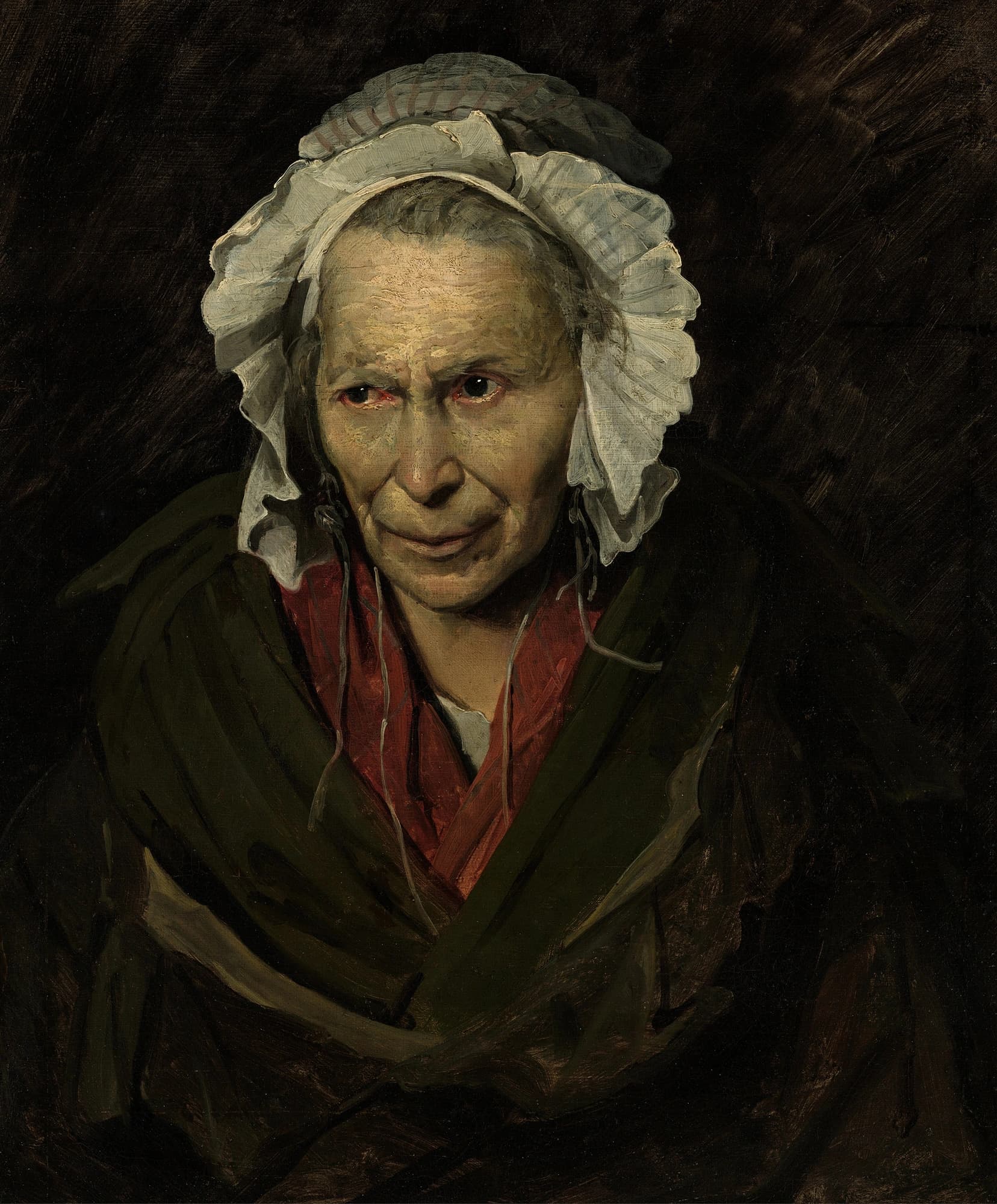
Late in life, he painted a series of portraits of the insane for Dr. Georget. These works are celebrated for their bravura style and expressive realism in documenting psychological discomfort.1
Géricault had a lifelong fascination with horses and their anatomy. In 'The Derby of Epsom' (1821), he used a unique pose with legs extended to convey a sense of extreme speed.1

Weakened by riding accidents and tuberculosis, Géricault died in 1824 at age 32. Despite his short life, he was a pioneer of the Romantic movement and deeply influenced artists like Delacroix.1