Artist
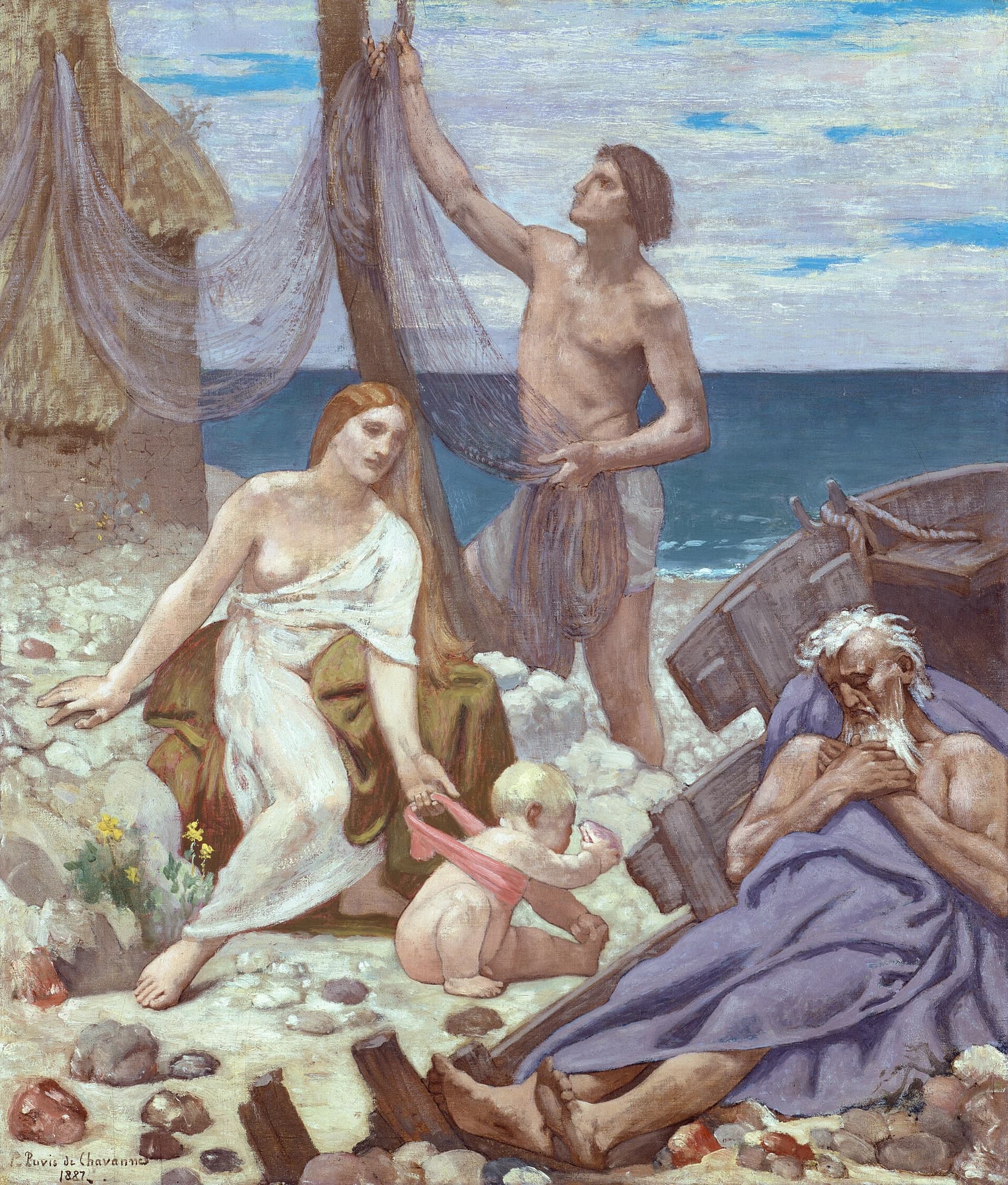
Pierre Puvis de Chavannes (French, 1824–1898)
Works (3)


Timeline
Originally intending to follow his father's career as a mining engineer, a serious illness in 1844 led him to convalesce. A subsequent trip to Italy inspired him to become a painter at age 22.1
He studied briefly under Delacroix and Thomas Couture but preferred to work alone, developing a non-classical training style that relied on his own artistic intuition.1
Known as 'the painter for France,' he gained fame through mural commissions for public buildings, including the Musée de Picardie, the Pantheon, and the Sorbonne.1
In the early Third Republic, he succeeded as a 'painter for France' by creating works that appealed to both Republicans and Royalists, bridging the ideological divide.1
The enormous hemicycle mural 'The Sacred Grove' at the Sorbonne in Paris is one of his masterpieces, depicting a hall of learning surrounded by muses in a serene composition.1
In 1890, he co-founded and became president of the Société Nationale des Beaux-Arts, establishing a dominant new salon for contemporary art in Paris.1
He shared a 40-year relationship with the Romanian princess Marie Cantacuzène. They married in 1898, shortly before their deaths; she was his lifelong spiritual support.1