Artist
Hugo van der Goes


Timeline
In 1467, he became a master in the painters' guild of Ghent. Joos van Wassenhove was one of his sponsors, and it is believed he had trained elsewhere before settling in Ghent.1
He served as the deacon of the Ghent painters' guild from 1474 to 1476, establishing himself as the city's leading artist and handling numerous public commissions.1
At the peak of his career in 1477, he closed his workshop to join a monastery as a lay brother. He was granted privileges to continue painting and receive eminent visitors.1
In 1482, he suffered an acute depression and attempted suicide, declaring himself damned. This mental breakdown contributed to his legacy as a 'suffering genius.'1
In 1482, he was asked to value and complete works left unfinished by Dieric Bouts, including the donor portraits on the left panel of the Triptych for Hyppolite Berthoz.1
Speculation suggests his madness was caused by anxiety over his artistic achievements, specifically the pressure of trying to equal the Ghent Altarpiece.1
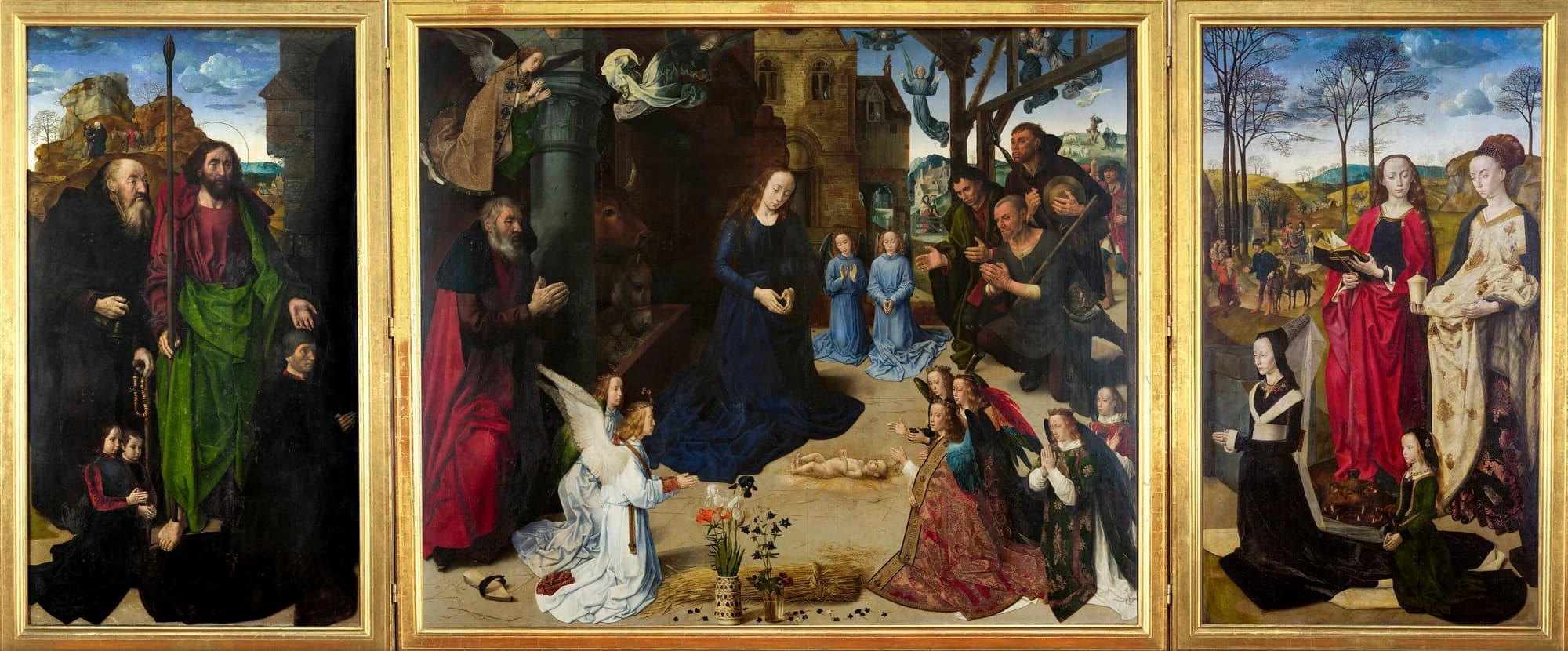
His masterpiece, the Portinari Triptych, arrived in Florence in 1483 and influenced Italian Renaissance artists in their development of realism and use of color.1
Vincent van Gogh identified emotionally with Van der Goes after seeing a 19th-century painting of the artist's madness, likening his own appearance to him in letters.1