Artist
Alexey Venetsianov
Works (1)

Timeline
Born in 1780 to a merchant family of Greek descent in Moscow, he initially worked as a civil servant while teaching himself art by copying works at the Hermitage, later apprenticing under Vladimir Borovikovsky.1
In 1811, he was awarded the title of Academician by the Academy of Arts for his self-portrait and other works, which officially established his status as a professional artist after starting as a portraitist.1
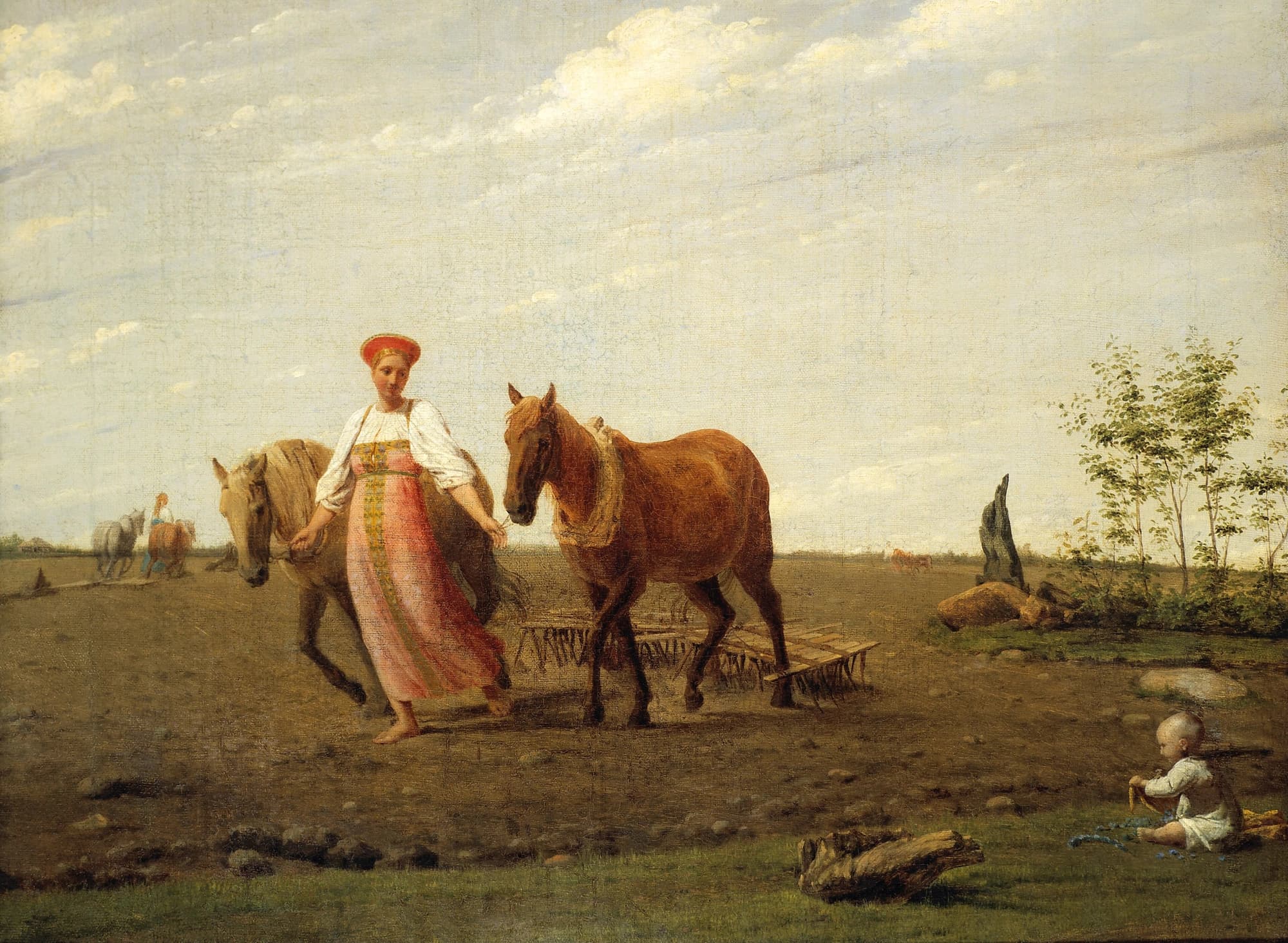
In 1819, he left the civil service and moved to the village of Safonkovo. This turning point allowed him to observe and paint nature and peasant life directly, establishing his most significant artistic style.1
His paintings of peasants received great critical acclaim at an 1824 exhibition. This success led to the widespread recognition of his 'national' themes within the Russian art world.1
In the mid-1820s, he founded his own art school, accepting students from poor backgrounds and even serfs like Grigory Soroka, providing tuition almost for free—a revolutionary act in Russia at the time.1
In 1847, he died in a tragic accident when his carriage horses bolted and fell down a steep slope. His realistic and humane style significantly influenced the later development of Russian Realism.1