Artist
Valentin Serov

Timeline
Raised in an artistic milieu by composer parents, Serov studied under Ilya Repin and Pavel Chistyakov. Repin's realism and Chistyakov's strict pedagogy sparked his early creativity.1
Early works like 'The Girl with Peaches' (1887) are considered pioneers of Russian Impressionism. Though unaware of French Impressionists at the time, he captured spontaneous light and color.1
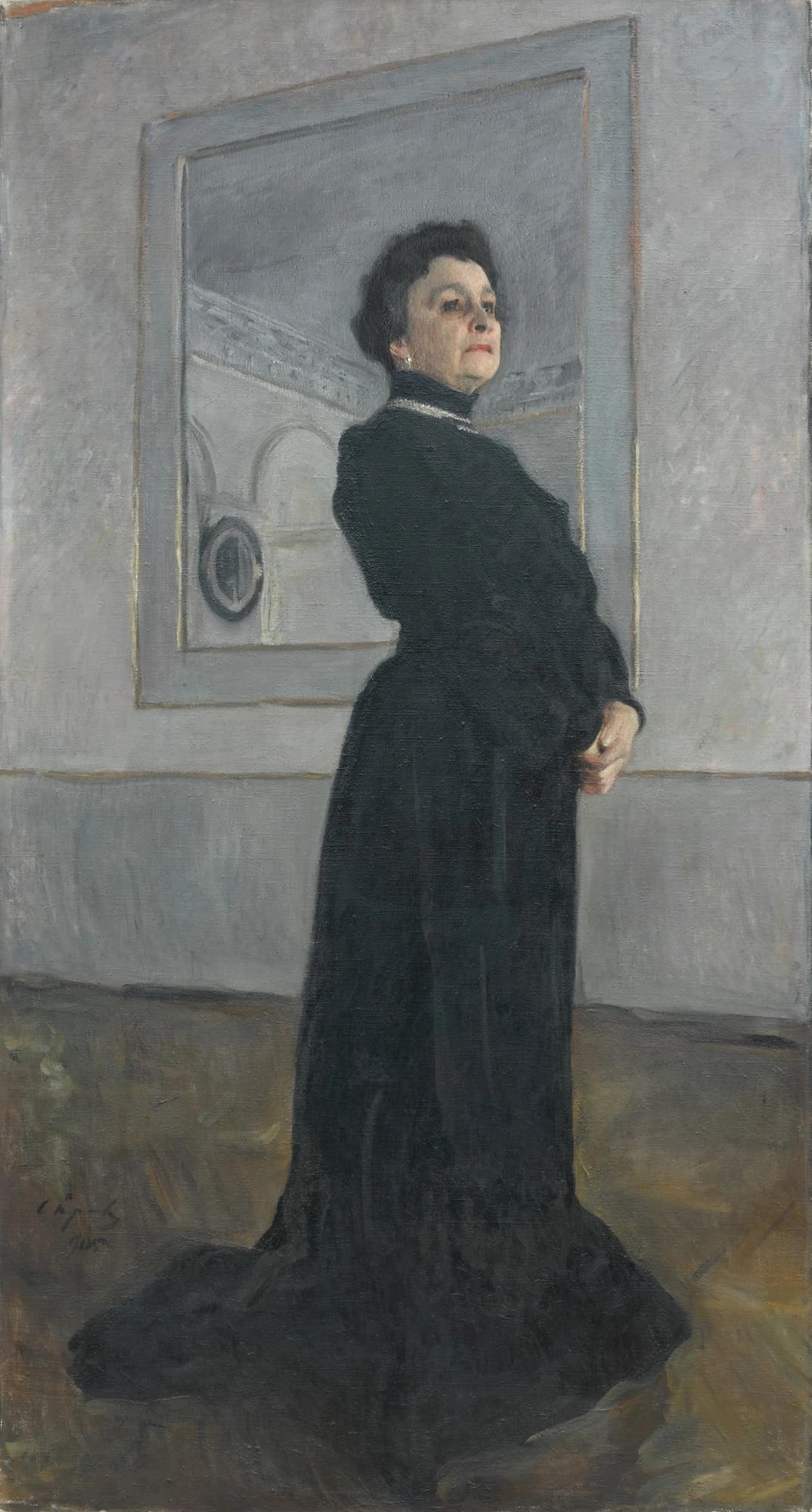
From 1890, Serov focused on portraiture, gaining fame for psychologically pointed characteristics. He depicted fellow artists like Korovin and Levitan using deep, expressive tones.1
Serov's portrait style derived from studying masters like Hals and Velázquez. In the 1890s, he shifted from bright colors to a dominant scale of black, grey, and brown tones.1
After joining the Itinerants in 1894, Serov became a favorite of the Russian elite, painting royals and aristocrats like Felix Yusupov and Princess Olga Orlova in a grand yet truthful manner.1
As an influential teacher, Serov taught at the Moscow School of Painting for 12 years. His students included Kuzma Petrov-Vodkin and other major figures of the next generation of Russian art.1
Serov excelled in children's portraits, capturing spontaneous gestures and purity. He used various techniques like pastels and watercolors to create intimate, heartfelt depictions of youth.1
In 1900, Serov joined 'The World of Art' due to dissatisfaction with the Itinerants. His style evolved from Impressionism toward a more decorative, modernistic approach while remaining realistic.1
In 1905, Serov resigned from the St. Petersburg Academy of Arts to protest the 'Bloody Sunday' massacre. His democratic beliefs were reflected in his satirical works and historical paintings.1

In his final years, Serov turned to classical mythology and historical themes. His works on Peter the Great and ancient myths featured personal interpretations and deep historical insight.1
A 2016 retrospective in Moscow became a phenomenon, with crowds waiting hours in freezing temperatures. After Putin's visit, the rush was so great that a museum door was broken down.1