Artist
John Steuart Curry

Timeline
From 1921 to 1926, Curry worked as an illustrator for magazines like The Saturday Evening Post, an experience that contributed to the narrative quality of his later paintings.1
In 1926, Curry studied the works of Courbet and Daumier in Paris, as well as the color techniques of Titian and Rubens, which informed his later expressive use of color and brushwork.1
Regionalism was a revolt against industrial centralization. Following the 1929 crash, rugged depictions of independent rural life provided an alternative to the perceived failures of capitalism.1

Curry traveled briefly with the Ringling Brothers Circus, leading to his painting 'The Flying Cadonas,' which captured the dynamic movement and tension of trapeze artists.1
In 1936, Curry was appointed the first artist-in-residence at the University of Wisconsin's College of Agriculture, where he promoted art in farming communities without formal teaching duties.1
The Dust Bowl turned Curry into a conservationist. He intended to portray soil erosion as a 'significant warning' of ecological disaster, though this met with resentment from local farmers.1
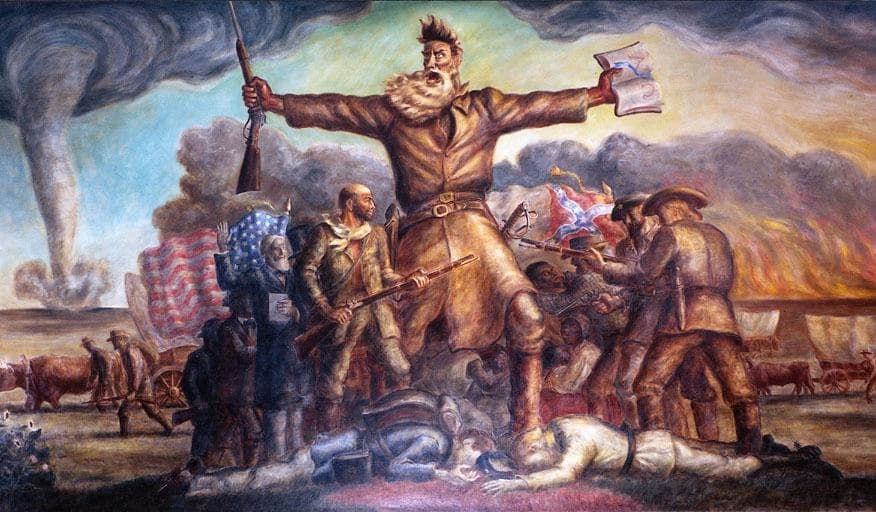
His mural 'Tragic Prelude' for the Kansas State Capitol was so controversial that the legislature blocked its hanging. In disgust, Curry refused to sign the work, which he considered his greatest.1