Artist
Anthony van Dyck
Works (13)
Equestrian Portrait of Charles I
1630
Self-portrait with a Sunflower
1632

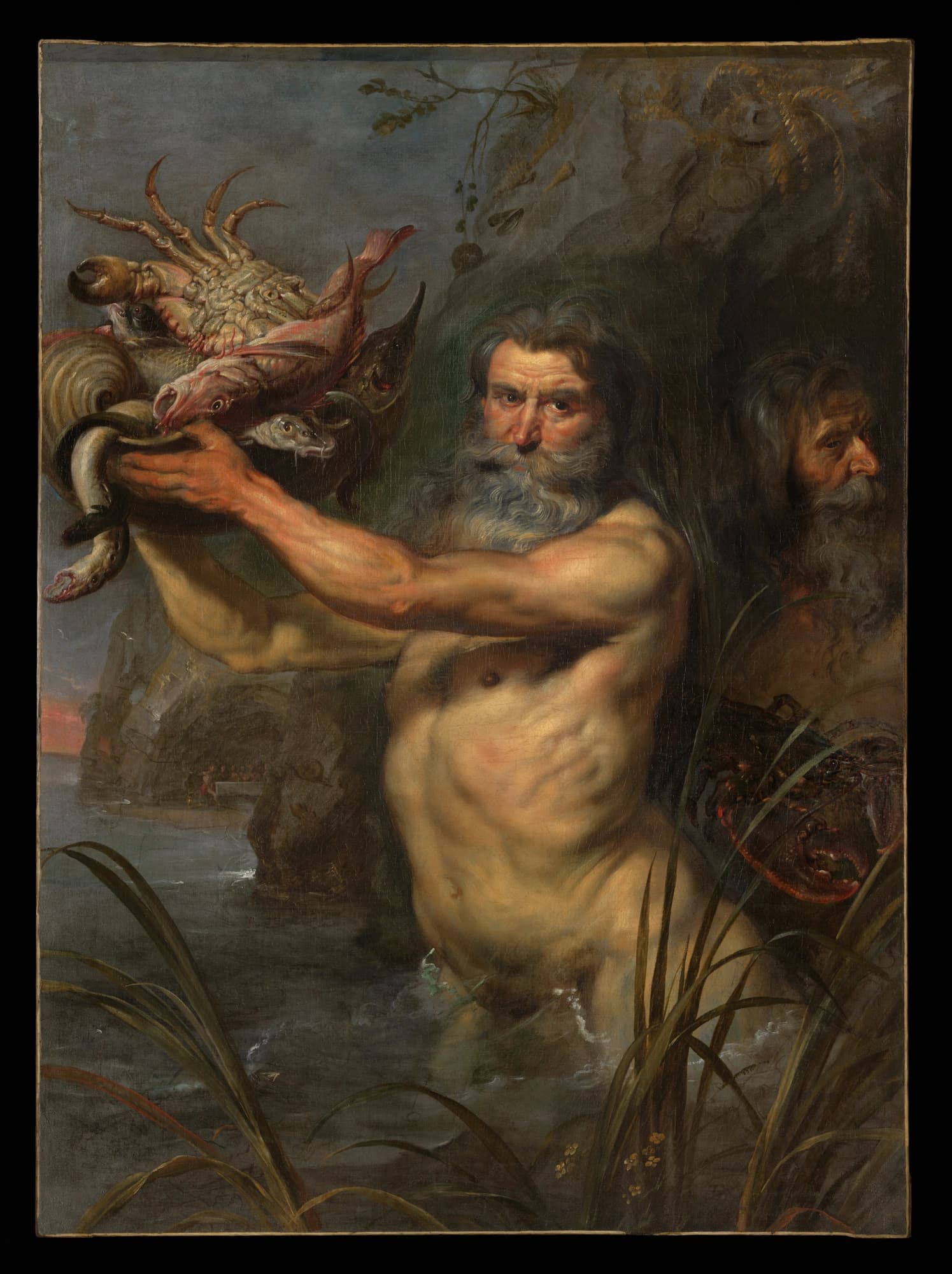
Two Tritons at the Feast of Acheloüs

A Man Mounting a Horse
ca. 1630

Sir Peter Paul Rubens (1577–1640)

Virgin and Child with Saint Catherine of Alexandria
ca. 1630

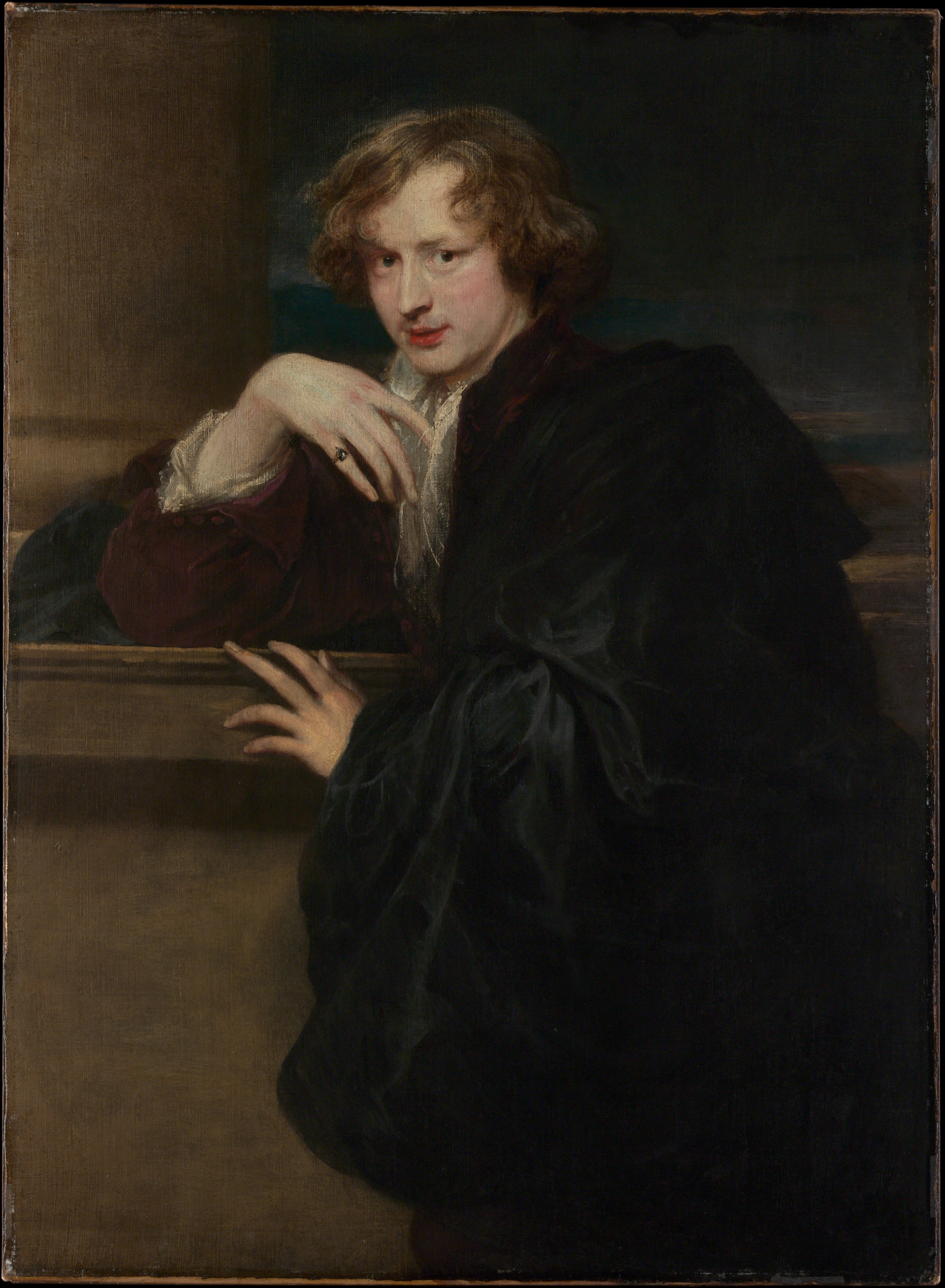
Self-Portrait
ca. 1620–21

Study Head of an Old Man with a White Beard
ca. 1617–20

Robert Rich (1587–1658), Second Earl of Warwick
ca. 1632–35

Queen Henrietta Maria
1636

Lucas van Uffel (died 1637)
ca. 1622

Saint Rosalie Interceding for the Plague-stricken of Palermo
1624

James Stuart (1612–1655), Duke of Richmond and Lennox
ca. 1633–35
Timeline
He began formal training at age 10 under Hendrick van Balen. His early talent was evident in his self-portrait from around age 14, which already showed accomplished skill.1
Born in Antwerp in 1599, he became a master in the Guild of Saint Luke at the age of 18, demonstrating his precocious talent as an independent painter in his late teens.1
He became the chief assistant to Peter Paul Rubens, who called him his 'best pupil.' The grand compositional style he learned in Rubens' workshop heavily influenced his early work.1
He spent six years in Italy from 1621, mostly in Genoa, where he established his own style by painting local aristocrats and absorbing the techniques of Italian masters.1
During his 1621 stay in London, he encountered Titian's work, which transformed his use of color and modeling, adding a new stylistic language to the lessons learned from Rubens.1
In Rome, he behaved like a nobleman, wearing silks and gold chains and accompanied by servants, which annoyed the more bohemian colony of Northern artists.1
In 1624, while in plague-stricken Palermo, he created the standard iconography of Saint Rosalia, which became highly influential for later Italian Baroque painters.1
An innovator in etching, he produced the 'Iconography' series, a collection of portrait prints of famous contemporary artists and figures, gaining high acclaim in the field.1
Along with Velázquez, he revolutionized court portraiture. His elegant and sophisticated style dominated English portrait painting for over 150 years.1
In 1632, he moved to London as the principal court painter for Charles I. Knighted by the King, he painted the royal family and aristocracy, defining the golden age of English portraiture.1
He died in London in 1641 and was buried in St Paul's Cathedral. His burial in such a prestigious location reflects the high social standing he achieved during his lifetime.1