
Artist
Angelica Kauffmann
Works (5)

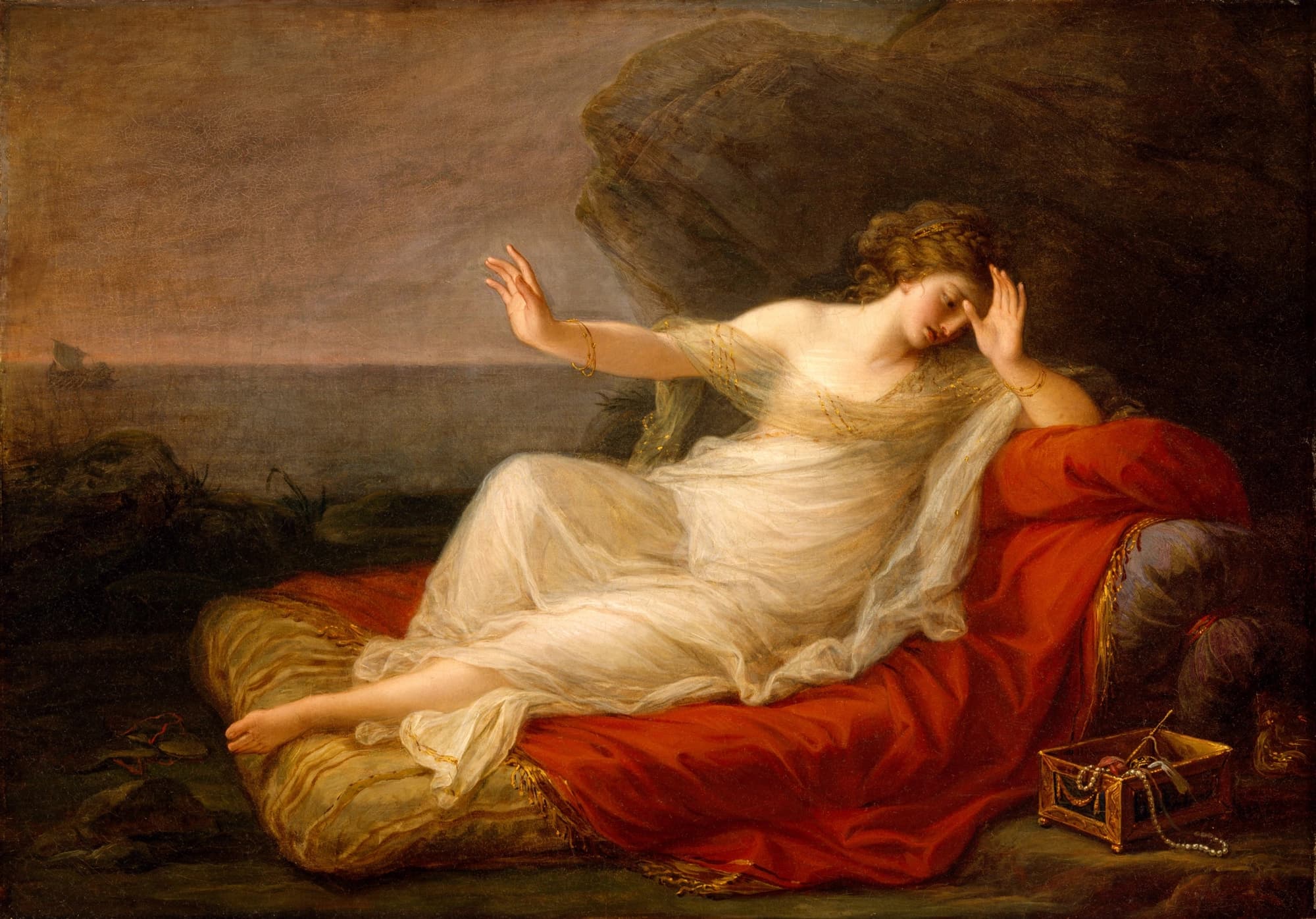
Ariadne Abandoned by Theseus
1774

Monsignor Giuseppe Spina (1756–1828)
1798

Edward Smith Stanley (1752–1834), Twelfth Earl of Derby, Elizabeth, Countess of Derby (Lady Elizabeth Hamilton, 1753–1797), and Their Son (Edward Smith Stanley, 1775–1851)
ca. 1776

The Sorrow of Telemachus
1783

Telemachus and the Nymphs of Calypso
1782
Timeline
A child prodigy trained by her painter father, she was known as a portraitist by age 12. Fluent in four languages, she assisted her father across Europe, gaining early recognition in the academies of Bologna and Florence.1
During her 1762 visit to Florence, she discovered the emerging Neoclassical style. This encounter was a major artistic turning point, defining the style that would later make her a celebrated history painter.1
The scholar Winckelmann praised her, saying her singing rivaled virtuosos and her art combined beauty and facility. Her portrait of him helped spread her fame throughout Europe.1
She shared a close friendship with Sir Joshua Reynolds, and they painted each other's portraits. Their intimacy sparked rumors in society and even led to satirical attacks by rival artists like Nathaniel Hone.1
In 1767, she was seduced into a tragic marriage with an impostor calling himself Count Frederick de Horn. They separated the following year, an event that became a well-known personal scandal in her life.1
In 1768, she became one of only two female founding members of the Royal Academy in London. This rare honor for a woman at the time highlights her exceptional talent and standing in the art world.1
She painted a series for the Royal Academy's ceiling titled 'The Elements of Art,' personifying Invention, Design, Composition, and Coloring. These allegorical works are considered her most recognizable masterpieces.1
Despite her success in London, she moved to Rome where history painting was more highly esteemed. She left her stable position in Britain to pursue her artistic ideals in a more receptive environment.1