
Artist
Alexandre Cabanel
Works (2)


Timeline
Cabanel entered the École des Beaux-Arts in 1840 under François-Édouard Picot. He won the Prix de Rome in 1845 and resided at the Villa Medici until 1850.1
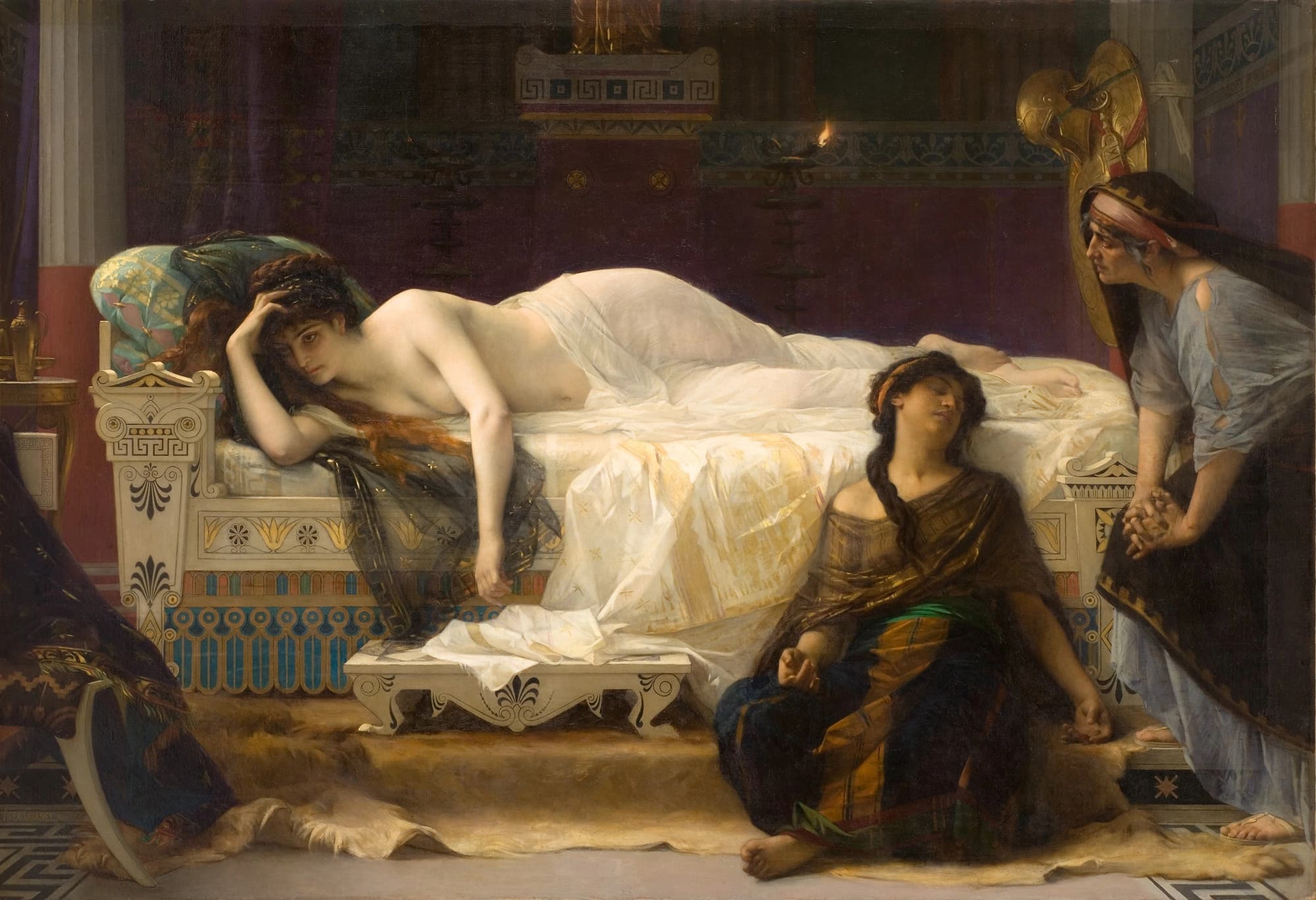
A history and genre painter, he evolved towards romantic themes like 'Albaydé', inspired by Victor Hugo, while maintaining a foundation in traditional Academic art.1
Cabanel was Napoleon III's preferred painter and, with Gérôme and Meissonier, was considered one of the three most successful artists of the Second Empire.1
His 1863 masterpiece 'The Birth of Venus' embodied Academic ideals with graceful modeling and silky brushwork, and was purchased by Napoleon III for his personal collection.1
As a Salon jury member in 1863, his refusal to allow Manet and others to exhibit led to the establishment of the famous Salon des Refusés by the French government.1
As a professor at the École des Beaux-Arts from 1864 and a 17-time Salon jury member, he trained hundreds of pupils, shaping the character of Belle Époque painting.1
Commissioned by Ludwig II of Bavaria, he painted 'Paradise Lost' for the Maximilianeum in Munich, earning the Order of Merit of Saint Michael of Bavaria.1
His personal life was marked by tragedy; he lost his first wife and two children in 1867, and his second wife died just four years after their marriage in 1869.1
While criticized by modernists like Zola and Huysmans, his style remained perennially popular with collectors for its perfected forms and classical subjects.1
Despite being an Academic guardian, he defended Manet's 'Pertuiset' in 1881, stating that no one among the jury was capable of painting such a head in the open air.1