Artist
François Gérard

Timeline
Born in Rome in 1770 to a French father and an Italian mother. At age 12, he entered the Pension du Roi in Paris and studied under sculptor Pajou and painter David, a background that formed his sophisticated style.1
He emerged as a star pupil of Neoclassical master Jacques-Louis David. His exceptional skills were highly trusted by his master, even assisting in the execution of David's celebrated portrait of Le Pelletier.1
He established his fame with 'Belisarius' (1795) and 'Psyche et l'Amour' (1797). The graceful and idealized depiction of Psyche brought a fresh breeze to the French art world and achieved great success.1
As court painter to Napoleon I, he was created a Baron of the Empire in 1809. He painted numerous portraits of the imperial family and high officials, capturing the brilliant court culture of the First Empire.1
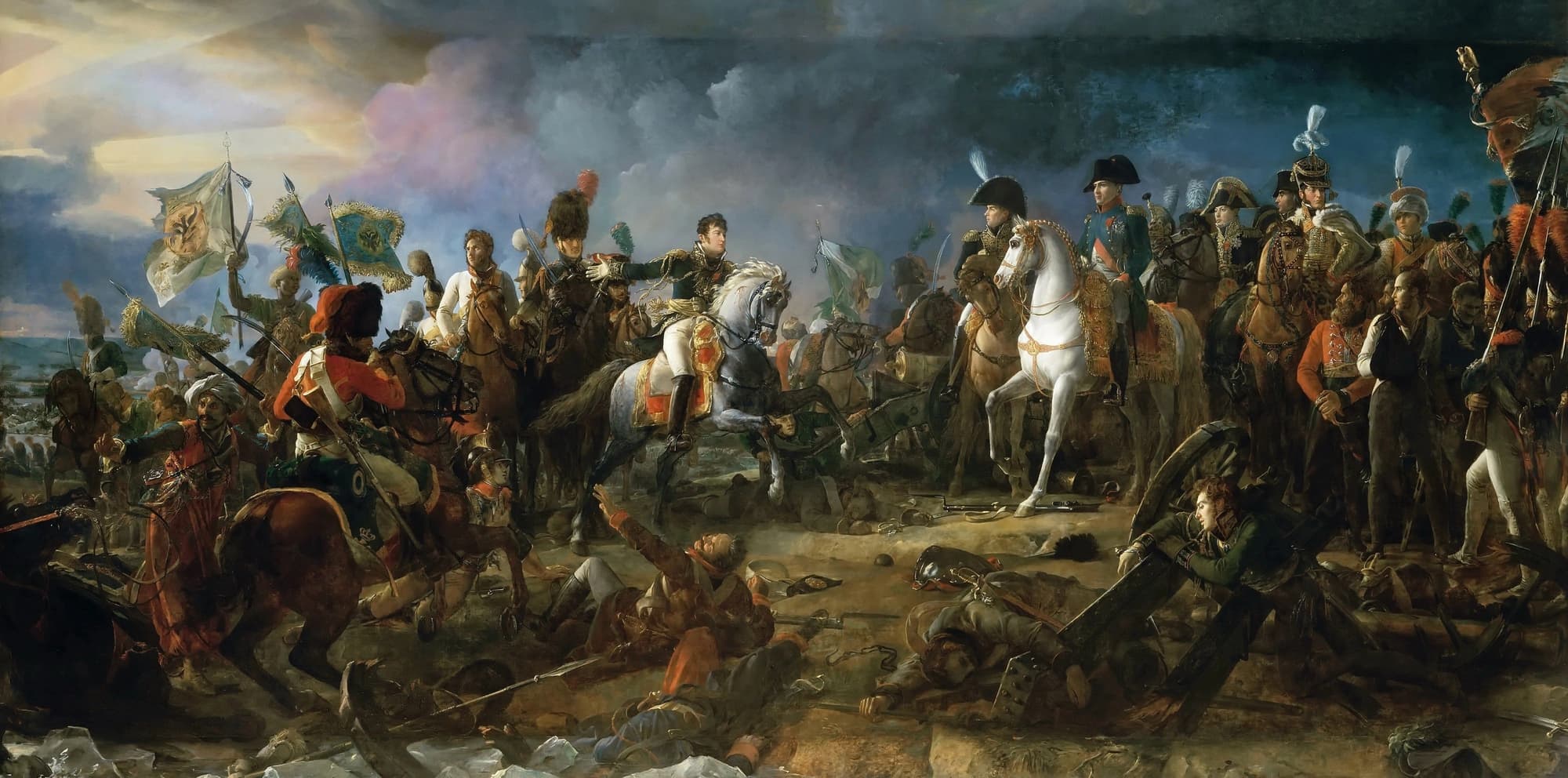
While gaining wealth through portraits, he maintained a passion for history painting, then considered a superior genre. 'The Battle of Austerlitz' (1810) demonstrates his ambition in composition and dramatic expression.1
Nicknamed 'the painter of kings, the king of painters,' he reigned as First Painter to Kings Louis XVIII and Charles X during the Restoration. European royalty sought his portraits, spreading his fame across the continent.1
His 1817 work 'Entry of Henri IV into Paris' was acclaimed as a masterpiece of the Restoration. However, he struggled with the rising Romantic school, grieving over the shift away from his classical style.1
The social upheaval of the 1830 July Revolution dealt a psychological blow to the conservative artist. He continued to work in discouragement until his death from fever in 1837 at the age of 66.1