Artist
Judith Leyster

Timeline
The peak of her career was concentrated between 1629 and 1635, a short but brilliant period during which she produced her most significant and innovative works of the Dutch Golden Age.1
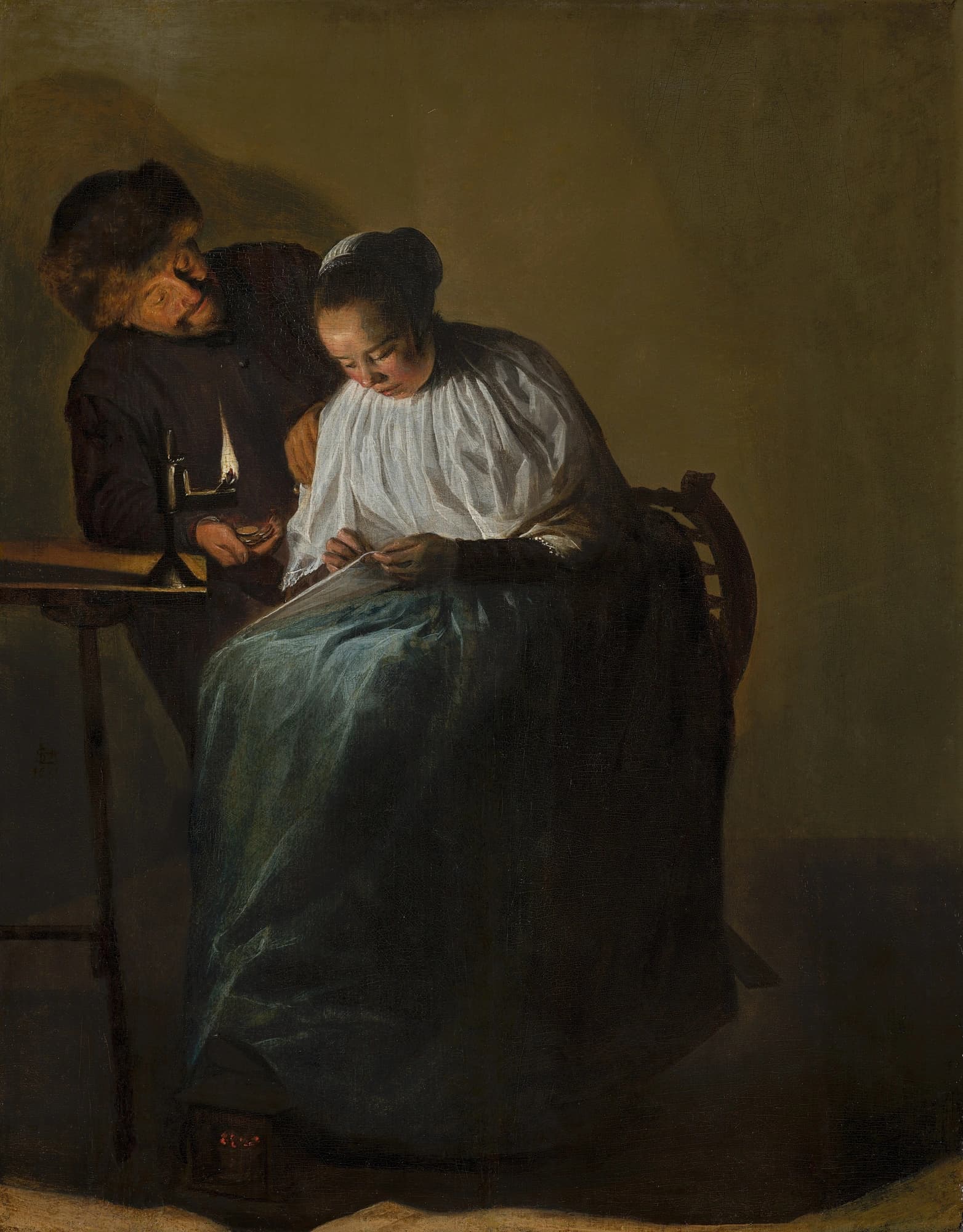
In 'The Proposition,' she subverted common artistic tropes by depicting a virtuous woman ignoring a man's advances, offering a distinct female perspective on domestic themes.1

Her 1633 Self-Portrait features a relaxed, dynamic pose that broke from the rigidity of earlier female self-portraits, showcasing her expertise and social status as an artist.1
In 1633, she was admitted as a member of the Haarlem Guild of St. Luke, making her one of the first women officially registered as a master painter in the guild.1
Leyster successfully sued Frans Hals for taking on an apprentice who left her workshop without permission, demonstrating her professional independence and assertiveness in a male-dominated field.1
After marrying artist Jan Miense Molenaer in 1636, her artistic output decreased significantly, with most of her known dated works produced during her prolific period between 1629 and 1635.1
Her work was largely forgotten after her death and misattributed to Frans Hals or her husband until 1893, when scholars rediscovered her signature and began to correctly attribute her oeuvre.1