Artist
Edward Savage
Works (1)
Timeline
Born in Massachusetts in 1761, he was a self-taught painter who became a successful portraitist of American founding fathers and played a key role in popularizing printmaking in early American art.1
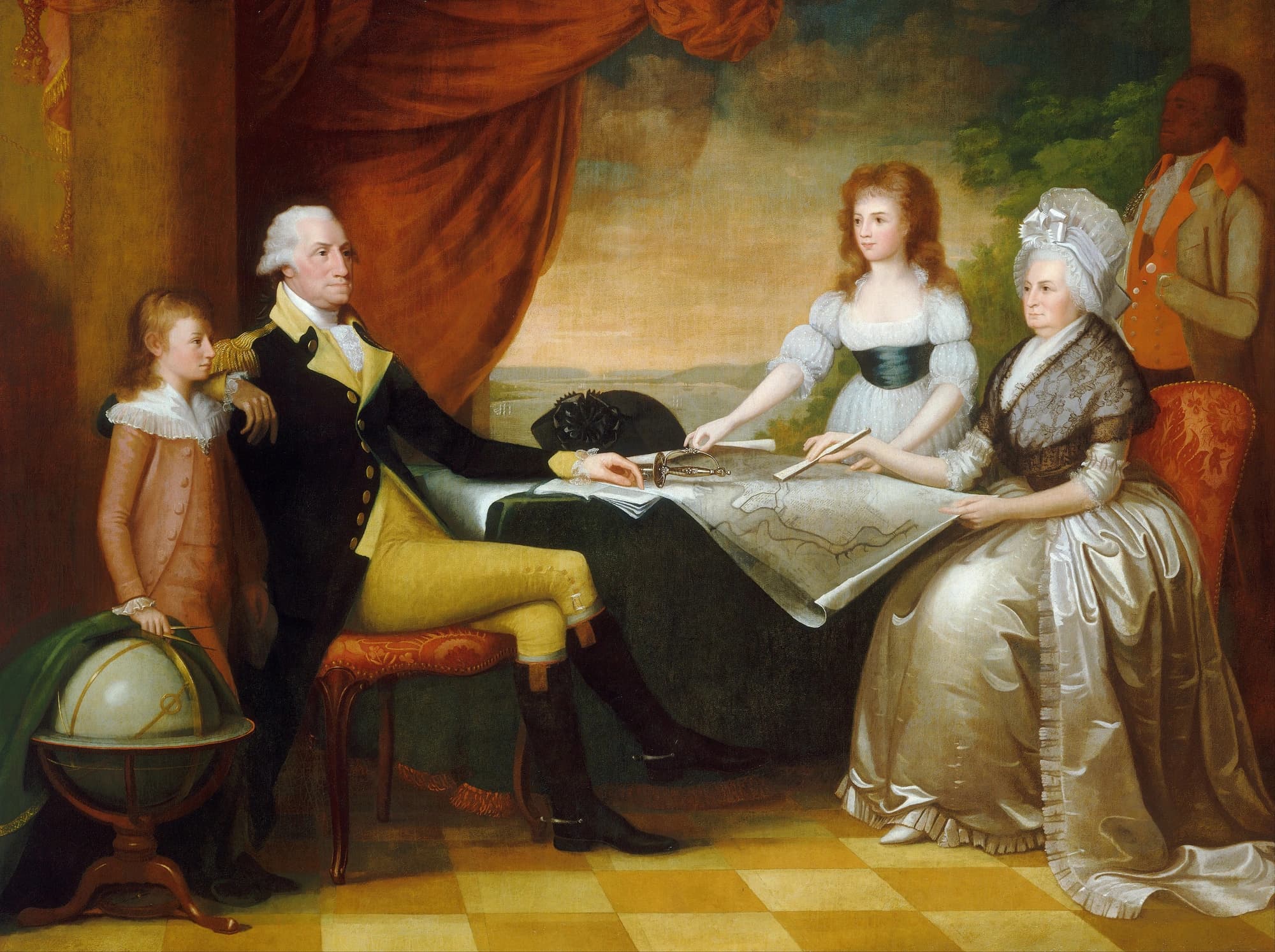
In 1789, he had the opportunity to paint President George Washington from life. This success established his reputation and served as the foundation for his masterpiece, 'The Washington Family.'1
In 1791, he traveled to London to study under Benjamin West, where he mastered advanced printmaking techniques like mezzotint and stipple engraving, incorporating refined European styles into his later work.1
The instruction he received from Benjamin West in London dramatically improved Savage's skills. West, then president of the Royal Academy, provided connections and knowledge that fueled Savage's success in America.1
In 1794, he opened the Columbian Gallery in New York, one of America's first private art museums, exhibiting his own works alongside natural history specimens and copies of European masters.1
Around 1795, he moved to Philadelphia, where he completed the engraving of 'The Washington Family.' Working in the then-capital of the U.S. helped solidify his work's status as a political symbol.1
His masterpiece 'The Washington Family,' painted between 1789 and 1796, depicts the family at Mount Vernon and became a widely popular symbol of harmony and stability in the new American nation.1

Active in Boston and New York until his death in Princeton in 1817, he left a significant mark on early American visual culture as a portraitist, engraver, and museum proprietor.1