Artist
Lucas de Heere
Timeline
Born to a sculptor father and a miniaturist mother, he was raised in an artistic environment from childhood, which laid the foundation for his versatile career.1
He studied under the leading Flemish painter Frans Floris in Antwerp. He moved there after Ghent's guilds declined, and it was likely during this time that he also began composing poetry.1
After returning to Ghent, he established a painting school and trained Karel van Mander, who later wrote 'Het Schilder-Boeck'. Most information about de Heere's life comes from this pupil's records.1
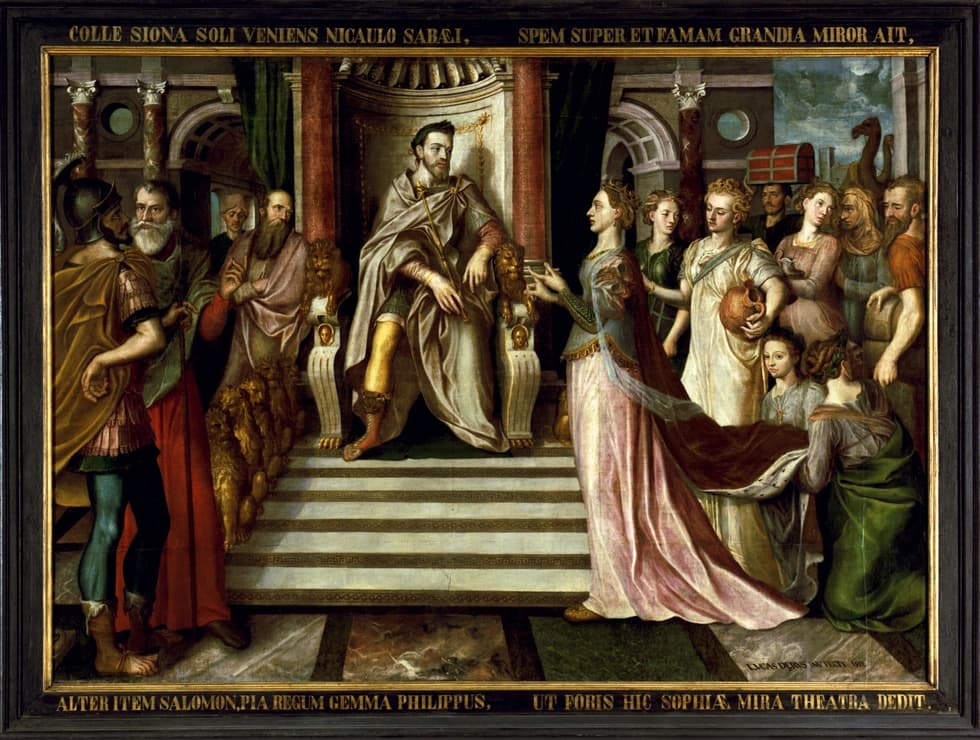
In his 1559 masterpiece 'King Solomon and the Queen of Sheba', he depicted Solomon with the features of King Philip II of Spain, likely as a gesture of political significance.1

Fleeing religious suppression, he went to France, where he was reportedly employed by Catherine de' Medici to assist in designing the Valois Tapestries.1
During his exile in England, he was employed by the Earl of Lincoln to paint a gallery depicting the costumes of various nations, forming the basis for his later ethnographic works.1
He visited Stonehenge in the 1570s and produced the earliest known realistic watercolor sketch of the site, which remains an important archaeological record of its condition at the time.1
His life was shaped by the turmoil of the Reformation. When Ghent surrendered to Spanish forces in 1584, he was forced to flee again and is believed to have died in Paris shortly after.1