Artist
Harmen Steenwijck
Works (1)
Timeline
Harmen Steenwijck was born in Delft around 1612. His father, Evert, was an eyeglass maker, and Harmen was the brother of Pieter Steenwijck, who was also a specialist in still life painting.1
In 1628, he moved to Leiden to study with his uncle. During his stay in Leiden until 1633, he established his signature style of vanitas still life painting, focusing on the transience of life.1
His teacher and uncle, David Bailly, is credited with inventing the vanitas genre. Harmen was greatly influenced by him and pursued the path of painting still lifes that symbolize death and emptiness.1
His brother Pieter Steenwijck was also a still-life painter; both received instruction from their uncle David Bailly. The brothers studied under the same master and were active in the Dutch Golden Age still-life scene.1
He is one of the representative painters of the Dutch Golden Age. In the Netherlands at that time, still lifes with religious and moral lessons were popular, and his vanitas paintings perfectly met that demand.1
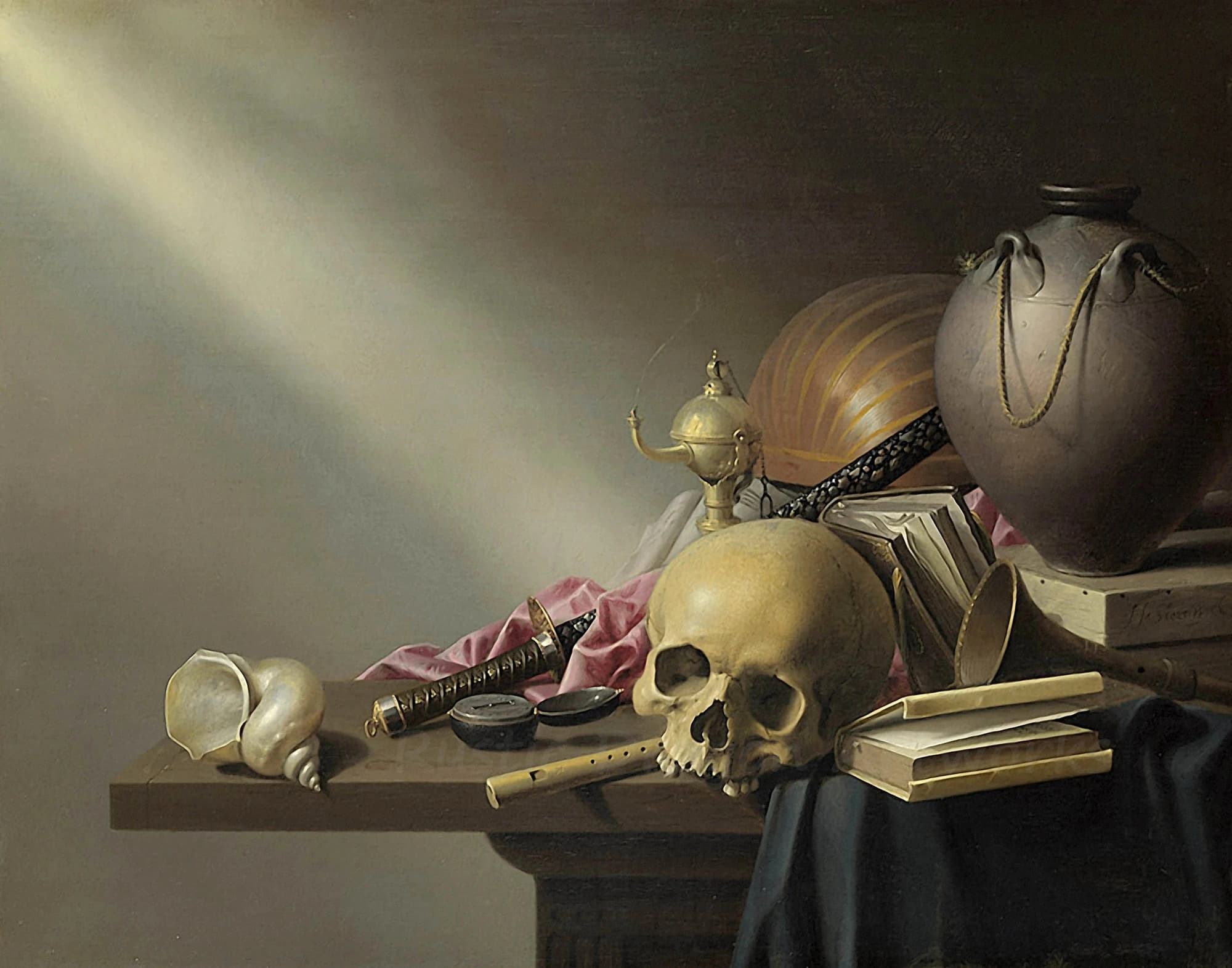
Painted around 1640, 'Still Life: An Allegory of the Vanities of Human Life' is his most famous work. It is a masterpiece of vanitas painting, using skulls and instruments to remind viewers of the transience of worldly wealth.1
His masterpiece, 'An Allegory of the Vanities of Human Life,' is currently held by the National Gallery in London. It is believed to have been painted in Leiden, reflecting the intellectual atmosphere of the city.1

Little is known about his life after 1656. Although his recorded period of activity is limited, the format of still life painting he established left a significant mark on later Dutch vanitas expressions.1