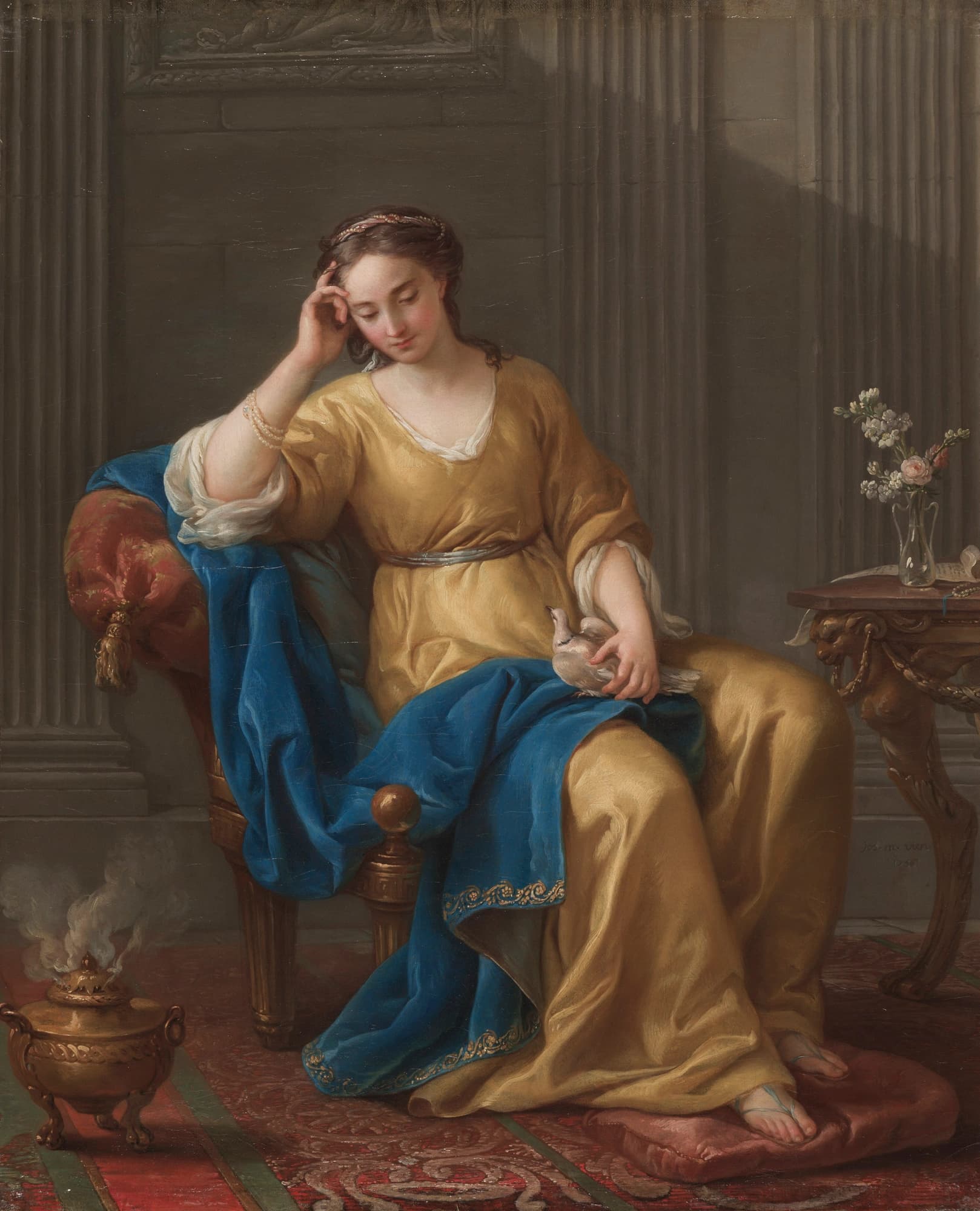
Artist
Joseph-Marie Vien
Works (1)

Timeline
Upon returning to Paris, his style was so foreign to the reigning taste that he owed his Academy admission for 'Daedalus and Icarus' solely to François Boucher's indignant protests.1
In 1757, he married Marie-Thérèse Reboul, a painter and engraver. Their son, Joseph-Marie Vien the Younger, also became a distinguished painter.1
In 1776, as director of the French Academy in Rome, he initially refused to take Jacques-Louis David with him, claiming he was too old to teach a young artist.1
Vien was the last holder of the post of Premier peintre du Roi (1789–1791) before it was abolished during the French Revolution.1
Despite losing his fortune in the French Revolution, he continued working and won an open government competition in 1796 at the age of eighty.1
Napoleon Bonaparte acknowledged Vien's merit by making him a senator, a high honor for an artist at the time.1
Joseph-Marie Vien died in Paris and was buried in the crypt of the Panthéon, reflecting his high standing in French society.1