Artist
Giuseppe Pellizza da Volpedo
Works (1)
Timeline
He studied under the master Giovanni Fattori in Florence, but later returned to Volpedo to dedicate himself to realist painting through the study of nature.1
Born in 1868 in Volpedo to a wealthy peasant family, he added 'da Volpedo' to his signature from 1892 onwards, reflecting his deep attachment to his birthplace.1
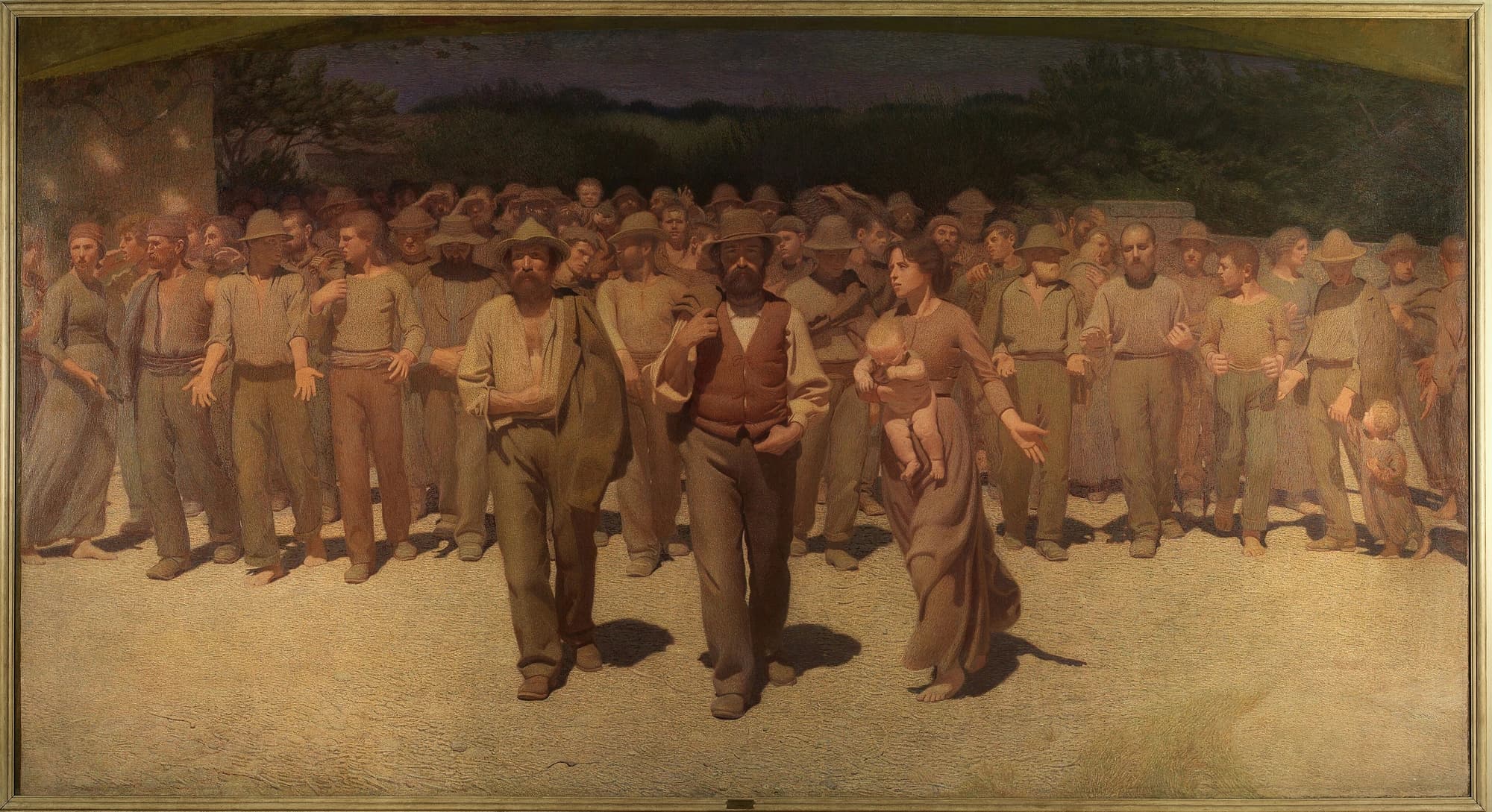
In the late 1890s, he shifted from impasto to Divisionism, a technique using small dots and lines based on color theory, influenced by artists like Giovanni Segantini.1
His masterpiece 'The Fourth Estate' took ten years to complete. Depicting a procession of workers, it became a symbol for socialist and progressive causes across Europe.1

When 'The Fourth Estate' was exhibited in 1902, it received criticism and caused confusion even among friends, leading a disappointed Pellizza to cut ties with many colleagues.1
Following the death of his friend Giovanni Segantini in 1904, Pellizza traveled to Engadin to reflect on the motivations and inspirations of the artist he deeply admired.1
In 1906, he successfully sold his painting 'Il Sole' to the Italian state, marking a turning point where artistic and literary circles finally began to recognize his work.1
The sudden death of his wife Teresa in 1907 plunged him into a deep depression, leading him to commit suicide in his studio at the age of 38.1